The true prophets of the anti-Brahmin message were no doubt the Christian missionaries. In the sixteenth century, Francis Xavier wrote that Hindus were under the spell of the Brahmanas, who were in league with evil spirits, and that the elimination of Brahminism was the first priority in the large operation of bringing Salvation to the wretched Pagans of India. In this endeavour, he strongly advocated and practiced the use of force. Unfortunately for him, the Portuguese government could not always spare the troops which he so passionately asked for. Still, the destruction wrought by Francis Xavier was impressive, and he has described the joy he felt on seeing idols being smashed and temples demolished.[1]
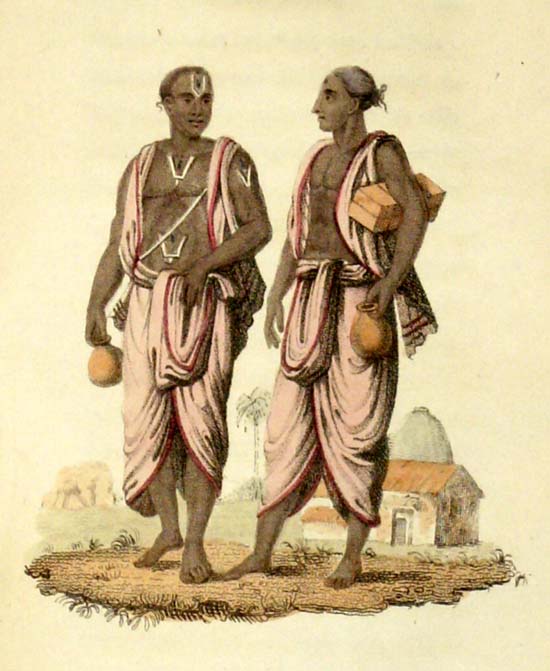 Within the Portuguese territories, physical persecution of Paganism naturally hit the Brahmins hardest. Treaties with Hindu kings had to stipulate explicitly that the Portuguese must not kill Brahmins. But in the case of Christian anti-Brahminism, these physical persecutions were a small matter compared to the systematic ideological and propagandistic attack on Brahminism, which has conditioned the views of many non-missionaries and has by now been amplified enormously because Secularists, Akalis, Marxists and Muslims have joined the chorus. In fact, apart from anti-Judaism, the anti-Brahmin campaign started by the missionaries is the biggest vilification campaign in world history (emphasis added).
While the Portuguese mission establishment was unanimous in branding the Brahmins as the chief obstacle to the Salvation of India, there was some dissent concerning the tactics to be employed against them. Robert de Nobili believed in fraud rather than force. He dressed as a Brahmin, and taught the Yesurveda, a fifth Veda which had been lost in India, but which the emigrant community of Romaka [Roman] Brahmins had preserved. He seems to have had a few followers, but after his death, nothing remained of his infiltration movement. Recently he has been declared the patron saint of the theology of inculturation,[2] and his method is being actualised and perfected in the Christian ashrams.[3]
 De Nobili’s approach was one possible application of the Jesuits larger strategy, which aimed at converting the elite in the hope that they would carry the masses with them. This approach had been tried in vain in China, in Japan, and even at the Moghul court (today, it is finally meeting with a measure of success in South Korea). A practical implication of this strategy was that Christianity had to be presented as a noble and elitist religion. This came naturally to the Jesuits, who (unlike, for instance, the Franciscans) styled themselves as an elite order.
Most importantly, that stage of missionary endeavour did not make use of any populist or democratic rhetoric of equality. At that time, political equality was not yet on the ideological agenda. On the contrary, even when in the eighteenth and nineteenth century, equality became a political hot item, the Church opposed it tooth and nail, and supported the aristocratic ancien regime and its restoration after the fall of Napoleon. Only in the late nineteenth century, when atheist socialism lured the urban masses away from Christianity, did the Church evolve what is known as the social teachings of the Church, formulated in encyclicals like Rerum Novarum. Before that time, any opposition of the Catholic Church (and of most Protestant Churches) against the caste system and the Brahmin caste had strictly nothing to do with a concern for social equality.
Recent claims that equality is an intrinsic and cardinal virtue of Christianity, and that the apostle Thomas came to India in AD 52 with a message of equality, abolition of caste, and women’s rights, are so many lies. Thus, C.A. Simon writes: “The oppressed and downtrodden followed [St. Thomas] and claimed equal status in society as it was denied them by the prevailing social norms. He condemned untouchability and attempted to restore equal status for women.” That St. Thomas ever came to India is already a myth, only kept alive in India with a lot of Christian-cum-secularist media effort; that he came with an Ambedkarist and feminist message is just ridiculous.
The source of the Thomas legend is an apocryphal text called the Acts of Thomas. If the [Jesuits and other Christian] missionaries want to continue to present it as history rather than legend, they should accept the consequences. In that case, they must tell the public about the way in which Thomas’s journey to India started, according to the very same text: he left Palestine because his twin brother Jesus sold him as a slave (Thomas is also called Didymus, “the twin brother”). They must give details of the destructive sorcery which Thomas practised, as in his first miracle, when he made a lion devour a boy for being impolite.
They must tell the public that Thomas was put to death not by the ugly Brahmins but by the king who, after having had a lot of patience with him, and after offering him a safe exit from the country, decided to put a stop to his practice of luring women away from their homes and putting them in sackcloth and ashes behind locked doors, etc.
Briefly, if it is true that the apostle Thomas came to India, then the following is also true:
- Thomas was an antisocial character;
- Jesus was a slave trader;
- Thomas was Jesus’s twin brother, implying that the four canonical Gospels are unreliable sources which have concealed a crucial fact, viz. that Jesus was not God’s Only Begotten Son. In fact, Jesus and Thomas were God’s twin-born sons. In other words, accepting the Thomas legend as history is equivalent to exploding the doctrinal foundation of Christianity.
The original Christian doctrine on equality has been expressed by St. Paul, who opposed attempts by slaves to free themselves because we have all been freed in Christ and that should be enough. St. Paul’s Letter to Philemon [in the New Testament Bible] is actually a covering note which he sent along with a runaway slave whom he returned to the legal owner, the Christian convert Philemon.[4]
A Christian Bible commentary, The Lion Handbook to the Bible edited by David and Pat Alexander, admits: “Slavery was such an integral part of the social structure of the day that to preach freedom would have been tantamount to revolution. Paul’s brief was not to engage in political campaigning but to preach a Gospel capable of transforming human life from within.” This is a poor excuse: religious pluralism was also an integral part of the dominant culture, and yet Christianity confronted and destroyed it. Why should God make compromises with the world? The fact of the matter is that St. Paul wanted to convert people to his own belief system, and that he was not interested in other, non-Salvationist pursuits such as social reform.
 If the missionaries were sincerely unhappy with the institution of caste, it was not because of its intrinsic inequality. The problem with caste was that it offered a lot of communal togetherness, social security and a certain pride in one’s caste identity. Through the missionary propaganda, we have come to see caste as an exclusion-from, but in the first place it is a belonging-to [a community]. Even for the lowest castes, humiliation by higher placed people on account of caste did not outweigh the considerable benefits of belonging to at least some caste.
This caste cohesion is an important reason why Hinduism could survive where the cultures of West Asia disappeared under the onslaught of Islam. The missionaries found that people were not willing to give up their caste by converting to Christianity, which implied breaking with a number of caste customs.
The only way to convert people, was to convert entire caste groups and allow them to retain some of their caste identity.Therefore, far from abolishing caste, the Church allowed caste distinctions to continue even within its own structure and functioning. Pope Gregory XV (1621-1623) formally sanctioned caste divisions in the Indian Church. This papal bull confirmed earlier decisions of the local Church hierarchy in 1599 and 1606.
 It is therefore not true that the Church’s motivation in blackening the Brahmins had anything to do with a concern for equality. The Church was against equality in the first place, and even when equality became the irresistible fashion, the Church allowed caste inequality to continue wherever it considered it opportune to do so. As a missionary has admitted to me: in Goa, many churches still have separate doors for high-caste and low-caste people, and caste discrimination at many levels is still widespread. Commenting on the persistence of caste distinctions in the Church, a Dalit convert told me: I feel like a frog who has jumped from one muddy pool into another pool just as muddy.
Whenever the Church feels it should accommodate existing caste feelings in settled Christian communities, it accepts them; and whenever it thinks it profitable to take a bold anti-caste stand before a Dalit public, it will do just that. It is true that contemporary missionaries, who have grown up with the idea of social equality, mostly have a sincere aversion for caste inequality, and are more dependable when it comes to conducting Church affairs in a caste-neutral way (as opposed to Indian Christians who insistently claim descent from high-caste converts). But when considering the missionary machine as a whole, we must say that the missionary commitment to equality and social justice is not sincere, but is an opportunistic policy motivated by a greed for conversions.
 In the past century, the Churches one after another came around to the decision that the lower ranks of society should be made the prime target of conversion campaigns. Finding that the conversion of the high-caste people was not getting anywhere, they settled for the low-castes and tribals, and adapted their own image accordingly. One implication was that the Brahmins were no longer just the guardians of Paganism, but also the antipodes of the low-castes on the caste ladder. A totally new line of propaganda was launched: Brahmins were the oppressors of the low-caste people.
In the proliferating mission schools, the missionary version of Indian history, including its view on caste, was taught to Indian pupils, and many interiorized the hostile and motivated story which they had been fed. One of them was Jotirao Phule of Maharashtra, the first modern leader to be called Mahatma. His position, while not yet all-out anti-Hindu, was strongly anti-Brahmin. He wrote:
“The Brahmin’s natural (instinctive) temperament is mischievous and cantankerous, and it is so inveterate that it can never be eradicated.”
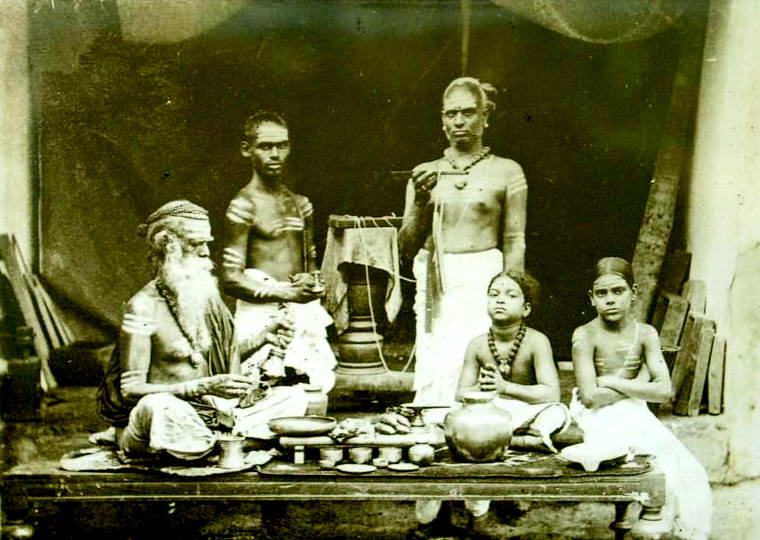 Then again, the Aryan Invasion theory was the alpha and omega of the version of India history spread by anti-Brahminism.[5] Phule’s book Slavery starts out with this view of history: “Recent researches have shown beyond a shadow of a doubt that the Brahmins were not the Aborigines of India…. Aryans came to India not as simple emigrants with peaceful intentions of colonisation, but as conquerors. They appear to have been a race imbued with very high notions of self, extremely cunning, arrogant and bigoted.”
For Phule, there could be no progress for the low-caste people without taking harsh anti-Brahmin measures, e.g.: “Let there be schools for the Shudras in every village, but away with all Brahmin schoolmasters.”
This is exactly what the missionary school-builders wanted him to say. Through Phule, the missionary indoctrination has influenced all twentieth century anti-Brahmin leaders.
 Even among the champions of the Hindu cause, anti-Brahminism acquired a following. The Hindu reform movement Arya Samaj rejected Brahminism and its heretical brainchildren, idolatry and the caste system, as utterly non-Vedic. Brahmin temples were desecrated in the name of Hinduism. Orthodox Brahmins were attacked as the traitors of Hindu interests.
Thus, it was said in those circles that when in the 1880s the Maharaja of Kashmir wanted to reconvert the forcibly converted Muslims in his domains, the Brahmins rejected this timely proposal, arguing from their obscurantist shastras that one is only a Hindu by birth.
This well-known allegation has been argued to be unhistorical (though of course nobody denies that mindlessly scripturalist Brahmins do exist, in dwindling numbers): it cannot be traced farther back than 1946, sixty years after the facts which it claims to describe. Admittedly, this argumentum e silentio is not strong in itself, but it is strengthened by the fact that Brahmins have reconverted ex-Hindus ever since the forcible conversions by Mohammed bin Qasim in AD 712. The ritual effecting conversion into the Arya fold has been available and in use since Vedic times.
There is ample Christian testimony from the sixteenth to the nineteenth century that the majority of converts were taken back into the Hindu fold, and that those who remained Christian were mostly the individuals who, driven out of their castes on account of their vices or scandalous transgressions of their usages, are shunned afterwards by everybody (quoted by Jeevan Kulkarni in Historical Truths & Untruths Exposed). The people affected by this conversion and reconversion process were mostly, but not exclusively, from the lower castes.
Just as well, the missionaries knew whom to hold responsible for their failure: “The Brahmin is therefore well worth looking at! We have more to do with him than with the Czar of all the Russians. The battle we have to fight with him is not against guns or rifles, not against flesh and blood.” This assessment, written in a mood of vexation by Rev. Norman MacLeod in 1871, was comparatively mild next to what Abbe Dubois had written (and of which MacLeod approved) in 1820: “And there is no stronghold of evil so impregnable as Brahmins”.
The well-spring of anti-Brahminism is doubtlessly the Christian missionaries greedy design to rope in the souls of Hindus. From there onwards, it spread through the entire English-educated class and ultimately became an unquestionable dogma in India’s political parlance. Communist historians and sociologists have been fortifying it by rewriting Indian history as a perennial struggle between Brahmin oppressors and the rest. When defending the Mandal report in 1990, the then Prime Minister of India V.P. Singh could say that Brahmins have to do penance for the centuries of oppression which they inflicted on the Backwards, without anyone questioning his historical assumptions. Anti-Brahminism is now part of the official doctrine of the secular, socialist Republic of India.[6]
1. Francis Xavier’s greatest success, though he didn’t live to see it, was to have the Holy Inquisition brought to Goa. The extraordinary perversions and cruelty practised by this Church tribunal against the native Goan population have been recorded in The Goa Inquisition by A.K. Priolkar.
2. Not only Robert de Nobili, but St. Thomas is being roped in as a mascot of inculturation. Ivan Fernandez, in “Hindu-Christian Dialogue Produces Results”, in the Jesuit magazine Jivan, May-June 1994, New Delhi, writes, “Hindu scholars have for the first time accepted Christian contribution to Indian philosophy and conceded that Indian philosophy does not necessarily mean Hindu philosophy…. Some of the issues raised [in the symposium organised by the Indian Council of Philosophical Research and the Jesuit Philosophical Research Institute, Madras,] asked if there actually were Christian thinkers in the country. If so, what were their framework and concerns?… It is important to raise these issues since the Christian presence in India dates back to the beginning of the Christian era itself. Tradition says, St. Thomas the Apostle, who visited and preached in Kerala … was martyred in Madras. This seminar is not just meant to prove Christian contribution but to demand one’s membership in society as a grown up….” says Anand Amaladass. “Indian philosophy today cannot be considered the property of any one particular community in the country, even if its major contribution has come from, till now, the Hindu community”.
3. See Catholic Ashrams: Sannyasin or Swindlers by Sita Ram Goel, New Delhi, 2010
4. For St. Paul on slavery see Ephesians 6:5-9, Colossians 3:22-25 & 4:1, 1 Timothy 6:1-2, and Philemon. See also 1 Peter 2:18-25, which begins: “Servants, be subject to your masters with all fear; not only to the good and gentle, but also to the forward.”
5. It should be understood here that the theory has been proved to be false. See Shrikant G. Talageri’s Aryan Invasion Theory and Indian Nationalism and K.D. Sethna’s Karpasa in Prehistoric India: A Chronological and Cultural Clue.
(46242)
 Founded in 1875, the Ârya Samâj, in effect “Society of Vedicists”, was a trail-blazer of Hindu revivalism and anti-colonial nationalism until Independence. It worked bravely for the reconversion of Indian Muslims, the only humane solution to India’s communal problem. Some of its spokesmen gave their lives for speaking out on Islam, most notably Pandit Lekhram in 1897 and Swami Shraddahananda (co-founder of the Hindu Mahasabha) in 1926.
 As an organization, the Arya Samaj is no longer very powerful or important, but its message has spread far and wide in educated Hindu society. The same is even more true of a similar movement, the Brahmo Samaj (°1825), a flagbearer of the Bengal renaissance which tried to translate Hinduism into rational-sounding concepts acceptable to the British colonizers and the first circles of anglicized Hindus.Whereas the Arya Samaj embraced a Christian-like religious theism, the Brahmo Samaj tended more towards a modern Enlightenment-inspired deism, i.e. the philosophical acceptance of a distant cosmic intelligence rather than a personal God biddable by human imprecations and sacrifices. But like the Aryas, the Brahmos rejected Hindu polytheism as a degenerate aberration from the true Vedic spirit.
 It is undeniable that Hindu Maha Sabha ideologue Savarkar spoke of reviving the “race spirit” of the Hindus. So did Golwalkar. Sri Aurobindo even used the term “Aryan race”, which to him meant exactly the same thing as “Hindu nation”,
  After 1945, the English language gradually lost the usage of the term “race” for the concept of “nation”; the Hindu nationalists followed suit. This was only natural: they had never cared for “race” in the biological sense so dear to the Nazis. The very concept of race, having been narrowed down to its biological meaning, has simply disappeared from their horizon. It is plainly untrue that Hindu ideologues at any time have shared Hitler’s racism.
 Most secularists pretend not to know this unambiguous position of Savarkar’s (in many cases, they really don’t know, for Hindu-baiting is usually done without reference to primary sources). Likewise, Savarkar’s plea for caste intermarriage to promote the oneness of Hindu society is usually ignored in order to keep up the pretence that he was a reactionary on caste, an “upper-caste racist” (as Gyan Pandey puts it), and what not. There are no limits to secularist dishonesty, and so we are glad to find at least one voice in their crowd which does acknowledge these positions of Savarkar’s.
 The first point rightly acknowledges that Savarkar, not being a historian, accepted the Aryan invasion theory promoted by prestigious seats of Western learning; and that he saw modern Hindus as a biological and cultural mixture of Aryan invaders and indigenous non-Aryans. He shared this view with Indian authors across the political spectrum, e.g. with Jawaharlal Nehru. Like Nehru, he saw no reason why people of diverse biological origins would be unable to form a united nation; the difference being that Nehru saw this unification as a project just started (“India, a nation in the making”), while Savarkar believed that this unification had come about in the distant past already.
 Nicholas Goodrick-Clarke has written a book on the strange case of a French-Greek lady who converted to Hinduism and later went on to work for the neo-Nazi cause, Maximiani Portas a.k.a. Savitri Devi. The book is generally of high scholarly quality and full of interesting detail, but when it comes to Indian politics, the author is woefully misinformed by his less than impartisan sources.
 If one is inclined towards fascism, and one has the good fortune to live at the very moment of fascism’s apogee, it seems logical that one would seize the opportunity and join hands with fascism while the time is right. Conversely, if one has the opportunity to join hands with fascism but refrains from doing so, this is a strong indication that one is not that “fascist” after all. Many Hindu leaders and thinkers were sufficiently aware of the world situation in the second quarter of the twentieth century; what was their position vis-a-vis the Axis powers?
 And indeed, in the successful retreat from Dunkirk and in the British victories in North Africa and Iraq, Indian troops played a decisive role. It would earn the Hindus the gratitude of the British, or at least their respect. And if not that, it would instill the beginnings of fear in the minds of the British rulers: it would offer military training and experience to the Hindus, on a scale where the British could not hope to contain an eventual rebellion in the ranks. After the war, even without having to organize an army of their own, they would find themselves in a position where the British could not refuse them their independence.
 It is not unreasonable to suggest that Savarkar’s collaboration with the British against the Axis was opportunistic. He was not in favour of any foreign power, be it Britain, the US, the Soviet Union, Japan or Germany. He simply chose the course of action that seemed the most useful for the Hindu nation. But the point is: he could have opted for collaboration with the Axis, he could have calculated that a Hindu-Japanese combine would be unbeatable, he could even have given his ideological support to the Axis, but he did not. The foremost Hindutva ideologue, president of what was then the foremost political Hindu organization, supported the Allied war effort against the Axis.
  That HMS support to the anti-Nazi war effort was not merely tactical but to quite an extent also ideological, is shown by a series of statements by Nirmal Chandra Chatterjee, president of the Bengal Hindu Mahasabha and vice-president of the All-India Hindu Mahasabha. He declared in February 1941: “Our passionate adherence to democracy and freedom is based on the spiritual recognition of the Divinity of man. We are not only not communal but we are nationalists and democrats. The Anti-Fascist Front must extend from the English Channel to the Bay of Bengal.” (Hindu Politics, Calcutta 1945, p.13)
  All this is hardly the language of a collaborator with the Axis powers. For anyone still in doubt on the Hindu Mahasabha’s position, he declared in March 1942: “In the conflict of ideologies the Hindus have made their position perfectly clear. We hate Nazism and Fascism. We are the enemies of Hitler and Mussolini. We are longing and struggling for our own emancipation and we want to repel any dictator who would try to reduce sections of humanity to slavery to serve the whims of his own megalomania.” (Hindu Politics, p.26) And in December 1943: “We are wholeheartedly anti-Fascist. Every anti-Imperialist must be anti-Fascist.” (Hindu Politics, p.68)
 Yet, the British accused the Freedom Movement, including the HMS but also the Congress, of Nazi sympathies. Already in the 1930s, they had sometimes equated no less a person than Mahatma Gandhi with Hitler (a comparison which made Gandhian Congress activists feel proud). That was the only way they could hope to lessen the sympathy of the increasingly influential American public opinion for the Indian anti-colonial struggle.
 As the science of language, historical linguistics in the early 19th century saw itself as providing a framework for studying the history and relationships of languages in the same manner as biology describes the animal world. But whereas biology has been revolutionized by the discovery of the genetic code, no similar breakthrough has brought new illumination to linguistics. Over the protestations of its many critics, mainstream historical linguistics has remained within the parameters of 19th century thinking. In the meanwhile, archaeological discoveries have altered our understanding of ancient Eurasia.
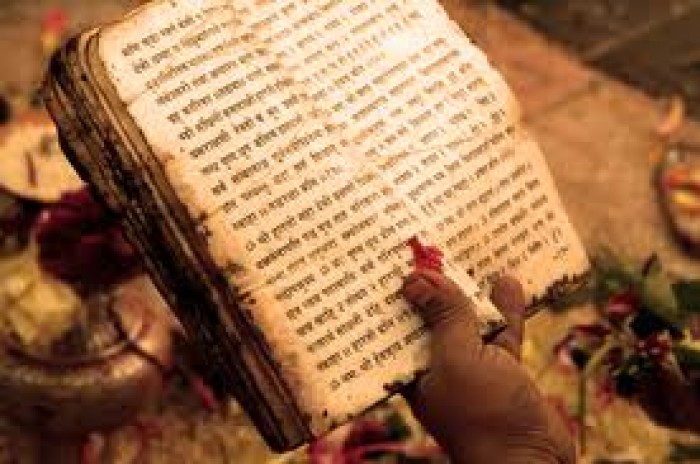 The Vedic texts are being interpreted as a record of the complex transformations taking place in the pre-2000 BC Indian society. We understand how the 19th century construction of the Orient by the West satisfied its needs of self-definition in relation to the Other. To justify its ascendancy, the Other was defined to be racially mixed and inferior, irrational and primitive, despotic and feudal. This definition was facilitated by a selective use of the texts and rejecting traditional interpretations, an approach that is now called Orientalism. The terms in the construction were not properly defined. Now we know that to speak of a “pure” race is meaningless since all external characteristics of humans are defined in a continuum.
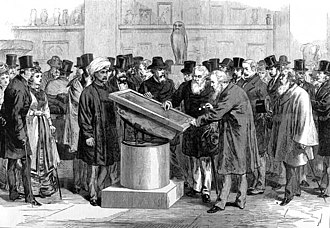 The comparative philology of the most ancient languages was a quest for origins, an attempt to return to a privileged moment in time when God, man, and natural forces still lived in mutual transparency. The plunge into the distant past in search of ‘roots’ went hand in hand with a never forgotten faith in a meaningful history, whose course, guided by the Providence of the one God, could be understood only in the light of Christian revelation.
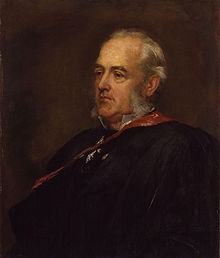 This dual inheritance was the mark of the imperial destiny of the West. Vernant reminds us that despite his monotheism, the poor Jew, since he lacked Aryan blood, should have seen “the dark silhouette of the death camps and the rising smoke of the ovens.”
 A linguistic “Garden of Eden’’ called the proto-Indo-European (PIE) language was postulated. Europe was taken to be the homeland of this language for which several wonderful qualities were assumed. This was a theory of race linking the Europeans to the inhabitants of the original homeland and declaring them to the original speakers of the PIE. By appropriating the origins, the Europeans also appropriated the oldest literature of the Indians and of other IE speakers. Without a past how could the nations of the empire ever aspire to equality with the West? Indian literature was seen to belong to two distinct layers.
 Bad intent should not turn anyone away from good science. Why isn’t PIE good science? It looks reasonable enough: If there are biological origins then there should be linguistic origins as well. And why don’t we believe that the nature of language tells us something about culture? If Europeans have been dominant in recent history, then why don’t we accept it as a characteristic of the European? Thus the origin of the PIE must be in the European sphere from where the energy of its early speakers carried them to the far corners of Asia and allowed them to impose their language on the native speakers. There are several problems with the idea of PIE. It is based on the hypothesis that languages are defined as fixed entities and they evolve in a biological sense. In reality, a language area is a complex, graded system of several languages and dialects of a family.
 Such an overlap need not imply that the speakers of either group intruded into the overlapping region. We note further the warning by N.S. Trubetskoy (1939) that the presence of the same word in a number of languages need not suggest that these languages descended from a common parent:
 It was Bishop Caldwell (1875) who suggested that the South Indian languages of Tamil, Malayalam, Kannada, and Telugu formed the separate Dravidian family of languages. He further suggested that the speakers of the proto-Dravidian language entered India from the northwest. Other scholars argued against this Dravidian invasion theory. Scholars have argued that this attempt to see both the North and the South Indian languages coming to the subcontinent from outside (West Asia) as another example of the preoccupation with the notion of the “Garden of Eden’’.
 The definition of Aryan and Dravidian are extrapolated from the culture of the speakers of the North and the South Indian languages. But the cultures of the North and the South are the same as far back as we can go. (There is some minor difference in kinship rules.) There is even a mirroring of the sacred geography. The North has Kashi and Mathura; the South has Kanchi and Madurai. Who is to say what the original was? If there is no cultural difference then the use of the term “Aryan” as defining the culture of just the speakers of the North Indian languages is misleading.
 The Indian linguistic evidence requires the postulation of two kinds of classification. The first is the traditional Indian classification where the whole of India is a single linguistic area of what used to be traditionally called the Prakrit family. Linguists agree that based on certain structural relationships the North and the South Indian languages are closer than Sanskrit and Greek.1, Second, we have a division between the North Indian languages that should really be called North Prakrit (called Indo-Aryan by the linguists) and the South Indian languages that may be called South Prakrit (or Dravidian).
 Since Puranic themes occur in the iconography of the Harappan times (2600-1900 BC), some take the Puranic material to precede the Vedas so that the Vedas could be placed in the second millennium BC. I think the only logical resolution of all the archaeological and textual evidence is to assume that the Indic area became a single cultural area at least around 5000 BC. The Indian civilization was created by the speakers of many languages but the language of the earliest surviving literary expression was Vedic Sanskrit, that is itself connected to both the North and the South Prakrit languages.
 The discovery of Tocharian as a centum language was seen as an example of a heroic movement of centum-speaking people from the west. But now the discovery of Bangani, a centum language in India, has make the whole idea of a treelike division suspect. Consider also the question of our knowledge of the vocabulary of various languages. For some languages, this knowledge was primarily obtained in quick field-work done decades ago by scholars who were not native speakers. Could it be that they missed out on vital evidence?
 Even Kannada has a cognate. Also, many Hindi speakers pronounce the word for “hundred” as sainkara rather than saikara, which the field studies tell us is the “correct” form. Does that make Hindi a centum language? The archaeological findings from India and the discovery of the astronomy of the Vedic period are fatal for the constructions of historical linguistics that arose in the 19th century and are still being followed in schoolbooks in India although textbooks in the West have begun to present the new picture. While the general language categories seem reasonable, the concept of overlapping families seems essential to obtain better conceptual clarity. The breakdown of the old paradigm calls for considerable effort to create a new one to take its place.
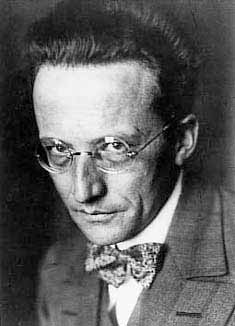 During the next few years, Schrödinger and Heisenberg and their followers created a universe based on superimposed inseparable waves of probability amplitudes. This new view would be entirely consistent with the Vedantic concept of All in One. He became a Vedantist, a Hindu, as a result of his studies in his search for truth. Schrödinger kept a copy of the Hindu scriptures at his bedside. He read books on Vedas, yoga, and Sankhya philosophy and he reworked them into his own words, and ultimately came to believe them. The Upanishads and the Bhagavadgita were his favourite scriptures.
 “insight is not new From the early great Upanishads the recognition Atman = Brahman (the personal self equals the omnipresent, all-comprehending eternal self) was in Indian thought considered, far from being blasphemous, to represent the quintessence of deepest insight into the happenings of the world. The striving of all the scholars of Vedanta was, after having learnt to pronounce with their lips, really to assimilate in their minds this grandest of all thoughts.”
 Substituting in Sayana’s statement we get 186,536 miles per second. Unbelievable, you’d say! It cannot be the speed of light. Maybe it refers to the speed of the sun in its supposed orbit around the earth. But that places the orbit of the sun at a distance of over 2,550 million miles. The correct value is only 93 million miles and until the time of Roemer the distance to the sun used to be taken to be less than 4 million miles. This interpretation takes us nowhere.
 Further support for the genuineness of the figure in the ancient book comes from another old book, the Vayu Purana. This is one of the earliest Puranas, considered to be at least 1,500 years old. (The same reference is to be found in the other Puranas as well.)
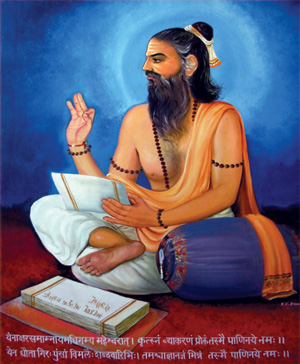 Panini described the grammar of Sanskrit algebraically in complete detail, an achievement that has not been matched for any other language until today. Panini’s grammar is as intricate in its structure as the most powerful computing machine. The scope of his achievement qualifies Panini as one of the greatest geniuses who ever lived. Not only did he influence attitudes in the East for centuries, his ideas led to the development of the subject of philology in the West.
 Five of the thirty-six chapters of the Natya Shastra are devoted to music. Bharata speaks of the 22 shrutis of the octave, the seven notes and the number of shrutis in each of them. He explains how the vina is to be tuned. He also describes the dhruvapada songs that were part of musical performances.
 But Bharata’s great text lay forgotten in India for almost a thousand years, his ideas remembered mainly through secondary sources. This is surprising considering this work has a sweep broader than that of Euclid or Panini. It is easy to understand success in devising a method of geometrical reasoning or finding the algebra of grammar as they are inherently structured. But imagine the audacity of creating a language for gesture, dance and music! Also, Euclid and Panini wrote for the scholar, whereas Bharata’s work influenced millions directly or indirectly. For these reasons alone, the Natya Shastra is one of the most important books ever written.
 Their devotion to their ways earned them grudging respect for exemplifying ‘freedom’ which by the late 18th century had caught the imagination of Europe fighting the suffocation of the Church. Slowly, the Roma (Gypsy) singers began to enjoy the patronage of the middle-class and the aristocracy.
 Bharata stresses the transformative power of creative art. He says, “It teaches duty to those who have no sense of duty, love to those who are eager for its fulfillment, and it chastises those who are ill-bred or unruly, promotes self-restraint in those who are disciplined, gives courage to cowards, energy to heroic persons, enlightens men of poor intellect and gives wisdom to the learned.”