D.N. Jha’s “Reply to Arun Shourie”, dated 3 July 2014, was published in shorter form as “Grist to the reactionary mill”, Indian Express, 9 July 2014. It starts as follows: “I was amused to read ‘How History Was Made Up At Nalanda’ [28 June 2014, the Indian Express:] by Arun Shourie, who has dished out ignorance masquerading as knowledge – reason enough to have pity on him and sympathy for his readers!”
Shourie had charged him with fudging evidence to distort the historical narrative of the destruction of the ancient Nalanda-mahavihar. Jha therefore considered it necessary to “rebut his allegations and set the record straight instead of ignoring his balderdash”. Note the unscholarly language, and this at his advanced age. We are dealing with a verbal street-fighter who has been given a post as an academic. Further down, we see him belittling his opponent, typical for the nouveau riche who thinks the world of his own status. When Shourie doubts miracle-tales as historical sources, Jha does not justify his own use of the same, but plays up his academic status: “Acceptance or rejection of this kind of source criticism is welcome if it comes from a professional historian but not from someone who flirts with history as Shourie does.”
Misdirection
The article is, as usual in secularist polemics, an exercise in misdirection. Beating around the issues of history, Jha draws the reader’s attention away from those by indulging in nit-picking: “My presentation at the Indian History Congress, to which Shourie refers, was in 2006 and not 2004 as stated by Shourie. It was not devoted to the destruction of ancient Nalanda per se – his account misleads readers and pulls the wool over their eyes.” His entire presentation may have contained material for several more articles, but here Shourie has focused on one daring lie of Jha’s in the course of that presentation, viz. the claim that the disappearance of Nalanda University was due to Hindus rather than Muslims.
Jha: “It was in fact focused on the antagonism between Brahmins and Buddhists, for which I drew on different kinds of evidence including myths and traditions.” At least he has the merit of pointing to a rhetoric that, that force of repetition from high pedestals, has by now almost become an established fact, viz. that Hindus themselves did to Buddhists what they allege Muslims did to them. Hindus have let this lie fester for decades, and at their own peril.
Jha: “In this context I cited the tradition recorded in the 18th century Tibetan text, Pag-sam-jon-zang by Sumpa Khan-Po Yece Pal Jor, mentioned by BNS Yadava in his Society and Culture in Northern India in the Twelfth Century — with due acknowledgement, although in his pettiness Shourie is quick to discover plagiarism on my part! (I may add that ‘Hindu fanatics’ are not my words but Yadav’s, which is why they are in quotes. How sad that one has to point this out to a winner of the Magsaysay Award!)” Jha did mention Yadava as his source in general, but his quoted phrase “Hindu fanatics” was such that it gave the reader the impression of being from the Tibetan original. Either way, both he and Yadava are plainly wrong when they use the anachronistic term “Hindu fanatics”, because the source text only calls them “beggars”. There is no indication at all that they acted out of fanaticism; instead, it is explicitly mentioned that they were angry at being mistreated by some Buddhist monks.
The crux of Shourie’s argument is that Jha, too lazy to go to the original source, merely quotes Yadava as an authority but omits to mention that Yadava himself considers the source untrustworthy. That is clearly dishonesty, and Jha has been caught in the act of committing it. Yet, in this article, Jha nowhere addresses the allegation that he himself has been dishonest, a central point of the article he claims to reply to. He even repeats the same trick: invoking Yadava as authoritative support for the Tibetan fairy-tale.
Jha: “In his conceit Shourie is disdainful and dismissive of the Tibetan tradition, which has certain elements of miracle in it, as recorded in the text.” Correction: he is only dismissive of the use a Marxist historian makes of the. In the Ayodhya affair, Marxists, and secularists in general, dismissed the Hindu side’s claim (which was not even miracle-mongering, just tradition-based) as “irrational”. And that claim was also based on documentary and archaeological evidence, whereas this Tibetan tale stands alone, is from five hundred years after the fact, and is contradicted by other evidence.
Jha: “Here is the relevant extract from Sumpa’s work cited by Shourie: ‘While a religious sermon was being delivered in the temple that he [Kakut Siddha] had erected at Nalanda, a few young monks threw washing water at two Tirthika beggars. (The Buddhists used to designate the Hindus by the term Tirthika). The beggars, being angry, set fire on the three shrines of Dharmaganja, the Buddhist University of Nalanda, viz. — Ratna Sagara, Ratna Ranjaka including the nine-storeyed temple called Ratnodadhi which contained the library of sacred books’ (p.92). Shourie questions how the two beggars could go from building to building to ‘burn down the entire, huge, scattered complex’.”
Shourie is perfectly right to question the verisimilitude of this story. At any rate, Nalanda University comprised more than these three buildings. Whether this Tibetan miracle-tale is true or not, it does at any rate not pertain to the wholesale destruction of Nalanda, though that destruction did take place. The whole university was flattened by fire (as archaeology can confirm), not just three shrines but the teaching and living quarters as well. If anyone could be tricked by the Tibetan tale into thinking that it pertained to this wholesale destruction rather than narrating some small incident, at least it should not be a historian.
Brahmin-Buddhist antagonism
Jha: “Look at another passage (abridged by me in the following paragraph) from the History of Buddhism in India written by another Tibetan monk and scholar, Taranatha, in the 17th century: ‘During the consecration of the of the temple built by Kakutsiddha at Nalendra [Nalanda] ‘the young naughty sramanas threw slops at the two tirthika beggars and kept them pressed inside door panels and set ferocious dogs on them’. Angered by this, one of them went on arranging for their livelihood and the other sat in a deep pit and “engaged himself in surya sadhana” [solar worship], first for nine years and then for three more years and having thus “acquired mantrasiddhi” he “performed a sacrifice and scattered the charmed ashes all around” which “immediately resulted in a miraculously produced fire” which consumed all the eighty-four temples and the scriptures some of which, however, were saved by water flowing from an upper floor of the nine storey Ratnodadhi temple. (History of Buddhism in India, English tr. Lama Chimpa & Alka Chattopadhyaya, pp.141-42).
If we look at the two narratives closely they are similar. The role of the Tirthikas and their miraculous fire causing a conflagration are common to both.”
Clearly, the two miracle-tales have a common source. A polemicist would boast that he has no less than two sources available, but a genuine historian would soberly realize that he can draw only on a single source, centuries removed from the events it claims to narrate.
Jha: “Admittedly, one does not have to take the miracles seriously, but it is not justified to ignore their importance as part of traditions which gain in strength over time and become part of the collective memory of a community.” Notice the very different tune he is singing compared to the Ayodhya controversy. Back then, the whole mission of the “eminent historians” was to debunk the temple destruction scenario which they conceived as merely “part of traditions which gain in strength over time and become part of the collective memory of a community”. Here a sheer miracle story is not debunked, but on the contrary invoked as a decisive historical source.
Jha: “Nor is it desirable or defensible to disregard the long standing antagonism between Brahmins and Buddhists, which may have given rise to the Tibetan tradition and nurtured it until the 18th century or even later. It is in the context of this Buddhist- Tirthika animosity that the account of Sumpa assumes importance; it also makes sense because it jibes with Taranatha’s evidence. Further, neither Sumpa nor Taranatha ever came to India. This should mean that the idea of Brahminical hostility to the religion of the Buddha travelled to Tibet fairly early, became part of its Buddhist tradition, and found expression in 17th-18th century Tibetan writings.”
Another explanation for this Tibetan tradition of hostility could be that they heard how Buddhism had been mistreated in India by the Muslim invaders, and concluded that “Indians” or “Hindus” (the two terms were not yet distinct) had done it. Even today, when the communication distance to the West is far smaller than to Tibet back then, numerous Westerners who hear about something wrong in India assume it must have been the doing of Hinduism. But if the Tibetans really thought that Hindus had been anti-Buddhist to the point of destroying major Buddhist shrines, they were simply misinformed. A historian should not merely quote sources, he should also ask himself how pertinent those sources are, and especially whether they are trustworthy. The question of truth, though central to the Indian Republic’s official motto, goes unconsidered too often.
At any rate, there was no “long-standing antagonism between Brahmins and Buddhists”, if only because most Buddhist writers were born Brahmins themselves and partook of Brahminical culture. Buddhist institutions in India flourished under Hindu rule for 16 centuries, otherwise there would have been nothing of them left for the Muslim invaders to destroy. By contrast, when Islam appears on the scene, Buddhism disappears, and not on account of two Tirthika beggars. Cases of polemic between Buddhists and Brahmins may be cited, as also between different Brahminical schools and different Buddhist sects, but they were only the normal exercise of freedom of opinion. They cannot be equated to the Islamic destruction of Buddhism in Central and South Asia.
Marxism
Jha: “Acceptance of the two Tibetan traditions, the one referred to by me has been given credence not only by Yadava (whom Shourie, in his ignorance, dubs a Marxist!) but also by a number of other Indian scholars like R K Mookerji (Education in Ancient India), Sukumar Dutt (Buddhist Monks and Monasteries of India), S C Vidyabhushana (Medieval School of Indian Logic), Buddha Prakash (Aspects of Indian History and Civilization), and many others. They were all polymaths of unimpeachable academic honesty and integrity. They had nothing to do, even remotely, with Marxism: which is, to Shourie in his bull avatar, a red rag.”
Marxism is no longer what it used to be; its fall in the Soviet Union and decline in China are making themselves felt even in India at last. Some erstwhile Marxists do not like to be described as Marxist anymore. In the 1990s, Romila Thapar was mentioned in Tom Bottomore’s Dictionary of Marxism as a representative of Marxist history-writing without any discussion, but today she avoids the label “Marxist”. They may be telling one more lie here, this time about their own label, but some of them may genuinely have outgrown Marxism. I leave it to Jha and Shourie, and first of all to Yadava, to decide which description of Yadava is the correct one. But Marxism has conditioned the Indian history discourse, even through many who would reject the “Marxist” label for themselves. It will take time to undo its influence.
Worse is that here again, Jha repeats his lie. Yadava has explicitly written that the said Tibetan tradition is “doubtful”, but once more Jha cites him in its support. He insists on proving Shourie’s allegation right.
Odantpuri
Jha: “Now juxtapose the Tibetan tradition with the contemporary account in the Tabaqat–i-Nasiri of Minhaj-i-Siraj, which Shourie not only misinterprets but also blows out of proportion. Although its testimony has no bearing on my argument about Brahmanical intolerance, a word needs to be said about it so as to expose Shourie’s “false knowledge” – which, as G B Shaw said, is ‘more dangerous than ignorance’. The famous passage from this text reads exactly as follows:
“He [Bakhtiyar Khalji] used to carry his depredations into those parts and that country until he organized an attack upon the fortified city of Bihar. Trustworthy persons have related on this wise, that he advanced to the gateway of the fortress of Bihar with two hundred horsemen in defensive armour, and suddenly attacked the place. There were two brothers of Farghanah, men of learning, [Nizamu-ud-Din and Samsam-ud-Din] in the service of Muhammad-i-Bakhtiyar, and the author of this book [Minhajuddin] met with at Lakhnawati in the year 641 H and this account is from him. These two wise brothers were soldiers among that band of holy warriors when they reached the gateway of the fortress and began the attack at which time Muhammad-i-Bakhtiyar, by the force of his intrepidity, threw himself into the postern of the gateway of the place, and they captured the fortress and acquired great booty. The greater number of inhabitants of that place were Brahmans, and the whole of those Brahmans had their heads shaven; and they were all slain. There were a great number of books there; and, when all these books came under the observation of the Musalmans, they summoned a number of Hindus that they might give them information respecting the import of those books; but the whole of the Hindus were killed. On becoming acquainted (with the contents of the books), it was found that the whole of that fortress and the city was a college, and in the Hindui tongue, they call a college Bihar” (Tabaqat-i-Nasiri, tr. H G Raverty, Calcutta, vol 1, 1881, pp.551-52).
“The above account mentions the fortress of Bihar as the target of Bakhtiyar’s attack. The fortified monastery which Bakhtiyar captured was ‘known as Audand-Bihar or Odandapura-vihara’ (Odantapuri in Biharsharif, then known simply as Bihar). This is the view of many historians but, most importantly, of Jadunath Sarkar, the high priest of communal historiography in India (History of Bengal, vol. 2, Dacca, 1948, pp.3-4). Minhaj does not refer to Nalanda at all: he merely speaks of the ransacking of the ‘fortress of Bihar’ (hisar-i-Bihar). But how can Shourie be satisfied unless Bakhtiyar is shown to have sacked Nalanda? Since Bakhtiyar was leading plundering expeditions in the region of Magadha, Shourie thinks that Nalanda must have been destroyed by him – and, magically, he finds ’evidence’ in an account which does not even speak of the place. Thus an important historical testimony becomes the victim of his anti-Muslim prejudice.”
I remember Sita Ram Goel himself pointing out to me that this passage is about Odantpuri, not Nalanda. So Shourie may have misidentified the institution here. But of course, a description of the Islamic sacking of Odantpuri implies nothing about other places not mentioned. Would the motives that led to the destruction of Odantpuri not have applied to Nalanda as well. We have it from the horse’s mouth, and now also from Jha, that the Islamic invaders sacked Odantpuri and killed every single inmate. We learn elsewhere that in the same military campaign (end of the 12th century), a thousand temples in Varanasi and many more religious institutions at other places were destroyed. Would it then, even without appeal to other sources, be so strange to assume that they did the same to other institutions, which were left unmentioned but nonetheless disappeared? Would that not be far more likely than Jha’s contrived hypothesis that, after sixteen centuries of allowing Buddhism to flourish, Brahmins in their very hour of need suddenly turned against Nalanda?
Islam destroyed Nalanda
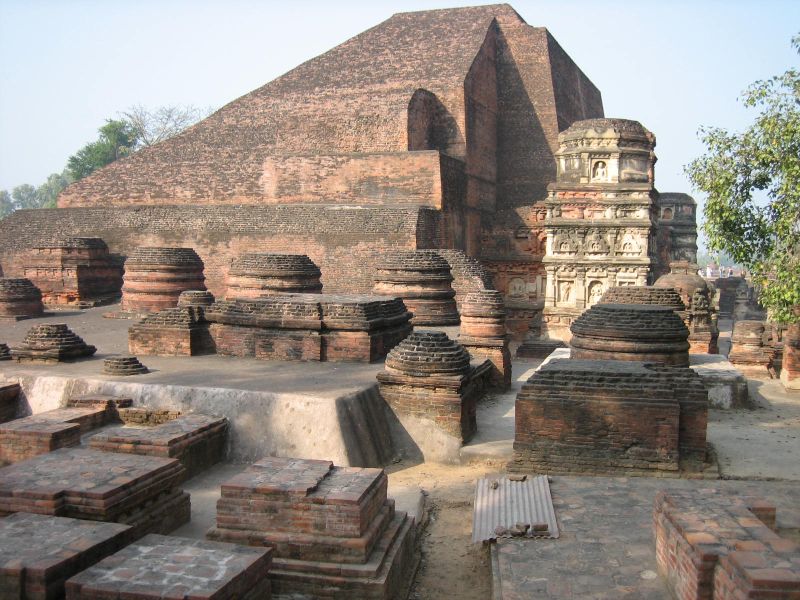 Jha becomes distinctly unpleasant when he starts throwing around allegations: “In his zeal, [Shourie] fudges and concocts historical evidence and ignores the fact that Bakhtiyar did not go to Nalanda from Bihar (Biharsharif). Instead, he proceeded to Nadia in Bengal through the hills and jungles of the region of Jharkhand, which, incidentally, finds first mention in an inscription of AD 1295 (Comprehensive History of India, vol. IV, pt. I, p.601). I may add that his whole book, Eminent Historians, from which the article under reference is excerpted, abounds in instances of his cavalier attitude to historical evidence.”
Notice the rhetorical sleight of hand: Shourie the non-historian has made only one mistake of historical fact, and yet Jha multiplies his invective as if it were a habit. By contrast, Jha the history professor has repeatedly been caught in distortions and manipulations in this debate alone, yet he reckons he can get away with those.
But then Jha admits the very thing which secularists, and partly he himself, had set out to deny: “It is neither possible nor necessary to deny that the Islamic invaders conquered parts of Bihar and Bengal and destroyed the famous universities in the region.” So, next time the Vishva Hindu Parishad starts a temple reclamation campaign, it can cite Jha in support.
Jha: “But any one associating Bakhtiyar Khalji with the destruction and burning of the university of Nalanda would be guilty of gross academic dishonesty. Certainly week-end historians like Shourie are always free to falsify historical data, but this has nothing to do with serious history, which is always true to evidence.”
History may be true to the evidence, but Jha with his hair-brained reliance on a much later foreign testimony isn’t. Circumstantial evidence certainly still points to Bakhtiyar Khilji as the culprit, since we don’t know of another commander at that time and in that area. Not every event on his campaign was recorded. As all genuine historians know: absence of evidence is not evidence of absence. But even his name makes little difference for the larger debate that motivated Jha to his distortions. Numerous holy warriors of Islam displayed the same behaviour as Bakhtiyar Khilji because they had the same motive: the doctrine of Islam with its hatred of Pagans and their institutions. In spite of so much denial and so many distortions, secularists cannot alter that historical fact. Islam had the motive and the chance. Hinduism had the chance for sixteen centuries to destroy the Buddhist institutions but showed no interest because it lacked the motive. Islam, by contrast, appeared on the scene and immediately Buddhism disappeared. Islam is guilty.
Book-banning
 Jha’s final word: “Shourie had raised a huge controversy by publishing his scandalous and slanderous Eminent Historians in 1998 during the NDA regime and now, after sixteen years, he has issued its second edition, from which the article under reference has been excerpted. He appears and reappears in the historian’s avatar when the BJP comes to power and does all he can to please his masters. His view of the past is no different from that of the Vishwa Hindu Parishad and the Rashtriya Swayamsevak Sangh and their numerous outfits, consisting of riff-raff and goons who burn books that do not endorse their views, who vandalize art objects which they label blasphemous, who present a distorted view of Indian history, and who nurture a culture of intolerance. These elements demanded my arrest when my book on beef-eating was published, and they censured James Laine when his book on Shivaji came out. It is not unlikely that Shourie functions in cahoots with people like Dina Nath Batra, who targeted A K Ramanujan’s essay emphasizing the diversity of the Ramayana tradition; Wendy Doniger’s writings, which provided an alternative view of Hinduism; Megha Kumar’s work on communalism and sexual violence in Ahmedabad since 1969; and Sekhar Bandopadhyaya’s textbook on modern India, which regrettably does not eulogise the RSS. Arun Shourie seems to have inaugurated a fresh round of battle by fudging, falsifying and fabricating historical evidence and providing grist to Batra’s mill.”
Jha seems to suggest that publishing these allegations (which he doesn’t refute) was only safe with the NDA in power. Apparently the UPA would have done the Eminent Historians’ bidding and arrested Shourie for slander. Then again, maybe as an intellectual Jha found it below his dignity to appeal to the authorities, and preferred the proper medium of a debate. In that case, we would like to see his refutation.
The rest of his final allegation is an exercise in guilt by association. This is beneath the standards of an intellectual but proper for a political polemicist. We have already pointed that the allegation of “fudging, falsifying” etc., repeated here, is unjustified and applies more to Jha himself. Then he associates Shourie with the VHP-RSS penchant for banning books. In reality, Shourie as a crusader for civil rights and probity in public life has always been on the side of free and frank debate. The RSS, by contrast, is a lot more like Jha himself: never addressing issues but grandstanding on extraneous factors: status and the perceived interests of secularism in Jha’s case, patriotic indignation in the case of the RSS. He supposes that is is “not unlikely that Shourie functions in cahoots with people like Dina Nath Batra”: this is worse than empty speculation, as it is easy to verify that Shourie was not involved in these recent book-banning operations. Indeed, Jha himself has been targeted, so he knows from experience that those who persecuted him comprised Batra but not Shourie.
To sum up: like any stage magician, Jha indulges in misdirection. While he himself has been caught in the act of misquoting his source (Yadava), and repeats this act of dishonesty in this very article, he tries to offset his embarrassment by a flight forward, viz. heaping imaginary allegations and plain swearwords upon his critic.
Hindu passivity
But he will largely get away with it, and secularists will go on quoting his speech at the Indian History Congress as an argument of authority for their truly daring thesis that “not Muslims but Hindus destroyed Nalanda University” and that this was but an instance of the long-standing hostility between Brahmins and Buddhists. Since the record is not being set straight from any powerful forum, it may even become part of the received wisdom.
 At the end of 1990, Sita Ram Goel and myself visited the VHP headquarters at RK Puram, Delhi. To some of their bigwigs (names available), I argued passionately that since they had been forced to make a historical case for their Ayodhya demand, and for other reasons too, they badly needed to invest in serious history-writing, rather than relying on either the output furnished by their enemies or the caricatures produced by incompetent Hindus of the PN Oak variety. Wise old Goel just smiled, knowing already what the effect of my enthusiastic plea would be. One VHP leader concluded the conversation by assuring me: “We will think about your suggestion”— the polite way of saying: “Drop dead.” As we left, Goel said: “You could just as well have talked to my wall.” The Sangh Parivar was determined not to invest in chicken but only in eggs; not to involve itself in building a Hindu worldview but to continue focusing on empty locomotion.
Today, 24 years later, no Hindu force has invested anything at all in rectifying India’s history. In about 2002, HRM Minister MM Joshi had the history textbooks rewritten, only to prove for all to see the incompetence of most people he picked for the job. (Notice, Prof. Jha, that Arun Shourie was not involved in this operation either.) The secularists had no problem in overruling this reform, and no Hindu force deigned to address the question: “What have we done wrong?” They only went on wailing about the daring injustice perpetrated by the secularists without ever wondering what they themselves could have done or could still do. Hindu moneybags who like to show off their commitment to Hinduism, finance large temple-building projects or sponsor their declared enemies, but never think of financing the research that Hindu society badly needs. And so, bad but highly-placed historians like DN Jha can go on rubbishing Hindu history.
(1901)


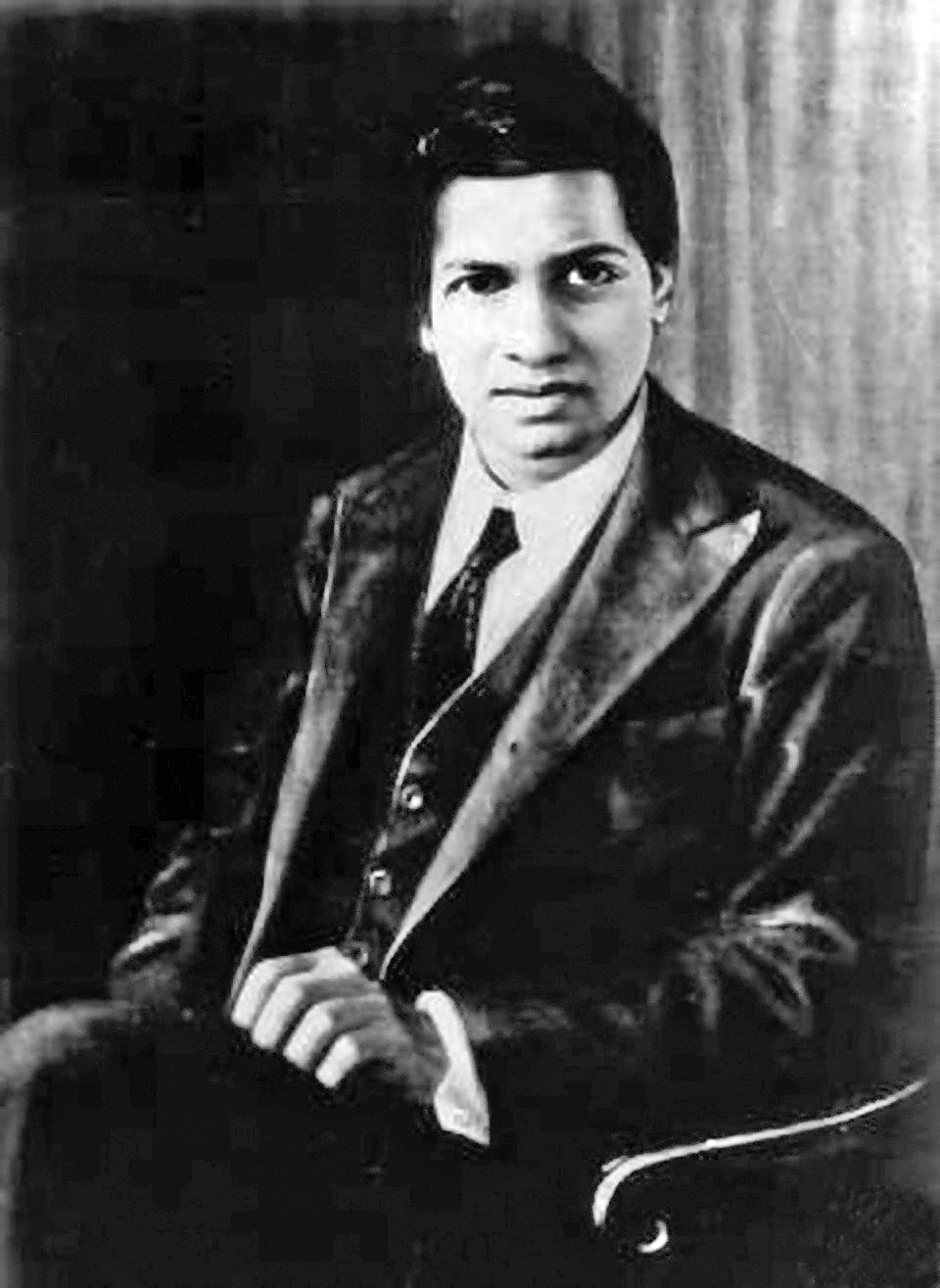
 Ramanujan could never explain to G H Hardy how he arrived at his deep insights in mathematical terms; but he did say many of his discoveries came to him in dreams, from the goddess Namakkal, and that he had a morning ritual of awakening and writing them down.