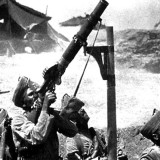
The Forgotten Heroes: Hindu soldiers in the First World War

The narration of First World War is that war was predominantly European and was fought exclusively by Europeans. This is quite a long way departure from the truth. Today, while few would remember that Indian Corps won 13,000 medals and 12 Victoria Crosses in the First World War, Hindus’ contribution in the war is altogether undermined.[1] The apathy towards an important footnote in contemporary history is mind boggling.

Hindus largely perceived as weak, not great soldiers, and yet they had been involved in fighting wars for other than themselves. Among the first foreign forces were Hindus to fight for British on Western front.[2]

While the plans for centenary commemorations of the First World War undergo this week, today’s generation know virtually nothing about the sacrifices of those who laid their lives in the war.

At the onset of the war itself it was abundantly clear to allies that additional troops from India were necessary to fight in North Africa, Europe and the Middle East.[3]

indian troops in first world war france

Indian soldiers in First World War.

It was the war India had supported British by all means – Political, military and economic. At a time when majority of Indians were suffering from abject poverty, they gifted 100 million pounds for war. The support was in expectation of British’s sensitive hearing towards plea for Indian independence, which post war British were in no hurry to fulfil.[4]

vintage photoIndian reinforcements who fought at Givenchy in December 1914 - first world war

Indian soldiers in First World War.

Indian army comprised men of diverse faiths. The role of Hindus in the First World War is by and large expunged from the history books.  Merely a cursory gaze at the figures reveals startling fact – In total 1,338, 620 Hindus participated in the war. This number exceeds the total number of army personnel from Australia, Canada, New Zealand and South Africa by 178,000[5].

Hindu soldiers were involved in the lands as diverse as Palestine, France, Syria and Mesopotamia. A school of thought says it was the Hindu army which changed the course of the war by turning German soldiers at Marne.Thousands of Hindu soldiers lost their lives and no hero’s welcome awaited the survivors, such was their fate.

indian-infantry-digging-trenches-prepared-against-gas-attack

indian-infantry-digging-trenches-prepared-against-gas-attack

The war graves in France and Belgium are grim reminder of largely anonymous Hindu soldiers. One of them was Mir Dast, Victoria Cross holder, British highest award of gallantry. He was the officer of 57th Rifles of the Indian Army, who came under vicious gas attack by Germans in April 1915. As he held his defence against the army, without a gas mask, he managed to save lives of eight officers.[6]

Lying in the hospital bed at Brighton, England, he wrote to his family that he was twice wounded, once in the hand and second from gas.

indian-infantry-digging-trenches

indian-infantry-digging-trenches

Traces of Hindu participation are fragmented by the fact that only a limited record of correspondence exist between Hindu soldiers and their families. The reason being most Hindu soldiers were illiterate. They would have one of the literate ones among them write the letter. The letter would then be read out to British officer as part of censorship procedure to restrict passing of militarily sensitive information to the enemy before being dispatched off to the recipient’s village.

These letters and diaries are the source of information on the anguish felt by the soldiers about the war. The soldiers talk about guns, poisonous gas, destruction, yearning of family. Hindu soldiers would often refer to great Hindu war epic Mahabharata and compare the war of good versus evil to the current one. One of the soldiers wrote that having witnessed the current war, end of the world seems near and all that was written in Mahabharata and Ramayana appears to be true to him.[7]

Extracts of these letters could be sourced from summaries prepared at the time of censoring of letters. The digital versions of the summaries are available at Europeana and British Library.

The war could also be remembered for the caste discrimination faced by Hindu soldiers. British insisted on maintaining the fault lines of caste system. Recruitment in the army was carried on the assumption that some races were martial races. Majority of army men were sourced from North and Northwest India.[8]

pav6large

Indian soldier in the Royal Pavilion, Brighton, England. 1914-18

The caste system was practiced by British even in the hospitals where Hindu soldiers were treated.  Royal Pavilion Hospital in Brighton, where the wounded soldiers were treated, ensured the hospital wards were segregated on caste lines. The so called ‘untouchables’ were employed as support staffs.[9]

According to Richard Smith, lecturer at Goldsmith College, University of London, and author of Jamaican Volunteers in the First World War, discrimination faced by the volunteers in the army worked as catalyst for them to join the movements for independence in their respective countries.[10]

Chatri (which means Umbrella in English), is the only memorial of significance to honour the contribution of Hindu and Sikh soldiers. The monument is on the Downs, near Patcham in Brighton.  It was unveiled by the Prince of Wales on 21st February 1921. [11] It is a cremation site for fifty three Hindus and Sikhs soldiers.

In 2010, their names were inscribed in stones on the site. It is truly disappointing is that it has taken over a century after their deaths that Commonwealth War Graves Commission to inscribe the names of the martyrs. [12]

download

The Chattri

Hindus sepoys were one of the highest numbers of volunteers as combatants and non-combatants. This is an aspect of history that cannot be disregarded anymore. Without them the freedom Europe enjoyed would not have been possible. It’s high time they are bestowed the honour they deserve for gallantly sacrificing their lives.

Courtesy

[1] http://www.historylearningsite.co.uk/india_and_world_war_one.htm

[2] http://www.independent.co.uk/news/uk/home-news/special-report-the-centenary-of-wwi–tommies-and-tariqs-fought-side-by-side-8669758.html

[3] http://www.black-history.org.uk/pavilionindian.asp

[4] http://timesofindia.indiatimes.com/india/World-War-I-the-India-story-retold/articleshow/30081903.cms

[5] http://www.hinduwisdom.info/European_Imperialism18.htm

[6] http://www.independent.co.uk/news/uk/home-news/special-report-the-centenary-of-wwi–tommies-and-tariqs-fought-side-by-side-8669758.html

[7] http://www.theguardian.com/books/2014/feb/21/found-translation-indias-first-world-war

[8] http://www.theguardian.com/books/2014/feb/21/found-translation-indias-first-world-war

[9] http://www.sikhmuseum.com/brighton/doctor/pavilion/caste.html

[10] http://www.independent.co.uk/news/uk/home-news/special-report-the-centenary-of-wwi–tommies-and-tariqs-fought-side-by-side-8669758.html

[11] http://www.chattri.org/

[12] http://www.historytoday.com/rosie-llewellyn-jones/memory-india%E2%80%99s-fallen

(2853)
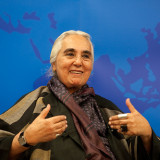
Romila Thapar mistakes Hindu impotent rage for a pro-Hindu power equation

According to retired history professor Romila Thapar, “academics must question more” (The Hindu, October 27, 2014). She was delivering the third Nikhil Chakravartty Memorial Lecture, eloquently titled: “To Question or not to Question: That is the Question”. The problem addressed by her was that “academics and experts shied away from questioning the powers of the day”. So, she “urge[d] intellectuals to resist assault on liberal thought”. In particular, she “asked a full house of Delhi’s intelligentsia on Sunday why changes in syllabi and objections to books were not being challenged”.

She was, hopefully, misinformed. (I shudder to think of the alternative explanation for this obvious untruth.) The recent changes in syllabi and objections to books by pro-Hindu activists, both phenomena being summed up in the single name of Dina Nath Batra, have met with plenty of vocal objections and petitions in protest, signed by leading scholars in India and abroad. I myself have signed two such petitions. At the European Indology conference in Zürich, July 2014, we were all given a petition to sign in support of Wendy Doniger’s book The Hindus: an Alternative History, which Batra’s judicial challenge had forced the publishers to withdraw. The general opinion among educated people, widely expressed, was to condemn all attempts at book-banning.

Selective indignation

To be sure, the intellectuals’ indignation was selective. There have indeed been cases where they have failed to come out in defence of besieged authors. No such storms of protest are raised when Muslims or Christians have books banned, or even when they assault the writers. Thus, several such assaults happened on the author and publisher of the Danish Mohammed cartoons, yet at its annual conference, the prestigious and agenda-setting American Academy of Religion hosted a panel where every single participant, including the speakers from the audience, supported the Muslim objections to the cartoons.

This trahison des clercs (“betrayal by the intellectuals”) is aptly explained by Thapar herself: “There are more academics in existence than ever before but most prefer not to confront authority even if it debars the path of free thinking. Is this because they wish to pursue knowledge undisturbed or because they are ready to discard knowledge, should authority require them to do so?”

The point is that the intellectual’s selective indignation shows very well where real authority lies. Threats of violence are, of course, highly respected. The day Hindus start assaulting writers they don’t like, you will see eminent historians like herself turning silent about Hindu censorship, or even taking up its defence — for that is what actually happens in the case of Islamic threats. Even more pervasive is the effect of threats to their careers. You will be in trouble if you utter any “Islamophobic” criticism of Islamic censorship, but you will earn praise if you challenge even proper judicial action against any anti-Hindu publications. This, then, safely predicts the differential behaviour of most intellectuals vis-à-vis free speech.

Box-type religions

A wholly different point is that she shows her partisan affiliation by adopting a secularized Christian framework when talking about Indian schools of thought. According to the newspaper report, “tracing the lineage of the modern public intellectual to Shramanic philosophers of ancient India, Prof. Thapar said the non-Brahminical thinkers of ancient India were branded as Nastikas or non-believers”.The division in Astika and Nastika already had different meanings at the time (not even exhausted by the two main ones: Vedic vs. non-Vedic, theistic vs. non-theistic), and did not coincide with the division in Brahmana vs. Shramana. Ancient Indian thought was never divided in box-type orthodoxies on the pattern of Christians vs. Muslims or Catholics vs. Protestants. It is only a Western projection, borrowed as somehow more prestigious by the Indian “secularists”, that imposes this categorization on the Indian landscape of ideas. Buddhist thinkers were never treated as dissenters, and even less so when Buddhism was politically in the ascendant.

She added an interesting image:

“I am reminded of the present day where if you don’t accept what Hindutva teaches, you’re all branded together as Marxists.”

The heavy-handed Marxist predominance in Indian academe is a historical fact of which she herself is a product as well as an icon, but now the notion is a bit dated. Today, many opportunists have shifted their loyalty to more fashionable new trends dictated by American universities, such as postmodernism, postcolonialism, multiculturalism, feminism and the more native contribution of subalternism. It is true that many Hindutva votaries are not up-to-date with the latest academic fashions, frozen as these outsiders are in old slogans. At any rate, the vibrant interaction of ancient India’s intellectual landscape, where free debate flourished, was nothing like the modern situation where her own school has locked out the Hindu voice and the latter has reactively demonized her.

Power equation

In her view, “public intellectuals, playing a discernible role, are needed for such explorations as also to articulate the traditions of rational thought in our intellectual heritage. This is currently being systematically eroded.” True, many intellectuals are not guided by what is true or “rational”, but only by what company they land up in if they get associated with a particular viewpoint. Numerous persons in academe and the media have loudly sung the anti-Hindu or “secular” tune when that was fashionable. Depending on how close their institutional position is to the new Narendra Modi government, you interestingly see many of them reposition themselves as somehow always having been pro-Hindu.

As she aptly said: “It is not that we are bereft of people who can think autonomously and ask relevant questions. But frequently where there should be voices, there is silence. Are we all being co-opted too easily by the comforts of conforming?”

But the power equation is such that the comforts of conforming still lead most to the anti-Hindu side. The opportunists changing sides are still a minority, the anti-Hindu discourse remains the dominant one. The best proof is that the ruling BJP, supposedly a Hindu party, is still acting out the worldview of the “secularists”. They are not actively challenging it or changing the intellectual power equation. It is perhaps fortunate for the Hindu side that the “secularists” have denounced it for so long as a Hindu party, for that is what makes the opportunists turn superficially pro-Hindu now.

So far, the ruling party is not repeating Murli Manohar Joshi’s attempt (ca. 2002) to rewrite the officially recommended history textbooks. That adventure ended in a demonstration of Hindu incompetence, a complete reversal once the “secularists” were back in power, and a strong reaffirmation of their intellectual predominance. Even though the BJP is back in power now, it still hesitates to challenge their conceptual framework.

Moral authority

According to the newspaper: “Prof. Thapar stressed that intellectuals were especially needed to speak out against the denial of civil rights and the events of genocide.” Yes, the genocide accompanying the birth of Pakistan and later of Bangladesh are two events that should not be forgotten, eventhough her own school has tried to whitewash, minimize or obscure them. The largest religious massacre of independent India’s history, that of the Sikhs by the Congress “secularists” in 1984, also comes in for closer scrutiny and for a demythologizing analysis about the true nature of Congress dynasticism.On a smaller scale, Hindus have also misbehaved, either out of smugness or out of desperation, and that too deserves study; except that it has already been made the object of publications so many times while the former subjects remain orphans.

The eminent historian is quoted as observing: “The combination of drawing upon wide professional respect, together with concern for society can sometimes establish the moral authority of a person and ensure public support.” Indeed, the impartisan nature of proper academic research would confer the moral authority to intervene, sparingly, in ongoing public debates. It is therefore a pity that so many scholars of her own school have squandered this moral authority by being so brazenly partisan.

No reaction?

Finally, she reiterated her main point, namely “the ease with which books are banned and pulped or demands made that they be burned and syllabi changed under religious and political pressure or the intervention of the state. Why do such actions provoke so little reaction from academics, professionals and others among us who are interested in the outcome of these actions? The obvious answer is the fear of the instigators — who are persons with the backing of political authority.”

Again, Prof. Thapar was misinformed. When Batra and other Hindus put publishers under pressure to withdraw Wendy Doniger’s book or AK Ramanujan’s Three Hundred Ramayanas, the publishers buckled under the fear of the Hindu public’s purchasing power. Apart from ideological factors, entrepreneurs also have to take into account the purely commercial aspect of a controversy. In this case, they took into account the only power that Hindus have: their numbers. But the Hindu instigators did not inspire “fear”, and definitely did not have “the backing of political authority”.

It is strange how fast people can forget. Modi has only very recently come to power. At the time of the Ramanujan and Doniger controversies, Congress was safely in power. If the publishers were in awe of any powers-that-be, it was of the Congress “secularists”.

More fundamentally, changes in government do not necessarily entail changes in the dominant intellectual framework. The accession to power (or rather, to office) of a nominally Hindu party does not mean that the ideological power equation has changed. In spite of the lip-service paid to Hindu self-respect by a few fashion-conscious opportunists, anti-Hindu “secularism” still rules the roost. Even now it furnishes the set of assumptions that most intellectuals, and even most ruling BJP politicians, go by.

(1502)