
Amidst the horrific stench and screaming of dying men a battered and torn saffron flag fluttered. Over the defeated and crushed armies of the Yamini dynasty a band of warriors rode, heedless of the multitude of corpses ranged around them in the blaze of the midsummer Indian sun.
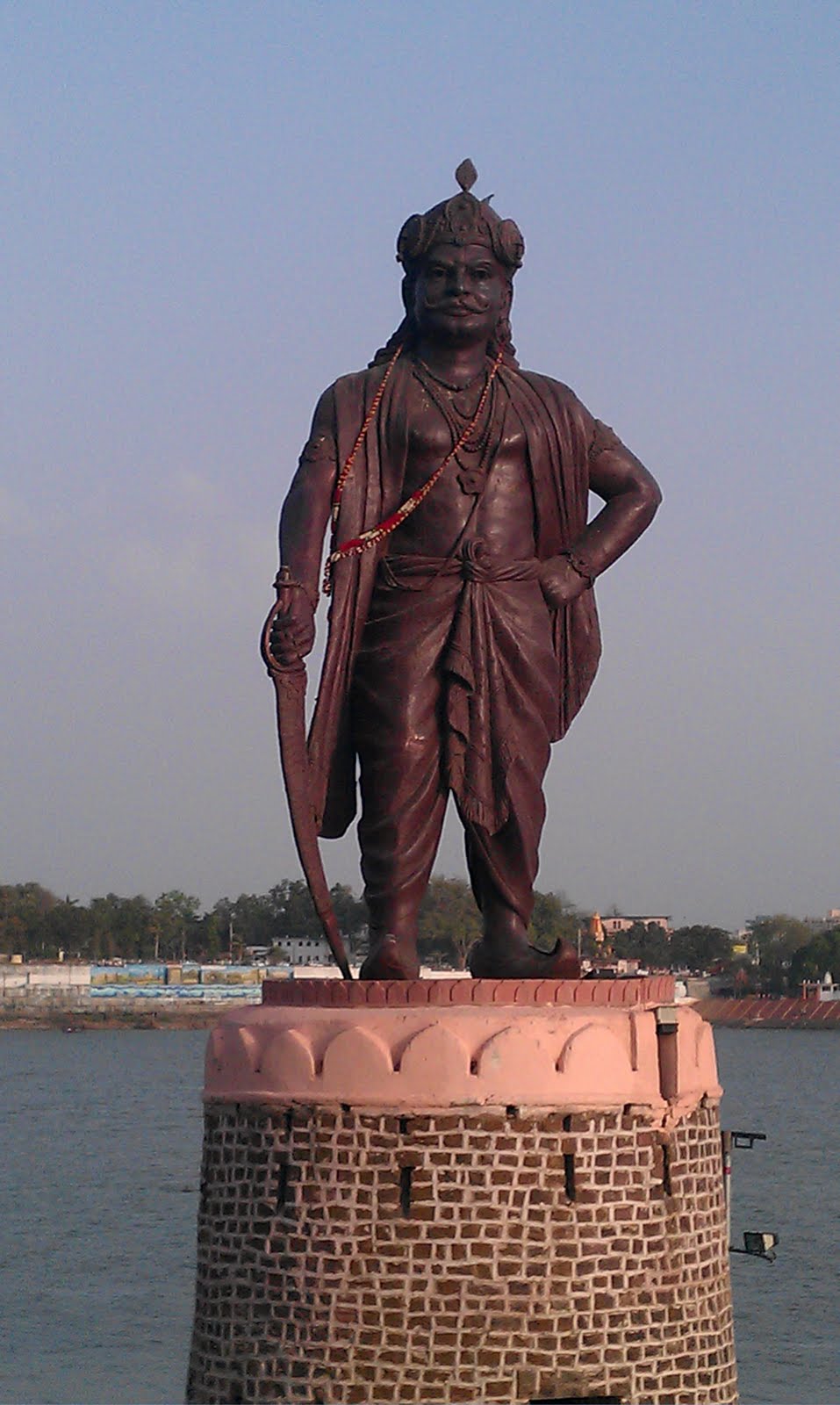 A defeat so calamitous had never been before thought of by the proud Yamini kings and their armies, also known as the Ghaznavids. Under their inspirational leadership of Mahmud of Ghazni the Central Asian Turk tribes had conquered from the borders of modern day Iraq to the doors of South Asia. There meeting determined opposition from the Hindu Shahi kings who sacrificed three generations of their kings to defend the entry to India the Ghaznavids broke through utilising their unmatched cavalry tactics which had defeated the Persians and Byzantines and were shortly to face down the Crusaders of Western Europe
The damage to the subcontinent was significant and the destruction of the ancient Hindu and Buddhist heritage of India was incalculable. The loss of population was significant due to war and pestilence and displacement of peoples.
The impact on the Indian psyche was enormous – the ancient seats of learning from Taxila to Nalanda were torn down – the seats of Buddhist learning once stretching into Central Asia in a vast circuit of Buddhist kingdoms collapsed like a house of cards. The once mighty Sassanid Empire of Persia who had defeated and humbled the Roman Empire and dragged the Emperor Valerian in chains to Ctesiphon , the custodians of Zoroastrianism were humbled and disappeared from the pages of history under the Arab Muslim onslaught. Their remnants fled to India for protection and others to the Chinese empire.
The waves of monotheism attack however did not subside. The organised and disciplined custodians of Buddha and Zoroaster were wiped from the pages of history in Persia, Central Asia and Afghanistan. It was at this juncture that the valiant Hindu Rajput clans united under the leadership of Bappa Rawal and the guidance of Guru Gorakhnath and in a vast clash of arms with the armies of the Arab Caliphate delivered to them their first great defeat at the Battle of Rajasthan in 745 CE and stopped forever the further Arab expansion into South Asia.
For 300 years this tenuous peace remained until the conversion of the Turk tribes to Islam in the last period of the first millennia Common Era which led to the infamous invasions of the subcontinent by Mahmud Ghazni. He was succeeded by his nephew Masud Salur who seeking to emulate Mahmud led a vast invasion of the Ghaznived forces into the subcontinent. Despite the success of his invasions Mahmud could not create an empire in India and Masud now sought to rectify this by leading the Ghaznavid veteran army into the north Indian plains. The proud soldiers who had marched from India to the Middle East under the banner of Islam entered India with an army of more than 100,000 men with 50,000 horses accompanied by two generals Meer Hussain Arab and Ameer Vazid Jafar in May 1031 AD
The march was joined by his uncle Salar Saifuddin, Meer Wakhtiar, Meer Sayyad Ajijuddin and Malik Bahruddin and their armies. After raiding through what is modern UP leaving a trail of plunder and rapine in their wake.
The invasion was stiffly opposed. His general, Syad Aziz-ud-din was killed by Hindus near Hardoi together with his relatives Jalaluddin Bukhari and Syed Ibrahim Bara Hazari whose graves can be found in Haryana today.
The famous Raja Bhoja who had faced down Mahmud Ghazni decades earlier and rebuilt the historic Somnath Temple after its desecration by the Muslims collected a coalition of Hindu warriors. Warriors from the disparate clans gathered under Raja Bhoja and on open plain near modern day Bharaich the coalition of Hindu clans faced up against their Islamic adversaries each side confident of victory.
The young Sultan Masur’s fame was already spread across the Ghaznivid Empire as an able soldier and general. In his ranks he boasted the famous light cavalry of the Central Asian Turkic tribes who were inspired with the zeal of their newly founded Muslim faith and eager to win victory and to finally establish their rule over Hindu dominated India or attain martyrdom and paradise as per the tenents of their faith.
The Hindu coalition was led by the Rajput Clans who emerged from the furnace of the decline of the Gupta Empire and the defeat of the Hun invasions which had devastated Europe to the early sixth century. From this crucible of endless conflict and religious turmoil rose the clans of the Rajput’s. Many traced their origin to the legendary Saint Gorakhnath and under his influence were able to repel and humiliate the Arab Caliphate in 745 AD. Their codes of conduct and bravery ushered in a new age of chivalry and honour of which the world has scarce seen.
Theses codes however were unable to cope with a new ruthless foe, Turmoil again engulfed the clans with the invasions of Mahmud of Ghazni and the northern plains were lacerated with violence and bloodshed. The terminal decline of Buddhism and Zoarasterism are also dated from this time. The swift footed cavalry and speed of movement was alien to the proud Rajput Hindu warriors and their concept of honour and valour. However it was only through their reckless bravery and raw courage that the Hindu warriors were able to hold the enemy at bay.
On this occasion under the skilful leadership of Raja Bhoja the Hindu army by swift movements were able to cut of the supplies of the Ghaznavids and pen them into a closely contested siege. Very soon the vast multitude of Muslim soldiers were running short on supplies and reinforcements. The close investment led Sultan Masur that he was left with only one choice – to force a decision on the battlefield.
Therefore on the blazing midsummer Indian plains that vast horde of the Ghaznavi army marched out to meet its Hindu enemy. the battalions of Turks, many of them veterans from the campaigns of Mahmud Ghanavi and brimming with the firmly held conviction that they marched in jihad against the enemies of their faith faced off against the aged Raja and his Rajput’s.
A desperate struggle ensued. The sweeping charges of the Turks were brought to bay by the Hindus. Trained from birth to excel in arms the Rajput warriors eagerly closed with their hated foe – before the gates of ancient Ayodhya they fought for ‘the ashes of their fathers and the temples of their Gods’ . The battle contended through the morning into the afternoon, charge after counter charge with brief moments of retreat and consolidation with neither side wiling to break. The battle cries of Allah how Akbar contended with the ancient cry of Har Har Mahadev as the soldiers closed in and grappled with their weapons and bare hands as thousands of their colleagues fell dead or dying amongst them.
The fighting continued unabated into the night with temperoay paused and the cool night air was rent with the shrieks of the dead and dying. The ground piled high in gore became slippery and unstable and the close fighting in the dark lent to the horror of enemies pouring out of the unknown at any time.
The high spirits of the Turk soldiers motivated by dreams of jihad and paradise were matched against the raw courage and matchless skill of the individual Hindu warriors with their flowing hair kept under check under steel caps and helmets fought whilst adopting the dread form of the God of Destruction, Shiva himself. Their utter contempt for their own lives and desire for freedom and dharma in the ancient land of the Rishis steadily began to wear down their enemies.
As the day wore on and the Muslims becoming increasingly enclosed in an ever tightening circle of steel the Sultan led a final desperate charge for victory. Here on the open plain he was brought to bay by the Rajput warriors and slain – the enraged Hindus cut of his head and displayed it on a pike to their enemies. This was the final straw for the Muslim army and it broke and fled. But there was nowhere to flee – hundreds of miles from their bases and surrounded by hostile foes the rout turned into a massacre and history tells us that not a single Muslim soldier returned to his home.
Raja Bhoja passed into legend. The terrible, slaughter of the Ghaznavids kept further attacks at bay and the Ghazanvaids never dared to attack India again.
POSTCRIPT:
Further attacks and counter attacks from Muslim kingdoms were defeated with great slaughter eventually passing into legend and merging with the later tragic tale of Prithviraj Chauhan. The defeat of Mohamad Ghouri in the first Battle of Tarain in which with great chivalry he released the captive Sultan was followed the next year by the second Battle of Tarain in which Prthivraj was defeated has entered into folklore. The tale has been magnified to indicate that Prithviraj defeated the Sultan no less than 17 times which is clearly a falsehood. In historical terms this is a garbled reference to the numerous attacks by the Arabs and Turk Muslims on India which were defeated by a succession of Hindu warrior kings from Bappa Rawal in the Battle of Rajasthan, to the wars from the Ghaznavi period onwards:
In 1072 CE Prince Mahmud was defeated and driven away by Lakshmadeva, the Paramara ruler of Ujjain. Mahmud also tried to take Kalanjar. But the Chandellas again proved more than a match for the army of Islam. Muslim historians record only his safe return from Hindustan.
Ibrahim’s successor, Masud III (AD 1099-1115), fared no better. The armies of Islam were defeated repeatedly by Govindachandra, the Gahadavad ruler of Kanauj. Inscriptions of Hindu princes around this period speak again and again of the rout of Turushka armies. These may refer either to the failure of feeble attempts which might have still been made by the Yamini (Ghaznavid) kings to extend their dominions in India or to the extermination of isolated pockets of Muslim domination beyond the Punjab.
One of the worst defeats suffered by the Muslims was at the hands of Arnoraja, the Chauhan ruler of Ajmer (AD 1133-1151). The Muslim commander fled before the Chauhans. Muslim soldiers died of exhaustion and an equal number perished from thirst. Their bodies lay along the path of retreat and were burnt by the villagers. A Chauhan prasasti of Ajmer Museum, line 15, states: The land of Ajmer, soaked with the blood of the Turushkas, looked as if it had dressed itself in a dress of deep red colour to celebrate the victory of her lord’
[box_dark]In an added irony of history the defeated Sultan Masurs body was flung into a pit by the enraged Hindus with the corpses of his soldiers and generals. Hundreds of years later the murderous Sultan Firuz Tughlaq raised a monument to the first ‘martyr of Islam’ in India.
In later times the monument became a shrine under the tutelage of Sufi preachers and in modern times incredulous and unwitting Hindus pay their respects to the shrine of a deceased ‘baba’ not knowing the history and background of the monument. That Sultan Masur came to India to murder and butcher the population or convert them to Islam was lost on the later generations of accommodating Hindu population.
[/box_dark]
The long and bloody history and struggle for survival of Hinduism has led to a growing awareness and confidence in our history and the facts of the great victories of Raja Bhoja are another reminder of the countless sacrifices made in the long and steady awakening and flowering of Hinduism under the challenge of relentless hatred and genocidal attack.
(14594)
