Continue reading “The Vedas and the Birth of Science”
(10353)
Imagine that archaeologists, digging a thousand year old virgin site in Antarctica, come across an inscription deep underground that shows the sun, and next to it the numbers 186,000 miles per second, the speed of light. What would the world do? More likely than not, this find will not be accepted by scholars. A fraud, they would say, committed for cheap fame. The reputation of the archaeologists will be ruined. If they didn’t hold tenure, they will lose their jobs.
Only lunatics will support them, claiming that this proves that aliens have visited the earth from time to time. The high priests of the academy will say that even if the find was genuine it proves nothing;
at best it is a coincidence.
But what an astonishing coincidence! Just the right number out of an infinite different numbers!
The speed of light was first determined in 1675 by Roemer who looked at the difference in the times that light from Io, one of the moons of Jupiter, takes to reach earth based on whether it is on the near side of Jupiter or the far side. Until then light was taken to travel with infinite velocity. Even Newton assumed so.
But why are we talking about the absurd scenario of the archaeologists in Antarctica? Because, we are confronted with a situation that is quite similar! I am an archaeologist of texts. I read old texts from the point of view of history of science. One such book is the celebrated commentary on the Rigveda by Sayana (c. 1315-1387), a minister in the court of King Bukka I of the Vijayanagar Empire in South India.
In a hymn addressed to the sun, he says that it is ``remembered that the sun traverses 2,202 yojanas in half a nimesha.”
This statement could either relate to the speed of the sun or to that of light. The units are well known. For example, the Indian epic “Mahabharata”, conservatively dated to 400 BC – 400 AD, defines 1 nimesha to be equal to 16/75.3 seconds; 1 yojana is about 9 miles.
 Substituting in Sayana’s statement we get 186,536 miles per second. Unbelievable, you’d say! It cannot be the speed of light. Maybe it refers to the speed of the sun in its supposed orbit around the earth. But that places the orbit of the sun at a distance of over 2,550 million miles. The correct value is only 93 million miles and until the time of Roemer the distance to the sun used to be taken to be less than 4 million miles. This interpretation takes us nowhere.
What about the possibility of fraud? Sayana’s statement was printed in 1890 in the famous edition of Rigveda edited by Max Muller, the German Sanskritist. He claimed to have used several three or four hundred year old manuscripts of Sayana’s commentary, written much before the time of Roemer. Is it possible that Muller was duped by an Indian correspondent who slipped in the line about the speed? Unlikely, because Sayana’s commentary is so well known that an interpolation would have been long discovered. And soon after Muller’s “Rigveda” was published, someone would have claimed that it contained this particular “secret” knowledge. The fact that the speed in the text corresponds to the speed of light was pointed out only recently by S.S. De and P.V. Vartak. Also a copy of Sayana’s manuscript, dated 1395 AD, is available.
 Further support for the genuineness of the figure in the ancient book comes from another old book, the Vayu Purana. This is one of the earliest Puranas, considered to be at least 1,500 years old. (The same reference is to be found in the other Puranas as well.)
In Chapter 50 of this book, there is the statement that the sun moves 3.15 million yojanas in 48 minutes. This corresponds to about 10,000 miles per second if considered as speed of light, and 135 million miles for the distance to the sun, if considered as the speed of the sun. Sayana’s speed of light is exactly 18 times greater than this speed of the sun! Mere numerology? For the rationalists these numbers are a coincidence. Given the significance of these numbers, they’d look very carefully at the old manuscripts of Sayana’s commentary.
There are others who would say that consciousness, acting on itself can find universal knowledge. Look, they’d say, by examining biological cycles one can know the periods of the sun and the moon. So why shouldn’t it be possible to know other universal truths? They’d add that ancient texts speak — and this is true — of embryo transplants, multiple births from the same fetus, air and space travel, slowing or speeding of time, weapons that can destroy the entire world.
They’d say that it is more than ancient science fiction, it shows that the human imagination can envision all that can happen. This brings us back to the question of whether the figure of 186,000 miles per second in Sayana’s book is a astonishing coincidence, an example of the powers of intuition, or a meaningless number.
Notes:
1. The Rigvedic hymn number is 1.50.
2. For a discussion of the technical issues download the file speedlight.ps from the ftp directory on my homepage or see http://www.ee.lsu.edu/kak/ and then check the file speedlight.ps
You can also read this paper called “The speed of light and Puranic cosmology” on the Los Alamos Physics Archive hysics/9804020.
(8612)
The events of September 11 remind us how words can convert ordinary people into mass murderers. But there are good words and bad words. Here we speak of three people whose words have done a lot of good for more than two thousand years. One could even say that these three people transformed the world.
Although most ancient narrative is as myth, a code language intermixing history, psychology, astronomy and metaphysics, three ancient sages wrote about language with great directness. Euclid (c 300 BC) in his Elements describes the language of mathematical ideas, Panini (c 450 BC) in his Ashtadhyayi describes the language of universal grammar, and Bharata Muni (c 450 BC) writes about the languages of gesture, dance and music in his Natya Shastra. Of these three we are reasonably certain of the dates of Panini and Euclid but much less of Bharata.
Euclid, educated in Plato’s academy, did his work in Alexandria. He presented Greek mathematics and geometry in terms of axioms and theorems. His approach was so elegant that his book remained the textbook of elementary geometry and logic up to the early twentieth century. Its formal method became the standard to be emulated for every new discipline. The idea of a short constitution to which all pay allegiance may ultimately be traced to Euclid’s framework.
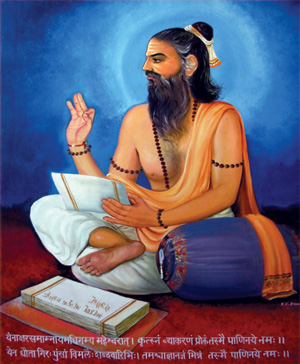 Panini described the grammar of Sanskrit algebraically in complete detail, an achievement that has not been matched for any other language until today. Panini’s grammar is as intricate in its structure as the most powerful computing machine. The scope of his achievement qualifies Panini as one of the greatest geniuses who ever lived. Not only did he influence attitudes in the East for centuries, his ideas led to the development of the subject of philology in the West.
Sadly, good ideas can be used for evil deeds. Philology became the underpinning of a racist attitude to history that was used to justify European colonialism, leading ultimately to Nazism. This racist attitude persists today in many departments of Sanskrit and Indian studies. It was embraced by the left in India, where it remains an ugly underside of the political discourse. Arcane philological controversies can garner headlines in the left’s political magazines in India.
Bharata Muni’s Natya Shastra not only presents the language of creative expression, it is the world’s first book on stagecraft. It is so comprehensive that it lists 108 different postures that can be combined to give the various movements of dance. Bharata’s ideas are the key to an understanding of Indian arts, music and sculpture. They provide an insight into how different Indian arts are expressions of a celebratory attitude to the universe.
 Five of the thirty-six chapters of the Natya Shastra are devoted to music. Bharata speaks of the 22 shrutis of the octave, the seven notes and the number of shrutis in each of them. He explains how the vina is to be tuned. He also describes the dhruvapada songs that were part of musical performances.
The concept of rasa, enduring sentiment, lies behind the aesthetics of the Natya Shastra. There are eight rasas: heroism, fury, wonder, love, mirth, compassion, disgust and terror. Bharata lists another 33 less permanent sentiments. The artist, through movement, voice, music or any other creative act, attempts to evoke them in the listener and the spectator. This evocation helps to plumb the depths of the soul, thereby facilitating self-knowledge.
Euclid and Panini are well known to scholars and the general public. Euclid’s formal system became the exemplar for European science. Panini’s algorithmic approach to knowledge was the model for scientific theories in the Indic world, extending from India to the east and Southeast Asia. The ideas of the Natya Shastra make intelligible the sculpture, temple architecture, performance, dance and story telling of the culture of east and Southeast Asia.
 But Bharata’s great text lay forgotten in India for almost a thousand years, his ideas remembered mainly through secondary sources. This is surprising considering this work has a sweep broader than that of Euclid or Panini. It is easy to understand success in devising a method of geometrical reasoning or finding the algebra of grammar as they are inherently structured. But imagine the audacity of creating a language for gesture, dance and music! Also, Euclid and Panini wrote for the scholar, whereas Bharata’s work influenced millions directly or indirectly. For these reasons alone, the Natya Shastra is one of the most important books ever written.
To appreciate the pervasive influence of the Natya Shastra, just consider music. Bharata’s work helps us see that ancient Greek music was similar to Indian music. The comprehensiveness of the Natya Shastra forged a tradition of tremendous pride and resilience that survived the westward movement of Indian musical imagination through the agency of itinerant musicians. Several thousand Indian musicians were invited by the fifth century Persian king Behram Gaur. Turkish armies used Indians as professional musicians.
The large Roma exodus from north India as a consequence of the Ghaznavid invasions gives us a clearer link between Indian music and the West. The Roma in Europe, living as tinkers, craftsmen, horse traders and entertainers — a despised minority in the fringes of society — were able to maintain cultural continuity, especially in music.
 Their devotion to their ways earned them grudging respect for exemplifying ‘freedom’ which by the late 18th century had caught the imagination of Europe fighting the suffocation of the Church. Slowly, the Roma (Gypsy) singers began to enjoy the patronage of the middle-class and the aristocracy.
According to Linda Burman-Hall: “Gypsy bands… travelled from village to village accompanying the ‘strong’ dancing of soldiers who recruited continuously for Nicolas the Magnificent’s military operations. The style of this verbunkos (the so-called ‘recruiting’ music), — a deliberate fusion of earlier Gypsy music (such as the 16th century works preserved in organ tablature) and elements of the western European tradition, — influenced Haydn and other classical composers because it was favored by public taste. As a national fashion this style remained popular through the 19th century with composers such as Beethoven, Hummel, Schubert, Brahms, von Weber, Doppler and especially Liszt writing in a ‘style Hongrois’ influenced by the jagged rhythms and fantastic cadences of the verbunkos style.”
 Bharata stresses the transformative power of creative art. He says, “It teaches duty to those who have no sense of duty, love to those who are eager for its fulfillment, and it chastises those who are ill-bred or unruly, promotes self-restraint in those who are disciplined, gives courage to cowards, energy to heroic persons, enlightens men of poor intellect and gives wisdom to the learned.”
Our life is spent learning one language or another. Words in themselves are not enough, we must learn the languages of relationships, ideas, music, games, business, power, and nature. There are some languages that one wishes did not exist, like that of evil. But evil, resulting from ignorance that makes one act like an animal, is a part of nature and it is best to recognize it so that one knows how to confront it. Creative art show us a way to transcend evil because of its ability to transform. This is why religious fanatics hate art.
Modern inquiry began as a search for the language of inanimate nature. Science slowly expanded into living systems and now with investigations into behavior and cognition it has come close to the ancient meaning of the term. The languages of cognition and music may be seen as the pinnacle of this journey of science. Bharata Muni’s text is a most useful guide to the weary traveler on this path.
by Professor Subhash Kak
Resources: To understand the milieu in which Panini and Bharata Muni arose, read G. Feuerstein, S. Kak, D. Frawley, In Search of the Cradle of Civilization: New Light on Ancient India. (Quest Books, 2001)
The best translation of the Natya Shastra is by Manomohan Ghosh (Manisha Granthalaya, Calcutta, 1967). Unfortunately, it is out of print. I am hoping this column will inspire some reader to arrange for its reprint.
Subhash Kak is an Indian American computer scientist. He is Regents Professor and Head of Computer Science Department at Oklahoma State University in Stillwater who has made contributions to cryptography, neural networks, and quantum information
(4930)
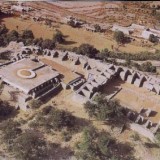
At least 2,800 years ago, circa 800BCE, there existed a giant University at Takshashila (often called Taxila), a town located in the north-western region of India (in today’s Pakistan). According to references in the Ramayana, King Bharata founded the town in the name of his son, Taksha.
The site initially began to develop as a loosely connected group of buildings where learned persons resided, worked and taught. Over the years, additional buildings were added; rulers made donations and more scholars migrated there. Gradually a large campus developed, which became a celebrated seat of learning in the ancient world.
When Alexander’s armies came to the Punjab in the fourth century B.C., Takshashila had already developed a reputation as an important seat of learning. Thus on his return Alexander took many scholars from there with him to Greece.
Being near the north-west frontier of India, Takshashila had to face the brunt of attacks and invasions from the north and the west. Thus the Persians, Greeks, Parthians, Shakas and Kushanas laid their destructive marks on this institution. The final blow, however, came from the Huns (also the destroyers of the Roman Empire) who, A.D. c.450, razed the institution. When the Chinese traveller Huen T’sang (A.D. 603-64) visited Takshashila, the town had lost all its former grandeur and international character.
(31959)
In our modernist parlance science and religion are held to be polar opposites. Scientific is equated with being rational, logical and in tune with reason. Religion however is seen as backward, laughable and regressive, as well as totally obscurantist. Yet how does this equate with the fact that many of the scientific strides came from India, a land and civilisation which has endured from ancient times and retains its core spirituality?
The ancient Indus Valley Civilisation dates back 5000 years. Yet the earliest excavations revealed that it must have been developed by a highly complex and intelligent society. Urban centres were planned on a chequerboard pattern with sophisticated drainage and sanitation. The same scientific knowledge was responsible for the reservoir and drainage systems which fed the agricultural base.
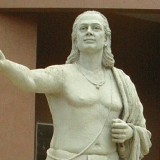
Further centuries saw incredible developments in the forging of bronze and iron weapons. Treatment of diseases such as leprosy, cataracts and smallpox. Trigonometric functions were used by the mathematician Aryabhata in the fifth century. The calculus theorem now known as “Rolle’s theorem” was stated by mathematician Bhāskara II, in the twelfth century. It is that to which we now turn.
The Vedic texts treated numbers as sacred and developed highly complex mathematics, especially in geometric constructions. Despite being known today as ‘Arabic’ the decimal number system originated from India. This is one of the most important gifts Hindu civilisation gave to the world. Modern calculations would be unthinkable without this. Key to this is the use of zero, which represents the empty set, nothing, no value.
To us it seems normal but it was an incredible feat of the ancient Hindu mind to realise that ‘nothing’ could be represented. Is it so logical? After all nothing is ‘nothing’? So why represent it? We cannot possible understand this unless we understand the mind which gave rise to the possibility that even ‘nothing’ could be understood in symbolic terms. And to do this that mind had to think both abstractly and delve into deep spiritual consciousness. This means we must revaluate our prognosis that science and spirituality stand at polar opposites of the spectrum in human understanding.
What led to ‘nothing’ be represented by the now familiar circular symbol which we call ‘zero’? Only a human mind which could understand the idea of ‘nothingness’. In this state of eternal bliss free from materialistic ties. This can only be achieved by moksha which is escape from the cycle of rebirth which one is fated to endure. If the mind is obsessed by hedonism and materialism it is destined to be tied to the wheel of reincarnation. But to achieve moksha is to be liberated from this.
It is the understanding of moksha which led the ancient Indian mind to understand that the empty set had a value, a very important value, the most profound value. Hence in ancient India the spiritual and scientific worlds were united and never separate. That is why Hindu civilisation has endured while others have perished. That is also why what we deem as western scientific development has at its core the essence of Indian spirituality.
Let us end this by looking at the most obvious example. Computing could not have developed without binary. And binary could not have developed without zero. Here ‘nothing’ as a value is essential. It is in fact so essential that without ‘nothing’ there would have been no computing. Technologically we would have all remained in the dark ages. So we can thank the ancient Hindu mind for showing us the light.
(5949)