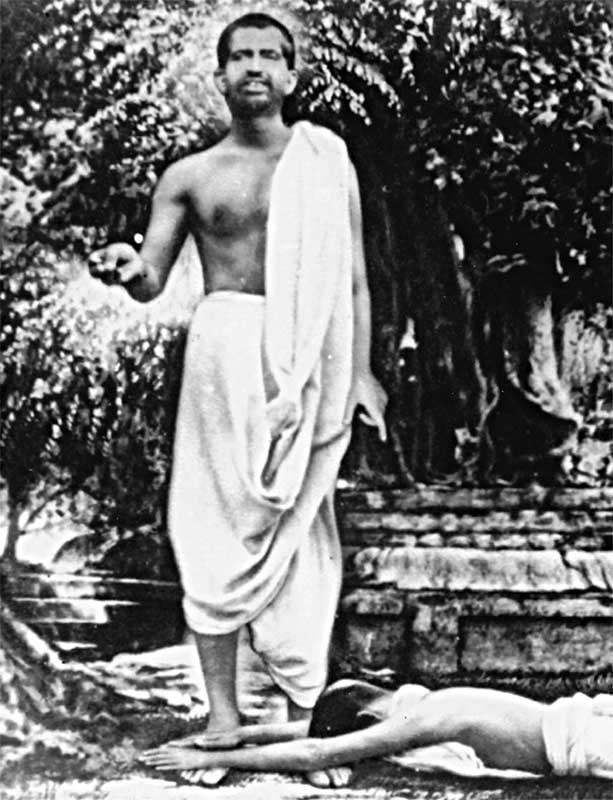
 Ramakrishna was born as Gadadhar into the Vaishnava-leaning pious brahmin family of Khudiram Chattopadhyay in 1836 in the village of Kamarpukur, now in West Bengal, India. This was the period when India was on the threshold of complete domination by the colonial superpower Britain, as described by Swami Nikhilananda in his foreword to the Gospel of Sri Ramakrishna: the old Maratha order was wilting, the East India company had decisively won the Anglo-Maratha wars, winning rule over the vast subcontinent.
Meanwhile they were setting up the capital of Imperial India in neighbouring Calcutta, in the heart of the rich province of Bengal, setting about Macaulay’s vision of producing Indians who were Indian only in colour but European by training and taste.
Graduating from the new Presidency College and other institutions of colonial power such as the various missionary run schools, young men and women had begun to abandon their traditions en-masse. Beef parties and drunken ribaldry mocking Hindu traditions were common on the streets of Calcutta. Economically, Indian industry and artisanship was being wiped out by British policies to export raw materials from India to feed Britian’s fledgling manufacturing. It seemed that the Hindu civilization that had endured over 5000 years, managing to reverse the severe onslaught by the Arabs, Turko-Mongols and Persinas would finally be over-run by the might of the colonial steam-press.
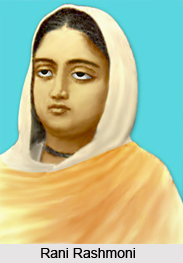 But the story of Dharma, as so often, is concealed more in the footnotes, by-lanes and the distant forests of time, rather than in the external happenings. On the outskirts of the giant metropolis of Calcutta, Rani Rashmoni, the wealthy widow of the Zamindar of Janbazar, had built a majestic temple complex dedicated to the Divine Mother in the form of Dakshina Kali, after receiving a vision.
So devoted was she, that Mother had promised to be ‘awakened’ in her temple. Henceforth the Rani transferred all her wealth in a trust in Mother Kali’s name and conducted the affairs of her business and estates as the Trustee. Located on the banks of the Hooghly river and on the path to the pilgrim site of Gangasagar, the vast complex also had shrines to Lord Shiva and Krishna, besides housing facilities to host wandering sadhus, jogis, bairagis and fakirs. In this remote temple and its jungle-like surroundings which included an old cemetery, were scripted the life and deeds of the sage which went on to storm the very foundations of the Raj.

Ramakrishna, who lost his father soon after birth, grew up to be an affectionate and sensitive child loved by all, and became the support of his mother. He was fascinated by the stories of the Gods and Goddesses of Hinduism.
When was just six, he had the experience of ecstatic self-absorption or ‘Samadhi’, while walking in the paddy fields, enchanted by the beauty of the natural setting for which the fertile Ganga valley of Bengal is still famous. A few years later he attained such a deep state of Samadhi while playing the role of Shiva during the winter-time ‘jatra’ village play, that his mother got frightened and henceforth forbade him from such activities.
He was a precocious child and mastered the teachings at the village school or ‘tol’ rapidly, and engaged in play with children of all the castes at the local mango orchard where he would often conduct plays. In his clear-sightedness and steadfastness to truth, he would even stand up to established social convention, as in the case when he dressed up as a woman, to question the patriarchy of his family’s patron and the village head, Dharmadas Laha – when the latter discovered him in the Zenana later, he understood that restricting women was not the way to maintain ‘family honour’.
During his Upanayana or the Hindu ceremony conferring the scared thread and commencing studies, he stuck to his word and took the first ‘bhiksha’ (collection of food since students were expected to live the humble lives of mendicants) from Dhani, the blacksmith woman who had been mid-wife at his birth and also took care of him through childhood. By his teen years, Ramakrishna gained widespread respect and even reverence from the village folk at Kamarpukur.
 Ramakrishna was thus already a mystic who was widely revered by the time he was invited to officiate as a priest in the Rani’s Kali temple, following his elder brother Ramkumar who advised the Rani on matters of worship.
In this enchanting place, Ramakrishna conducted what is the most well recorded campaign of spiritual practices that embraced the vast diversity of approaches available in the Hindu fold. In a moving episode, he first has direct vision of Ma Kali as the highest spirit and moving force behind the entire universe, as he is about to kill himself with the sickle attached to the image he worships in the shrine every day, unable to bear not seeing her for real.
Following this first and direct experience unguided by anyone, he trains under several Gurus, the chief of whom was the illustrious Bhairavi, a female tantra master who was divinely led to the Kali temple. Under the Bhairavi, Ramakrishna practiced the hoary techniques described in the 64 Shakta tantras, attaining perfection in each of them while uniquely remaining in the ‘Divya’ attitude that respects the mother aspect of the Divine. Under the guidance of Vaishnava babas, he practiced sadhanas of Sita, Hanuman and Gopala (baby Krishna). An episode of his vision of the baby Rama under the guidance of a baba of the Ramayat sect is utterly heart-melting.

All this culminates in his attainment of the most difficult goal of nirvikalpa samadhi, the highest and stated goal of Advaita Vedanta where the mind is merged in absolute Brahman and the body remains in suspended animation, under the guidance of the war-like naked itinerant monk Totapuri who was perhaps from the Punjab. Ramakrishna took a mere three days to attain this height which Totapuri himself had taken over forty years to reach, and in an act of heroic mystery, he remained in this state for several months at a go.
As with others, Ramakrishna also teaches Totapuri of the necessity to acknowledge Shakti, while similarly teaching the Ramayat Baba of detachment even to spiritual ideals, and disavowing the ego of a teacher to the Bhairavi. At this time, he also welcomed his wife Sarada lovingly to his dwelling in the temple complex, invoking the Deity in her in a stirring performance of the arduous Shodasi puja described in the tantras. Sarada devi later said that the years she spent in Ramakrishna’s divinely inebriated company were full of indescribable happiness, as if someone had placed a pitcher full of bliss in her heart. Their mutually loving and understanding relationship demonstrated that a union at the level of spiritual ideals is the very foundation and basis of a satisfying marital life.
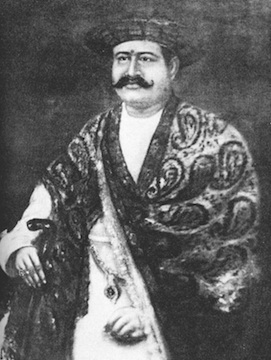
After twelve long and arduous years of spiritual disciplines and incomparable realizations of the truths described by the Hindu dharma, Ramakrsihna burst forth on the intellectual and elite circles of Calcutta. Already influential and wealthy members among the city’s elites who were recoiling from the spiritually vacuous and morally draining colonial ethos were flocking to him by this time. The Rani’s son-in-law and heir to her estates, Mathurnath Biswas was among the first to gauge the depth of Ramakrishna’s realizations.
The aristocrat Shambhu Charan Mullick, the Marwari businessmen from Calcutta, and many simple Hindus from various walks of life began to gravitate towards him. It was at this time that Ramakrishna also conducted unique inter-religious experiments, something that no Hindu sage has done before or after. Perhaps as if to alleviate and address the angst of the Calcutta people who were being slowly anglicized, after being battered by Islamic extremism already over several hundred years Ramakrishna sought to experience the spiritual paths in Islam and Christianity. At first, he listened to readings of the Bible by Shambhu Mullick, and in three days, he attained a vision of an angelic personality like Christ, with a voice proclaiming ‘here is the Son of Man who gave his blood to redeem all mankind’.
This was an epic act of the native Hindu genius showing that perhaps Christianity could be envisioned as a possible bhakti path centered around the person of Christ. This episode was a blow to the fanatic missionaries, and showed that contrary to their propaganda, it was not necessary to practice a militantly exclusive spirituality to gain access to the Truth that Christ had so famously said will set one free. Later Ramakrishna took initiation into a mantra from the Sufi Govinda Rai, and is said to have rapidly had an experience of God with attributes, the end goal of Sufi Islamic sadhanas.
These experiments showed that the framework of Hindu spirituality, centered around the seeking for a direct experience of the spiritual essence of all existence, was broad enough to accommodate even the traditions originating from outside India. These experiences of Ramakrishna bolstered and completely rejuvenated the battered psyche of Hindu Bengal and indeed across all of India and provided the basis for a new line of spiritually centered national unity, a concept that was later adopted by the pan-Indian independence movement.

In an act of spiritual inspiration, one day Ramakrishna visited Keshab Chandra Sen, the savant who headed the Brahmo Samaj, a Christian-leaning reformist Hindu movement that had captivated the educated elites and middle classes of Calcutta. That first meeting, where Ramakrishna spontaneously appeared before and clarified doubts raging in in him, was to completely transform Keshab.
Henceforth, he met Ramakrishna dozens of times, in the company of his many followers – sometimes on steamer boats on the Ganga, sometimes at spiritual gatherings at his home and at Brahmo meetings at others.
Ramakrishna’s rustic message pregnant with the native Hindu spiritual ethos backed by the sheer power of realization scandalized the anglicized members of the Samaj, so much as to cause a split, with a sizable section of the educated members completely adopting him.
This was to be a defining moment – with them, came the masses of Calcutta youths hitherto lost and numb before the glitz of the Raj. Prominent citizens such as Balaram Bose, Mahendranath Gupta, Ramachandra Dutta, Adhar Sen, Mnomohan Mittra, Sivanath Sastr, Ishan Mukhopadhya and Durgacharan Nag slowly overcame their inhibitions and skepticism and accepted Ramakrishna as their Guru.

There also followed the epic conversion of the Bohemian stalwart of modern Bengali Theatre, Girish Chandra Ghosh, who was a tormented soul riven between his upbringing and the rationalism of the time. Ramakrishna’s selflessly loving interactions with the sometimes repulsive and acerbic Girish mesmerized the literary, artistic and musical circles of Calcutta.
Female artistes such as Binodini became his ardent devotees, and to this day Ramakrishna is considered the patron saint of Bengali performing arts. As his fame spread, students from colleges and even women of aristocratic families sought refuge in Ramakrishna’s spiritual wisdom. Thus came Narendranath Dutta, Rakhal Chandra Ghosh, Baburam Ghosh, Sarat Chandra Chakravarty, Taraknath Ghoshal, Kali Prasad Chandra and several others, who banded together under the gentle and nourishing guidance of Ramakrishna at the Dakshineshwar temple.
Ramakrishna’s disciples included the whole breadth of Bengali Hindu society, including all classes and castes, and members of both sexes. Prominent female disciples included Golap Ma, Gauri Ma and Yogin Ma. The storm unleashed by his teachings gathered winds that were to later emerge as the Bengal renaissance, nucleus of the nascent Indian independence movement.
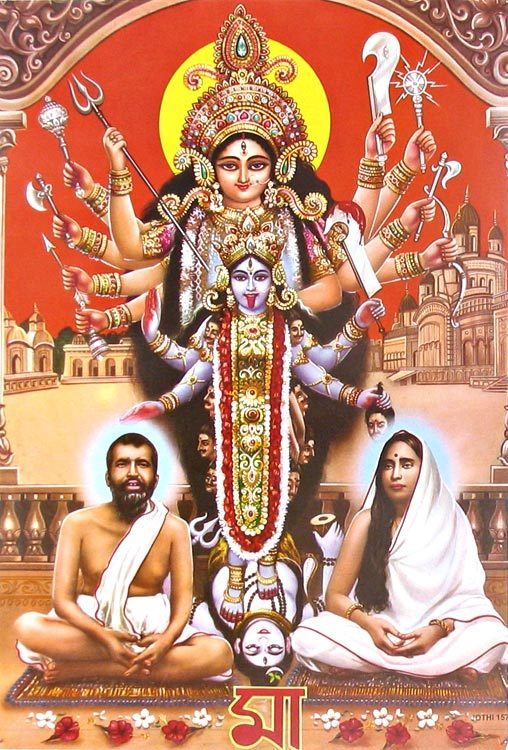 Like Buddha before, Ramakrishna did not take a dogmatic theological position, and rather encouraged the development of innate spiritual tendencies among aspirants, prescribing paths and techniques suited to their own temperaments. In Ramakrishna’s view, ‘God is with form, without form, and besides who knows what else’ – a vision that aptly captures at once the depth and diversity of Hindu spiritual traditions.
Direct experience was to him more important than dry debate and analysis, and by his own example, dancing to songs in praise of the divine at the public Harisbha’s and other events, Ramakrishna brought vibrancy and colour to the otherwise dulled spiritual atmosphere of anglicized Victorian Bengal. ‘Bhakti mixed with Jnana’ as prescribed by Narada, was his own preferred path and he converted many a skeptic including a vigorously doubting Naren into ardent devotees of Kali.
Ramakrishna also did not discriminate on the basis of caste or birth or sex to initiate someone into the spiritual path, taking in all those who he judged had the potential to ‘storm the gates of the divine’ as he himself had done before. His approach to teaching his disciples was revolutionary for his times, for he allowed them to completely cross-examine and test him, while delivering lessons in fables as much as through practical life episodes.
His non-dogmatic and flexible spirituality recognized and admitted every genuine aspiration for the divine, expressed in whatever manner and form, from orthodox Vedic worship, to heterodox tantric and non-Indian practices. ‘Vyakulata’ or earnest and passionate seeking for the divine was for him, the first and highest necessity of spiritual life. Through his experiences he had cut through the cobwebs that had accumulated over the vast and varied spiritual paths of the Hindu traditions.
His arduous spiritual practices and ceaseless engagement with ever increasing flow of disciples and devotees took a toll on Ramakrishna’s health, and in mid-1880’s he developed what was perhaps a cancer of the throat. The brief years of his severe illness brought together his disciples into a closely-knit community bonded in their common quest for the direct experience of the divine.
Soon after his passing away in 1886, his younger disciples renounced the world and took Sanyas, as per the wishes of Ramakrishna, led by Narendranath (later famous as Vivekananda) on Christmas eve at a fire ceremony at Bauram’s ancestral home in Antpur.
Gathering together as a monastic community, the young Sanyasis undertook severe austerities, while several of them including Naren also travelled across the country as initerant mendicants. Several years later, Naren was to take the West by storm by his opening address to the first parliament of world religions in America. Now known as Vivekananda, he also established the Ramakrishna Math and Mission, with an aim to make Hinduism ‘a strong missionary religion’ and promote the brand of direct spirituality espoused by his Guru.
In a series of stirring speeches delivered all across the cities on his path from his landing from America at Colombo to the Himalayan retreat of Almora, Vivekananda outlined his grand vision for a spiritual and material rejuvenation of India and Hinduism at large. His points on the basic unity of Hindu traditions and practical spirituality as outlined in these speeches, are still relevant. Vivekananda also produced classical translations of the foundational texts of Yoga-Vedanta in the form of his books on the four Yogas, which have since influenced generations of seekers across the world.
 Long before he attained fame, Ramakrishna had already been declared an Avatar, by several assemblies of traditional scholars, the most famous of which was the vigorus debate between Pandits Gauri and Vaishnavacharan held under the supervision of Mathurnath and the Bhairavi, perhaps in the 1850’s at Dakshineshwar. In Ramakrishna, India discovered herself, and he was certainly one of modern India’s first ‘God-men’, rooted in tradition yet modern in his outlook, co-eval with perhaps Shirdi Sai Baba on India’s western shores.
Ramakrishna’s life, experiences and ministry produced a intense churning among the youths of Calcutta and India at large, and after many hundred years, India’s sacred heritage now became the talking point among the common masses.
The themes of God, spirituality, the essence of life, absolute reality, causation and incarnation continue to be discussed today in India and all over the world. What were considered settled theological debates on topics such as image-worship, plurality of the Godhead and the exclusivity of revelation, have now rightly become topics for ardent reflection. Among the Gurus of modern India, Ramakrishna is unique not just for his multi-faceted personality and realization, but also for the fact he created a clear succession plan indicating ‘Naren will teach’, identifying the leader of his movement after him.
Succession is an issue that has caused the most number of schisms and bloodshed as seen in the history of the Christian Church and Islam, as well as among the recent Guru movements across the world. On his deathbed, Ramakrishna revealed to Vivekananda, ‘He who was Rama, he who was Krishna, is Ramakrishna in this body. And this, not in your Vedantic sense’ – those immortal words continue to echo through our skeptic times, and perhaps hold the key as Vivekananda himself later proclaimed, to the rejuvenation of humankind.
Endnote: It was the winter of 2006 – as snow capped everything in sight, a group of about 30 seekers gathered in a retreat center in the remote German village of Bindweide, around a diminutive but charismatic Hindu swami from India. In snapping cold, the wooden house with spacious halls that was located in an otherwise desolate snowy settings, came alive with the vibrancy of the quest. Some, seeking through their cooking, others in cleaning the house and surroundings, while yet others by volunteering at the shrine. The eclectic group drew upon many nationalities: ethnic Indians mingled with Germans, Swiss, British, Canadians and Americans.
The damp early hours resonated with readings from the Guru Stotram and the Gita, while the calm mornings and sleepy afternoons saw readings from ancient Vedantic texts and Vedantic readings of the Bible. Many wept for joy at the evening meditations. This is the first of what is now the annual December retreat at the newest center of the global monastic Order that now has over two dozen branches in the US, and dozens of centers all across the Americas, Europe and Asia. Over 100 years since it’s founding by the legendary guru Vivekananda who famously brought Yoga to the West, the Ramakrishna Mission continues to grow and touch people’s lives.
Prabhu Iyer
(2584)
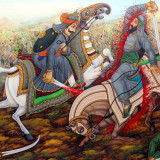
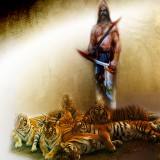
 Puli Thevar was born in the martial community of Hindu Marvars . After defeating a coalition of Islamists(the soldiers of the nawab of Arkot)-British forces, he was taken as a prisoner by deceit while on his way to the Sankaran Kovil temple. He was taken through the town streets, in a procession, by the muslim soldiers to shame him and left him alone in the sacred sanctum of the temple before they could take him to the courts for dispensing justice to the man who brought the mercenaries of Adharma to their knees.
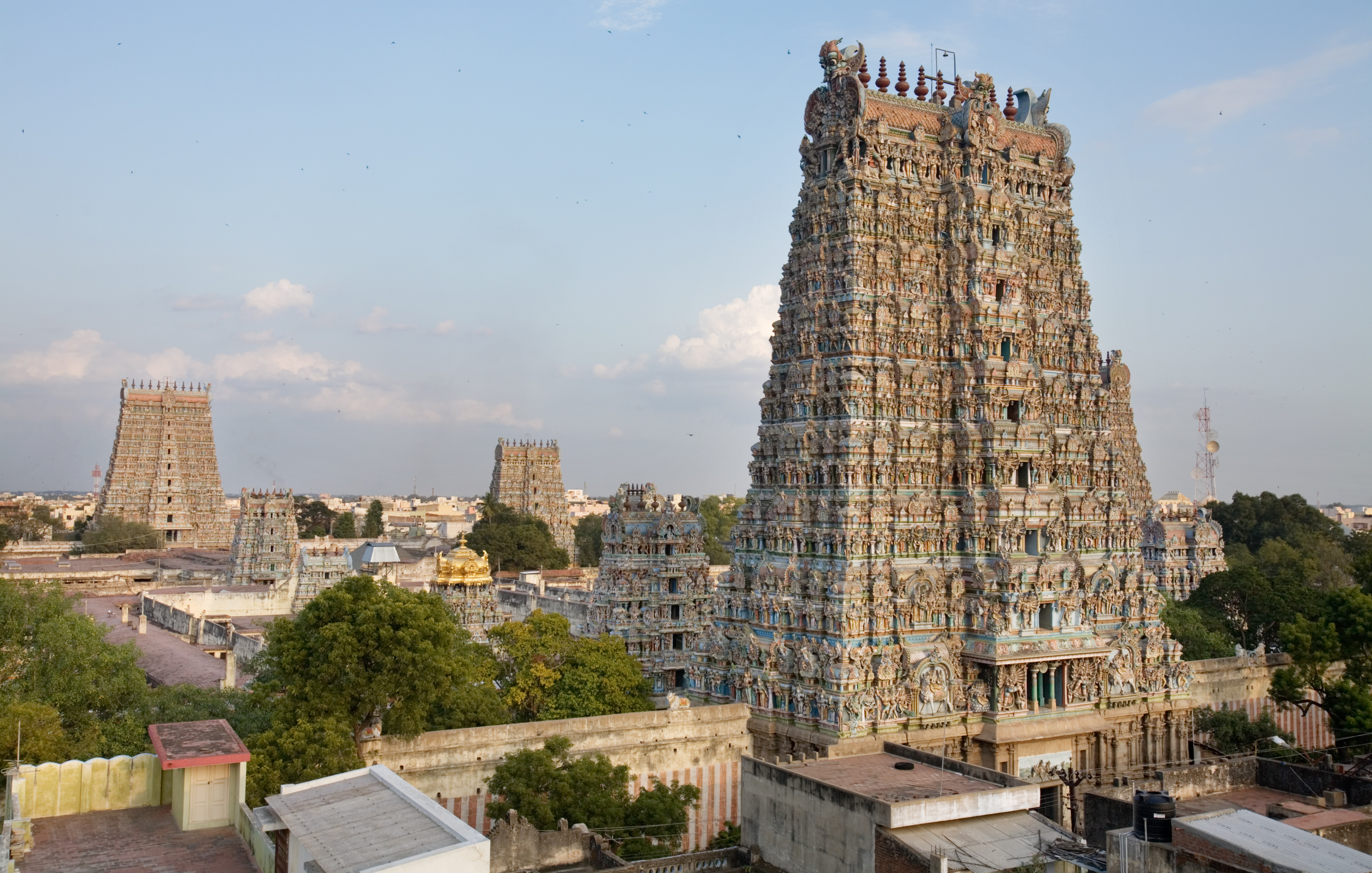 Seeds of this rebellion were in 1736 when the Muslim Nawab of Arcot, Mohammed Aley, annexed the Hindu kingdom of Madura in present day Tamil Nadu. The Hindu Poligars (Chieftans and vassals to the king), being the descendants of the Cholas and Pandyas, were in no mood to accept the lordship of a usurper and Adharmika refused to compromise with him or pay taxes of homage to him.
 No sooner had Puli Thevar refused the British demand for the payment of fief as an acceptance of their lordship over him, they launched an attack on Thevar. Puli Thevar’s informant in the British camp, the interpreter of Heron, sent him news that the British were short on supplies and did not have much heavy artillery. Hearing this Thevar decided to hold the British attack further.
 Understanding fully well that the British would not back down and would come back to attack his people again, Puli Thevar sent one of his generals to Travancore to win over the support of Maharajadhiraj Marathanda Varma who was the regent of Travancore. The general managed to convince His Majesty to support the Polingar confederacy lead by Puli Thevar and returned back with 4000 troops.
 Being very well aware that without the reinforcements from Travancore his army stood little chance against the gigantic cavalary of Mahfuz Khan, Thevar assembled all his troops and guns inside his fort complex at Nelkattumseval. Taking advantage of the situation the devious Khan sent his troops to devastate the Marvaras who had given him a hard time Kalakadu. The Muslim troops reestablished control of Arcot, which till then had been devastated by the Marvaras, and surrounded Puli Thevar in fort.
 Thevar being an astute militant commander decided to take this difficult route instead of a straight highway inorder to conceal the movement of his troops and to take the enemy by surprise.His plan was based in the information of a spy’z report that Mudali had camped his bulk force some twenty miles away where he anticipated Thevar;’s attack. Thevar decided to wait till nightfall before entering Tinnevelly. By dawn they had infiltrated into the town in small bands through unguarded points.
 In early 1757, Thevar along with Mahfuz Khan and supported by many Polygars marched towards Tirunelveli for the third time at the head of an army of 10,000 men. They camped near Tirunelveli but did not attempt to capture the town. Thevar remembered well what would happen if a largely primitive force engaged with the well-equipped army which held Tirunelveli.
 The pro-British Kattabomman died and the new Kattabomman loathed them. He, as the leader of Eastern Poligars, pledged support to Puli Thevar, the undisputed leader of Western Poligars. This union was aimed to meet the threat of Yusuf Khan.
 The Polygar of Wadagiri took refuge with Puli Thevar at Nelkattumseval. Puli Thevar himself was worried as the most powerful Western Polygar-Wadagiri Polygar was finished. He learnt that the French had sent a letter to Mahfuz Khan which stated that soon the English would be finished and that Mahfuz would be crowned as Nawab after the present Nawab, an English puppet, was ousted. Thevar exploited this situation.
 In December, 1759, Yusuf besieged fort of Vasudevanellur with his allied troops after he received a large stock of ammunition. This fort belonged to Puli Thevar and was his second strongest fort, located on top of a mountain range and was covered by a vast forest on all sides.
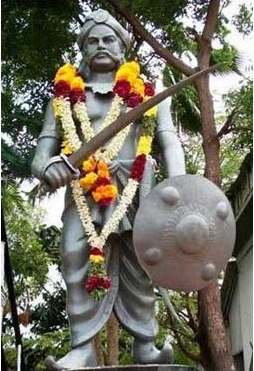 Thevar did not leave Yusuf Khan in peace. His Maravas ravaged Tirunelveli country so much that Yusuf Khan himself realised that he could not crush them by force so he bribed many of them to join his side. Yusuf soon found himself at war with Mysore and Dutch, which bought Thevar time. Yusuf Khan crushed a force of 3000 men sent by Kattabomman. Thevar learnt that the French were besieged in Pondicherry by the English and that Mahfuz Khan had gone over to Nawab, but his Maravas ravaged lands held by Yusuf Khan so much that he soon deployed the bulk of his force in front of Nelkettumseval in order to force the Maravas to abandon his lands.





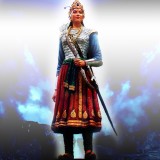
 n 1542, she was married to Dalpatshah, the eldest son of king Sangramshah of Gond Dynasty. Chandel and Gond dynasties got closer as a consequence of this marriage and that was the reason Keerat Rai got the help of Gonds and his son-in-law Dalpatshah at the time of invasion of Shershah Suri in which Shershah Suri died.
 This plan of Mughul invasion was the result of expansionism and imperialism of Akbar. When Rani heard about the attack by Asaf Khan she decide to defend her kingdom with all her might although her minister Adhar pointed out the strength of Mughal forces. Rani maintained that it was better to die respectfully than to live a disgraceful life.
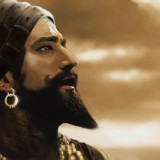
 It started in 1681 with the Mughal emperor Aurangzeb’s invasion of Maratha empire. It ended in 1707 with Aurangzeb’s death. Aurangzeb threw everything he had in this war. He lost it all.
 At the time of Shivaji’s death in 1680, Maratha empire spanned an area far more than the current state of Maharashtra and had taken firm roots. But it was surrounded by enemies from all sides. Portuguese on northern Coast and Goa, British in Mumbai, Siddies in Konkan and remaining Deccan sultanates in Karnataka posed limited challenge each, but none of them was capable of taking down the Marathas alone. Mughal empire with Aurangzeb at its helm was the most formidable foe.
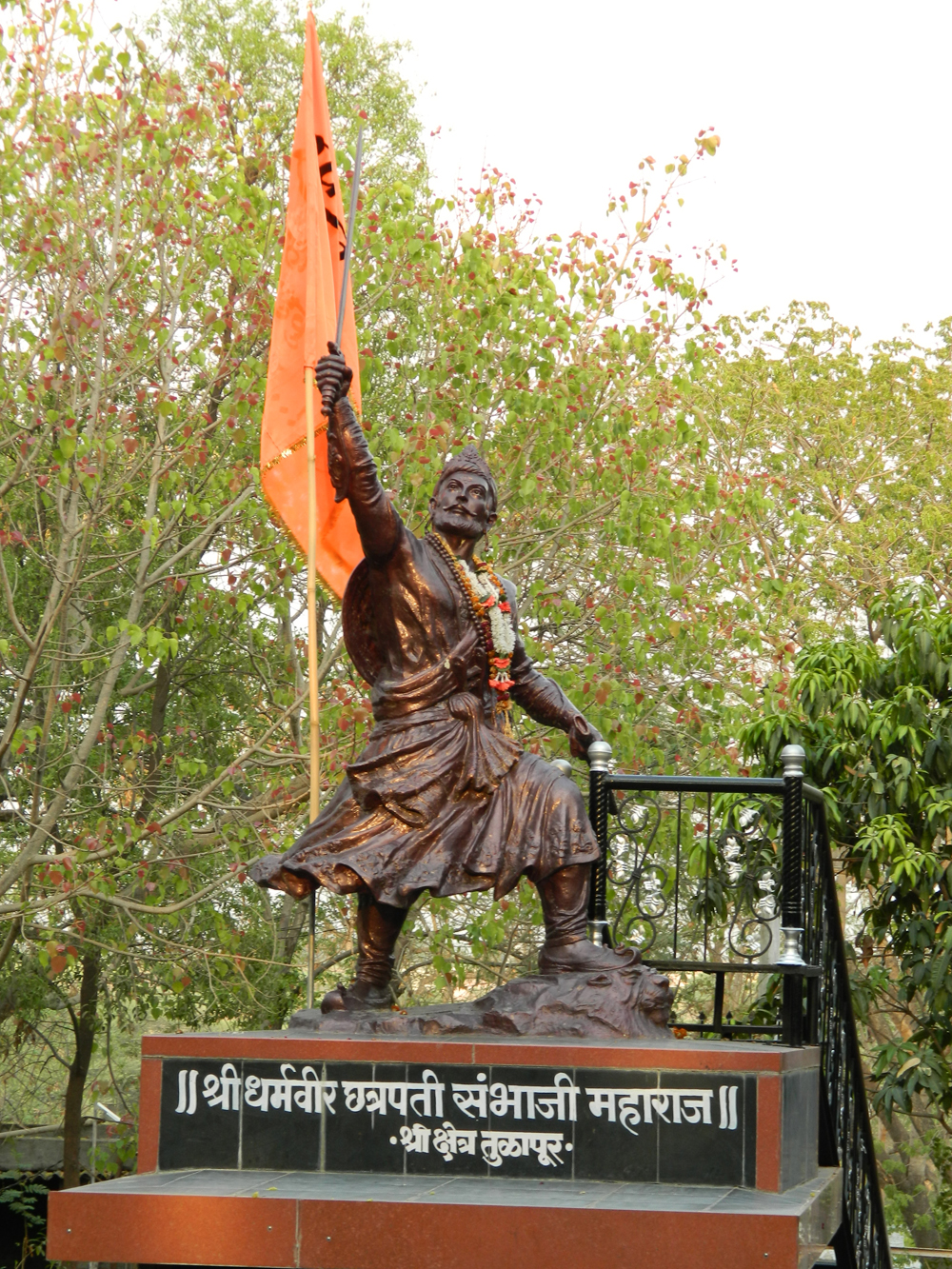
 After the death of Shivaji in 1680, a brief power struggle ensued in the royal family. Finally Sambhaji became the king. By this time Aurangzeb had finished his North missions and was pondering a final push in Deccan to conquer all of the India.
 The beginning went quite well. Shah Alam crossed Krishna river and entered Belgaum. From there he entered Goa and started marching north via Konkan. As he pushed further,he was continuously harassed by Marathas. They ransacked his supply chains and reduced his forces to starvation. Finally Aurangzeb sent Ruhulla Khan for his rescue and brought him back to Ahmednagar. The first pincer attempt failed.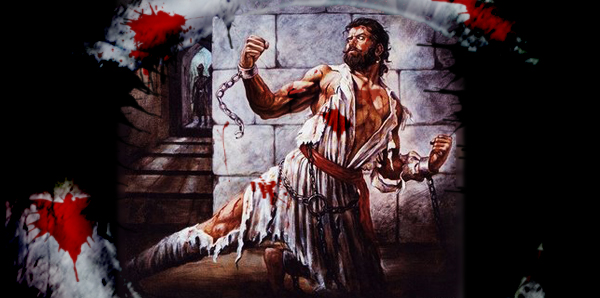
 Julfikar khan, who was orchestrating Jinji siege, left the siege on Aurangzeb’s orders and marched back. Santaji followed him to North, but was defeated by Julfikar Khan. Santaji then diverted his forces to Bijapur. Aurangzeb sent another general Kasim Khan to tackle Santaji. But Santaji attacked him with a brilliant military maneuver near Chitaldurg and forced him take refuge in Dunderi fort. The fort was quickly sieged by Santaji and the siege only ended when most of the Mughal soldiers starved and Kasim Khan committed suicide. Aurangzeb sent Himmat Khan to reinforce Kasim Khan. Himmat khan carried heavy artillery. So Santaji lured him in a trap in the forest near Dunderi. A sudden, ambush style attack on Mughals was followed by a fierce battle. The battle ended when when Himmat Khan was shot in head and died. All his forces routed and Santaji confiscated a big cache of weapons and ammunition.
 Jinji fell, but it did a big damage to the Mughal empire. The losses incurred in taking Jinji far outweighed the gains. The fort had done its work. For seven years the three hills of Jinji had kept a large contigent of mughal forces occupied. It had eaten a deep hole into Mughal resources. Not only at Jinji, but the royal treasury was bleeding everywhere and was already under strain.
 In March of 1700, another bad news followed Marathas. Rajaram took his last breath. His queen Tarabai, who was also daughter of the gallant Maratha Commander-in-Chief Hambeerrao Mohite, took charge of Maratha army. Daughter of a braveheart, Tarabai proved her true mettle for the next seven years. She carried the struggle on with equal valor. Thus began the phase 3, the last phase of the prolonged war, with Marathas under the leadership of Tarabai.
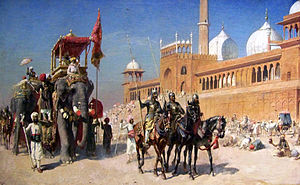 In this war, Aurangzeb’s army totaled more than 500,000 in number (compared to total Maratha army in the ballpark of 150,000). With him he carried huge artillery, cavalry, muskettes, ammunition and giant wealth from royal treasuries to support this quest. This war by no means a fair game when numbers are considered.
 Marathas had one big advantage on their side. They were the expert in fort warfare. The game of defense using forts had two components.
 Marathas mostly launched offensive attacks in the region when Mughal army was away. They rarely engaged Mughal army in open fields till later part of the war. If situation seemed dire, they would retreat and disperse and thus conserve most of their men and arms for another day. The rivers Bhima, Krishna , Godavari and the mountains of Sahyadri, divide entire Maharashtra region is in several North- South corridors. When Mughal army traveled South through one corridor, Marathas would travel North through another and launch attacks there. This went on changing gradually and in the end, Maratha forces started engaging Mughals head on.
 Last but not the least, we must give due respect to one more thing. The seeds of every political revolution can be traced back to a spiritual one and this was no exception. The “Bhakti” movement in Maharashtra that began with 12th Century saint Dnyaneshwar and spearheaded by saint Tukaram (who was contemporary of Shivaji), played a role of social catalyst of immense effect. It created a forum, a pool in society where everyone was welcome.