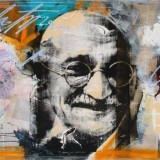
Mahatma Gandhi is often praised as the man who defeated British imperialism with non-violent agitation. It is still a delicate and unfashionable thing to discuss his mistakes and failures, a criticism hitherto mostly confined to Communist and Hindutva publications. But at this distance in time, we shouldn’t be inhibited by a taboo on criticizing official India’s patron saint.
Gandhiji’s mistakes
 Without attempting to approach completeness, we may sum up as Gandhi’s biggest political failures the following events:
(1) Recruiting Indian soldiers for the British war effort in 1914-18 without setting any conditions, in the vain hope that this unilateral gift to Britain would bring about sufficient goodwill in London for conceding to India the status of a self-ruling dominion within the British Empire, on a par with Canada or Australia. While it was already off line for a pacifist to cooperate in such a wasteful war (as contrasted with World War 2, to both sides a kind of holy war where fundamental principles were at stake), Gandhiji’s stance was also a glaring failure of political skill, since he neglected to extract any tangible gains for India in return for the thousands of Indian lives which he sacrificed to British imperial interests.
(2) Committing the mobilisation potential of the freedom movement to the Khil’fat agitation in 1920-22, again a non-negotiated unilateral gift. The Khilafat movement was a tragicomical mistake, aiming at the restoration of the Ottoman Caliphate against which the Arabs had risen in revolt and which the Turks were dissolving, a process completed with the final abolition of the institution of the Caliphate in 1924. It was a purely retrograde and reactionary movement, and more importantly for Indian nationalism, it was an intrinsically anti-nationalist movement pitting specifically Islamic interests against secular and non-Muslim interests. Gandhi made the mistake of hubris by thinking he could reconcile Khilafatism and Indian nationalism, and he also offended his Muslim allies (who didn’t share his commitment to non-violence) by calling off the agitation when it turned violent. The result was even more violence, with massive Hindu-Muslim riots replacing the limited instances of anti-British attacks, just as many level-headed freedom fighters had predicted. Gandhiji failed to take the Khilafat movement seriously whether at the level of principle or of practical politics, and substituted his own imagined and idealized reading of the Khilafat doctrine for reality.
 (3) His autocratic decision to call off the mass agitation for complete independence in 1931, imposed upon his mass following and his close lieutenants against their wishes and better judgment, in exchange for a few puny British concessions falling far short of the movement’s demands. His reputation abroad didn’t suffer, but to informed observers, he had thrown away his aura as an idealist leader standing above petty politics; the Pact between Gandhi and Viceroy Lord Irwin amounted to the sacrifice of a high national goal in favour of a petty rise in status for the Congress. Also, every delay in the declaration of Independence gave the emerging separatist forces the time to organize and to strengthen their position.
(4) Taking a confused and wavering position vis-vis India’s involvement in World War 2. His initial refusal to commit India to the war effort could have been justified on grounds of pacifist principle as well as national pride (the Viceroy had committed India without consulting the native leadership), but it was a failure because his followers weren’t following. Indian recruits and business suppliers of the Army eagerly joined hands with the British rulers, thus sidelining Gandhi into political irrelevance. By contrast, the Muslim League greatly improved its bargaining positions by joining the war effort, an effect not counterbalanced by the small Hindu Mahasabha’s similar strategy. The pro-Partition case which the Muslim League advocated was bolstered while Gandhi’s opposition to the imminent Partition was badly weakened. Gandhi was humiliated by his impotence before the degeneration of his “Quit India” agitation into violence and by ultimately having to come around to a collaborationist position himself.
 (5) Taking a confused and wavering position vis-vis the Partition plan, including false promises to the Hindus of the designated Pakistani areas to prevent Partition or at least to prevent their violent expulsion. He chose not to use his weapon of a fast unto death to force Mohammed Ali Jinnah into backing down from Partition, a move which cast doubt on the much-touted bravery of all his other fasts “unto death” performed to pressurize more malleable opponents. If acquiescing in the Partition could still be justified as a matter of inevitability, there was no excuse for his insistence on half measures, viz. his rejecting plans for an organized exchange of population, certainly a lesser evil when compared to the bloody religious cleansing that actually took place. Gentle surgeons make stinking wounds.
(6) Refusing to acknowledge that Pakistan had become an enemy state after its invasion of Kashmir, by undertaking a fast unto death in order to force the Indian government to pay Pakistan 55 crore rupees from the British-Indian treasury. Pakistan was entitled to this money, but given its aggression, it would have been normal to set the termination of its aggression, including the withdrawal of its invading troops, as a condition for the payment. Indeed, that would have been a sterling contribution to the cause of enduring peace, saving the lives of the many thousands who fell in subsequent decades because of the festering wound which Kashmir has remained under partial Pakistani occupation. Coming on top of Gandhi’s abandonment of the Hindus trapped in Pakistan in August 1947, it was this pro-Pakistani demand, as well as his use of his choice moral weapon (left unused to save India’s unity or the persecuted Hindus in Pakistan) in the service of an enemy state’s treasury, that angered a few Hindu activists to the point of plotting his murder.
Problems with pacifism
 The common denominator in all these costly mistakes was a lack of realism. Gandhi refused to see the realities of human nature; of Islamic doctrine with its ambition of domination; of the modern mentality with its resentment of autocratic impositions; of people’s daily needs making them willing to collaborate with the rulers in exchange for career and business opportunities; of the nationalism of the Hindus who would oppose the partition of their Motherland tooth and nail; of the nature of the Pakistani state as intrinsically anti-India and anti-Hindu.
In most of these cases, Gandhi’s mistake was not his pacifism per se. In the case of his recruiting efforts for World War 1, there wasn’t even any pacifism involved, but loyalty to the Empire whether in peace or in war. The Khilafat pogroms revealed one of the real problems with his pacifism: all while riding a high horse and imposing strict conformity with the pacifist principle, he indirectly provoked far more violence than was in his power to control. Other leaders of the freedom movement, such as Annie Besant and Lala Lajpat Rai, had warned him that he was playing with fire, but he preferred to obey his suprarational “inner voice”.
The fundamental problem with Gandhi’s pacifism, not in the initial stages but when he had become the world-famous leader of India’s freedom movement (1920-47), was his increasing extremism. All sense of proportion had vanished when he advocated non-violence not as a technique of moral pressure by a weaker on a stronger party, but as a form of masochistic surrender. Elsewhere (Elst: Gandhi and Godse, Voice of India, Delhi 2001, p.120-121) I have cited four instances of his advice to the victims of communal violence which is simply breathtaking for its callousness in the face of human suffering. Two more instances follow.
 During his prayer meeting on 1 May 1947, he prepared the Hindus and Sikhs for the anticipated massacres of their kind in the upcoming state of Pakistan with these words: “I would tell the Hindus to face death cheerfully if the Muslims are out to kill them. I would be a real sinner if after being stabbed I wished in my last moment that my son should seek revenge. I must die without rancour. (*) You may turn round and ask whether all Hindus and all Sikhs should die. Yes, I would say. Such martyrdom will not be in vain.” (Collected Works of Mahatma Gandhi, vol.LXXXVII, p.394-5) It is left unexplained what purpose would be served by this senseless and avoidable surrender to murder.
Even when the killing had started, Gandhi refused to take pity on the Hindu victims, much less to point fingers at the Pakistani aggressors. More importantly for the principle of non-violence, he failed to offer them a non-violent technique of countering and dissuading the murderers. Instead, he told the Hindu refugees from Pakistan to go back and die. On 6 August 1947, Gandhiji commented to Congress workers on the incipient communal conflagration in Lahore thus: “I am grieved to learn that people are running away from the West Punjab and I am told that Lahore is being evacuated by the non-Muslims. I must say that this is what it should not be. If you think Lahore is dead or is dying, do not run away from it, but die with what you think is the dying Lahore. (*) When you suffer from fear you die before death comes to you. That is not glorious. I will not feel sorry if I hear that people in the Punjab have died not as cowards but as brave men. (*) I cannot be forced to salute any flag. If in that act I am murdered I would bear no ill will against anyone and would rather pray for better sense for the person or persons who murder me.” (Hindustan Times, 8-8-1947, CWoMG, vol. LXXXIX, p.11).
 So, he was dismissing as cowards those who saved their lives fleeing the massacre by a vastly stronger enemy, viz. the Pakistani population and security forces. But is it cowardice to flee a no-win situation, so as to live and perhaps to fight another day? There can be a come-back from exile, not from death. Is it not better to continue life as a non-Lahorite than to cling to one’s location in Lahore even if it has to be as a corpse? Why should staying in a mere location be so superior to staying alive? To be sure, it would have been even better if Hindus could have continued to live with honour in Lahore, but Gandhi himself had refused to use his power in that cause, viz. averting Partition. He probably would have found that, like the butchered or fleeing Hindus, he was no match for the determination of the Muslim League, but at least he could have tried. In the advice he now gave, the whole idea of non-violent struggle got perverted.
Originally, in Gandhi’s struggle for the Indians’ rights in South Africa, non-violent agitation was tried out as a weapon of the weak who wouldn’t stand a chance in an armed confrontation. It was a method to achieve a political goal, and a method which could boast of some successes. In the hands of a capable agitator, it could be victorious. It was designed to snatch victory from the jaws of powerlessness and surrender. By contrast, the “non-violent” surrender to the enemy and to butchery which Gandhi advocated in 1947 had nothing victorious or successful about it.
During the anti-colonial struggle, Gandhi had often said that oppression was only possible with a certain cooperation or complicity from the oppressed people. The genius of the non-violent technique, not applicable in all situations but proven successful in some, was to create a third way between violent confrontation between the oppressed and the oppressor, fatally ending in the defeat of the weak, and the passive resignation of the oppressed in their state of oppression. Rather than surrendering to the superior power of the oppressor, the oppressed were given a method to exercise slow pressure on their oppressor, to wrest concessions from him and to work on his conscience. No such third way was left to the minorities in Pakistan: Gandhi’s only advice to them was to surrender, to become accomplices in their extermination by meekly offering their necks to the executioner’s sword.
My point is not that Gandhi could and should have given them a third way, a non-violent technique that would defeat the perpetrators of Partition and religious cleansing. More realistically, he should have accepted that this was the kind of situation where no such third option was available. Once the sacrifice of a large part of India’s territory to a Muslim state had been conceded, and given previous experiences with Muslim violence against non-Muslims during the time of Gandhi’s own leadership, he should have realized that an exchange of population was the only remaining bloodless solution. The Partition crisis was simply beyond the capacity of Gandhian non-violence to control. If he had had the modesty to face his powerlessness and accept that alternatives to his own preferred solution would have to be tried, many lives could have been saved.
Robust pacifism
I t cannot be denied that Gandhian non-violence has a few successes to its credit. But these were achieved under particularly favourable circumstances: the stakes weren’t very high and the opponents weren’t too foreign to Gandhi’s ethical standards. In South Africa, he had to deal with liberal British authorities who weren’t affected too seriously in their power and authority by conceding Gandhi’s demands. Upgrading the status of the small Indian minority from equality with the Blacks to an in-between status approaching that of the Whites made no real difference to the ruling class, so Gandhi’s agitation was rewarded with some concessions. Even in India, the stakes were never really high. Gandhi’s Salt March made the British rescind the Salt Tax, a limited financial price to pay for restoring native acquiescence in British paramountcy, but he never made them concede Independence or even Home Rule with a non-violent agitation. The one time he had started such an agitation, viz. in 1930-31, he himself stopped it in exchange for a few small concessions.
It is simply not true that India’s Independence was the fruit of Gandhian non-violent agitation. He was close to the British in terms of culture and shared ethical values, which is why sometimes he could successfully bargain with them, but even they stood firm against his pressure when their vital interests were at stake. It is only Britain’s bankruptcy due to World War 2 and the emergence of the anti-colonial United States and Soviet Union as the dominant world powers that forced Clement Attlee’s government into decolonising India.
Even then, the trigger events in 1945-47 that demonstrated how the Indian people would not tolerate British rule for much longer, had to do with armed struggle rather than with non-violence: the naval mutiny of Indian troops and the ostentatious nationwide support for the officers of Subhas Bose’s Axis-collaborationist Indian National Army when they stood trial for treason in the Red Fort.
So, non-violence need not be written off as a Quixotic experiment, for it can be an appropriate and successful technique in particular circumstances; but it has its limitations. In many serious confrontations, it is simply better, and on balance more just as well as more bloodless, to observe an “economy of violence”: using a small amount of armed force, or even only the threat of armed force, in order to avoid a larger and bloodier armed confrontation. This is the principle of “peace through strength” followed by most modern governments with standing armies. It was applied, for example, in the containment of Communism: though relatively minor wars between Communist and anti-Communist forces were fought in several Third World countries, both the feared Communist world conquest and the equally feared World War 3 with its anticipated nuclear holocaust were averted.
 The ethical framework limiting the use of force to a minimum is known as “just war theory”, developed by European thinkers such as Thomas Aquinas and Hugo Grotius between the 13th and 18th century, but in essence already present in the Mahabharata as well. Thus, waging war can be a just enterprise when it is done in self-defence, when all non-violent means of achieving the just objective have been tried, when non-combatants are respected as such, when the means used are in proportion to the objective aimed for, etc.
One of the less well-known criteria for just warfare which deserves to be mentioned here in the light of Gandhi’s advice to the Hindus in Pakistan is that there should be a reasonable chance of success. No matter how just your cause, it is wrong to commit your community to a course of action that only promises to be suicidal. Of course, once a group of soldiers is trapped in a situation from which the only exit is an honourable death, fighting on may be the best course remaining, but whenever possible, such suicide should be avoided. This criterion is just as valid in non-armed as in armed struggle: it was wrong to make the Hindus stay among their Pakistani persecutors when this course of action had no chance of saving lives nor even of achieving certain political objectives.
As the Buddha, Aristotle, Confucius and other ethical guides already taught, virtue is a middle term between two extremes. In this case, we have to sail between the two extremes of blindness to human fellow-feeling and blindness to strategic ground realities. It is wrong to say that might makes right and that anything goes when it comes to achieving victory, no matter what amount of suffering is inflicted on the enemy, on bystanders or even on one’s own camp. It is equally wrong to strike a high moral posture which haughtily disregards, and hence refuses to contain or subdue, the potential for violence in human confrontations and the real pain it causes. In between these two extremes, the mature and virtuous attitude is one which desires and maintains peace but is able and prepared to fight the aggressor.
Limiting the use of force to a minimum is generally agreed to be the correct position. In this case, disagreeing with Gandhi is not an instance of Communist or Hindu-chauvinist extremism, but of the accumulated wisdom of civilized humanity. Excluding the use of force entirely, by contrast, may simply whet the aggressor’s appetite and provoke far more violence than the achievable minimum.
This is a mistake which an overenthusiastic and inexperienced beginner can forgivably make, but in an experienced leader like Mahatma Gandhi during his time at the head of the freedom movement, it was a serious failure of judgment. The silver lining in the massacres which his mistakes provoked, is that they have reminded us of the eternal wisdom of “the golden mean”, the need for a balanced policy vis–vis the ever-present challenge of violence and aggression. It has been known all along, and it is crystal-clear once more, that we should avoid both extremes, Jinnah’s self-righteousness and Gandhi’s sentimentalism.

(13655)
 S.N. Balagangadhara, better known as Balu, is Professor of Comparative Culture Studies in Ghent University, Belgium. Balu is a Kannadiga Brahmin by birth, a former Marxist, and his discourse has a very in-your-face quality. In his latest book, Reconceptualizing India Studies (Oxford University Press 2012), the attentive reader will see a critique of the Indological establishment in the West and the political and cultural establishment in India. Like Rajiv Malhotra’s recent works, it questions their legitimacy. The reigning Indologists and India-watchers would do well to read it.
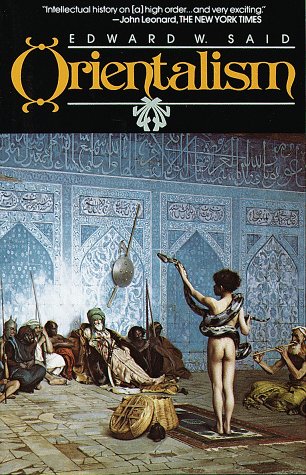 Look at the secularists, who for decades now have gone gaga over Said’s concept of Orientalism: “Orientalism is reproduced in the name of a critique of Orientalism. It is completely irrelevant whether one uses a Marx, a Weber or a Max Müller to do so. (…) the result is the same: uninteresting trivia, as far as the growth of human knowledge is concerned; but pernicious in its effect as far as Indian intellectuals are concerned.” (p.47) India has produced intellectual giants like (limiting ourselves to the 20th century:) R.C. Majumdar, P.V. Kane or A.K. Coomaraswamy, but the Indian secularists are intellectually very poor copies of their Western role models.
 Balu’s explanation of intercommunal relations in India and the state’s role therein is original and clear. In his opinion, the secular state is not there to curb religious violence, but is in fact the cause of this violence. He focuses on its position in the question of religious conversion, which is forbidden in some neighbouring countries and demanded to be forbidden by many Hindus (both Mahatma Gandhi and the Hindu nationalists). But it is upheld as a right by the Muslims and especially by the Christian missionaries — and by the “secular” state. The latter clearly takes a partisan stand in doing so; and it would also be partisan if it did the opposite. It is impossible to be impartisan.
 The whole “secular” discourse on “religion” and intercommunal relations is borrowed from Christianity. The basic framework to think about religion is informed by Western experiences and fails to see the radical difference between these and the native traditions: “the secular state assumes that the Semitic religions and the Hindu traditions are instances of the same kind” (p.203). In realities, Hindus and Parsis don’t missionize and refrain from basing their religions on a defining truth claim. By contrast, Christianity and Islam believe they offer the truth, and consequently want everyone to accept it.