Long before Mangal Pandey who ignited the revolt of 1857, there was another Hindu , born in the land of the Raja Raja Cholan, who was the scourge of the enemies of Dharma. His name was Puli Thevar. The name Puli in Tamil means a Tiger, and this brave devotee of Mahadeva was one who lived to his name. Unmatched in skill of warfare, understanding of politics and full of fire this man was born to be a rebel. Not a rebel without cause, rather a rebel against Adharma.
 Puli Thevar was born in the martial community of Hindu Marvars . After defeating a coalition of Islamists(the soldiers of the nawab of Arkot)-British forces, he was taken as a prisoner by deceit while on his way to the Sankaran Kovil temple. He was taken through the town streets, in a procession, by the muslim soldiers to shame him and left him alone in the sacred sanctum of the temple before they could take him to the courts for dispensing justice to the man who brought the mercenaries of Adharma to their knees.
What happened after is nothing less that divine intervention. Puli Thevar started singing hymns in praise of Mahadeva and all of sudden the sound of the cracking of handcuffs were heard by the soldiers camping outside the temple. Disturbed by the sounds the soldiers rushed inside the temple to see what happened, only to see broken handcuffs and chains with Puli Thevar nowhere in sight and never to be seen again by any mortal. Some say he was taken by the Lord himself to his abode……
Not being a man who would give up or prostrate in front of the British their Muslim lackeys, Puli Thevar was thoroughly maligned by the British historians as a man who never kept his word and was deceitful to the core. While these events occurred in late 1760, the truth of the events was never fully told by the Marxist historians of secular India. Therefore I shall try and tell the tale of the heroic exploits of this man who very few Hindus outside of Southern India have ever heard about.
 Seeds of this rebellion were in 1736 when the Muslim Nawab of Arcot, Mohammed Aley, annexed the Hindu kingdom of Madura in present day Tamil Nadu. The Hindu Poligars (Chieftans and vassals to the king), being the descendants of the Cholas and Pandyas, were in no mood to accept the lordship of a usurper and Adharmika refused to compromise with him or pay taxes of homage to him.
Over the next twenty years s confederation of seventy seven Poligars belonging to the Marvar community joint hands to defy the dictate of the usurper Mohammed Aley. The Poligars who lived in the vicinity of their hill fortress surrounded by forests and armed with ammunition, guns and traditional Hindu weapons attacked Mohammed’s forces at will defying him at each opportunity.
Scared of the might and defiance of the Hindu Poligars Mohammed the Nawab decided to find shelter in the British camp and beg them for help. The British eyeing an opportunity to grab Hindu lands that lay between Trichinapally and Cape Comorin decided to take nawab under their wing. This was a mistake that both the British and their lackey the nawab would go on to regret.
The British sent a large army commanded by Colonel Heron to assist their muslim vassal, Mohammed. On reaching the Poligar country this army started acting like street thugs, looting ordinary village folks, burning homes and even devastating the Hindu temples and shrines. Continuing his march forward Heron managed to used his skills of deceit to fight the Polingars into submission. The strongest Polingar was the Kattabomman of Panjalakurichi. He too surrendered and as he did not pay the full sum demanded by the British as tribute, he surrendered some of his close male relatives as collateral.
Assuming their victory was complete the British, under Heron, decided to head back to their base. However on their way back home Heron came up with an idea and the idea was to seek the submission of a minor Poligar of Nelkattumseval, his name was Puli Thevar. While the owner of a very small estate his influence amongst the Western Polingars was immense due to the fame of his abilities as an able administrator and considerable warrior.
What followed after this idea were a series of attacks, sieges and battles.
The First Siege: Nelkattumseval 1755 CE
 No sooner had Puli Thevar refused the British demand for the payment of fief as an acceptance of their lordship over him, they launched an attack on Thevar. Puli Thevar’s informant in the British camp, the interpreter of Heron, sent him news that the British were short on supplies and did not have much heavy artillery. Hearing this Thevar decided to hold the British attack further.
Although Heron ordered a massive bombardment on Puli Thevar’s fort his forces couldn’t make much progress due to the thick walls of the fort. Forced to acknowledge that he couldn’t raid the fort, Heron sent a message to the Puli asking for a paltry sum of rupees twenty thousand to be paid. However Puli who by now understood the British game replied thus
“ My estate does not have that much income….. besides I know the value of money and don’t expect me to pay you even a single rupee”
After facing such a humiliating defeat at the hands of the brave Marvar, the British ducked tail and retreated. However this defeat of the British ignited a fire of rebellion that would make the foreigners pay a very heavy price before it went out in a blaze of glory in 1763. The Polingars emboldened by their fellow Hindu’s victory soon joined hands against the British and started an all out revolt under the able leadership of Puli Thevar.
After the retreat of Heron was complete, Thevar gathered his Marwars and let them loose to seize the entire countryside. The Marwars who were the ablest of warriors, famed for their ferocity in war and predatory warfare started ambushing and looting the British units burning down the villages that had supported the British in their war effort and overran the entire countryside.
The Second Battle: Kalakadu, 1755 CE
 Understanding fully well that the British would not back down and would come back to attack his people again, Puli Thevar sent one of his generals to Travancore to win over the support of Maharajadhiraj Marathanda Varma who was the regent of Travancore. The general managed to convince His Majesty to support the Polingar confederacy lead by Puli Thevar and returned back with 4000 troops.
These troops were then added to his existing armies in order to fight the forces of Mahfuz Khan, the younger brother of Mohammed Aley and a British appointed governor of Madura. While Mahfuz Khan had a well equipped army, owing to the reinforcements received by the British , they were no match for Thevar’s much smaller army’s bravery or morale. These early victories boosted the morale of Thevar and he besieged the fort at Kalakadu. In order to end this siege Mahfuz Khan sent an entire division of cavalry. It was at this critical juncture that the Travancore forces had to retreat and head back home to control a major rebellion lead by Moplahs back in Travancore. With a large chunk of his men lost, Thevar knew that this battle was lost and so he retreated.
Second Siege of Nelkattumseval, 1755-1756 CE
 Being very well aware that without the reinforcements from Travancore his army stood little chance against the gigantic cavalary of Mahfuz Khan, Thevar assembled all his troops and guns inside his fort complex at Nelkattumseval. Taking advantage of the situation the devious Khan sent his troops to devastate the Marvaras who had given him a hard time Kalakadu. The Muslim troops reestablished control of Arcot, which till then had been devastated by the Marvaras, and surrounded Puli Thevar in fort.
Thevar quickly asked his general to Mudemiah to engage Travancore once again, who by then had subdued the rebellion. The Travancore troops came out victorious, however knowing the sort of pain Puli Thevar could be Mahfuz went ahead with the siege of Thevar’s fort as he couldn’t afford to loose Puli.
Since this siege lasted quite some time Mahfuz’s troops ran short of supplies and begged the British for more. Seizing this opportunity, Puli Thevar instructed his crack troops to attack the British convoy. They more than obliged and looted the caravans and increasing Mahfuz Khan’s misery. Mahfuz who was by now in a state of shock decided to head back to his base in Tirunelveli in order to meet payroll and supply his troops.
Now a confident Thevar decided that he must launch an assault to fully obliterate his Arcot-British enemies. For this purpose he persuaded the Eastern Poligar council to join hands with him so that they could together fight their common enemies. Sadly the strongest of the Eastern Poligar ,Kattabomman, still had his relatives as captives under the Nawab. Out of fear for loosing his loved ones he decided to opt out of this council, despite wanting to join hands with Puli Thevar. However all the Madura Poligars joined hands with Puli Thevar and ensured troops in case of a war. Thereafter Puli went on to ask the Poligars of Nattam tojoin him.
This confederacy of Polingars had a single point agenda which was to seize the ancient and strategic city of Madura, as that would be a symbolic restoration of pre-1736 order in addition to enabling them to oust the Anglo-Muslim garrisons and seize control the country south up to Cape Comorin. Their objective was to restore Hindu rule in what was once the kingdom of Madura.
British soon learnt of this preparation for war and they were alarmed by the sheer scale of ambitions of Thevar. They blamed Mahfuz’s incompetency for this dangerous situation and resolved to intervene directly. They dispatched 1000 sepoys under Yusuf Khan and also put Mafuz’s armies under Yusuf Khan’s orders.
Siege of Srivilliputtur, 1756
By the time these sepoys arrived, Puli Thevar had already started out on his victory march leading the Marwar confederate army. They had assembled in Nelkattumseval and were supposed to attack Madura in order to recapture it from the Mohammed Aley, the usurper. As they marched, they faced the fort of Srivilliputtur, which they had seize if the wished to march on to Madura.
This fort was under the lordship of one Abdul Rahim and he was confident that he could easily rout Puli Thevar and his marvars. Initially they engaged in an open battle with Thevar’s forces but found themselves to be no match for the Hindu skill and bravery and hence retreated back to their fortress. Puli Thevar had them surrounded so badly that the Arkot troops got demoralized and all of them, including Rahim Khan, fled to save their lives.
Seing this victory the rest of the Polingars appealed to Puli Thevar to change the original plan of to march from Nelkattumseval to Madura and instead seize Tirunelveli in the south and then move to Madura. Thevar agreed and this turned out to be a catastrophic decision. At that time Madura was held lightly by Arckot troops and a siege of on Madura would have passed the entire kingdom into Puli Thevar’s hands. As fate would have it Mahfuz Khan, with his strong troops in place, in Tirunelveli persuaded Kattabomman to support him in the war initiative and promised him land grants, riches, etc in return. As Kattabomman led the Eastern Poligars, war that began as a war of independence now became a civil war.
Battle of Tirunelveli, 1756
Despite the sabotage by his own Hindu brothers, The Polingars of the East, Thevar didn’t loose his resolve to meet the enemy forces in battle. Both sides had an equal number of men, totaling forty thousand, facing each other. However Mahfuz had an great advantage over the Poligars due to his superior calavry which was supported by his British masters. Not loosing hope and with the name of Mahadeva on his lips Puli Thevar and his brave twenty thousands left upon the enemy, however they were no match for the cavalry that supported Mahfuz. Had it not been for Kattabomman’s greed the Arcot troops, it would have been a funeral for Mahfuz and his troops and almost all of the entire the lands of Thamiz would have been in the hands of the Hindus. Sadly Thevar’s rank crumbled and he and his men returned back to Nelkattumseval.
After this catastrophe, Puli Thevar noticed a drop of morale among his fellow Poligars. He himself evaluated the situation and decided on a clever policy. Thevar sent out affirmations of loyalty to the Nawab and the British and even met the Tirtarappa Mudali, a fellow Hindu belonging to the Vellala community and Nawab’s new viceroy in Madura and paid him a large sum as tribute. Meanwhile, he let his Maravas loose once more to loot and devastate enemy held territories once more. When Arcot sepoys tried to control them, they looted Arcot camps as Arcot troops watched helpless. Thevar was determined that the British and the Nawab should never know any peace.
This came to the attention of Yusuf Khan, the military commander of the Mohammed Aley the Nawab’s trops. He ordered Thevar to return back to his fort at Nelkattumseva. Thevar instead met Kattabomman and rallied the Polingars again to fight the enemies of Dharma and the usurpers of Hindu lands. Puli Thevar managed to assemble ten thousand men within a short span of time proceeded towards a forest that was under Kattabomman’s protectorate and stretched to the outskirts of Tinnevelly.
Capture of Tirunelveli, 1756
 Thevar being an astute militant commander decided to take this difficult route instead of a straight highway inorder to conceal the movement of his troops and to take the enemy by surprise.His plan was based in the information of a spy’z report that Mudali had camped his bulk force some twenty miles away where he anticipated Thevar;’s attack. Thevar decided to wait till nightfall before entering Tinnevelly. By dawn they had infiltrated into the town in small bands through unguarded points.
By sunrise Thevar and his men had seized the town of Tirunelveli. Mudali who had heard that he had been outwitted by Thevar, decided to assemble his troops at Palamkotta fort instead of attacking Tirunelveli. Thevar had no artillery so ordered his cavalry to encircle the fort and burn a large area around the fort to deprive them of supplies. His troops could not scale the fort walls because of gun-fire by Mudali’s troops; their only option is to wait and starve the enemy.
In the meantime Yusuf Khan who heard of the fall of Tirunelveli gathered his troops to attack Puli Thevar. On being informed of this Puli Thevar had to abandon the fort and move to Gangai Konda, north of Tirunelveli.
Thevar’s troops attacked from all sides but suffered huge losses as Yusuf Khan’s artillery took its toll on Thevar’s ranks. Thevar realised that the battle was lost and ordered a retreat. Thevar’s army split into three; the forces of Polygars under Thevar fled into the jungle, one of his generals with his horsemen went to Madura and another retreated towards Srivilliputtur.
Puli Thevar had not lost hope. He opened talks with agents of Mysore at Dindigul and offered them half a million (five lakh) rupees in exchange for military help. He also tried to persuade the corrupt officers of Mahfuz Khan to give up Cholavandan, a region through which the only road between Dindigal and Madura passed through a mountain defile. In order to tempt Mahfuz Khan to join his side, Thevar also tempted him with promise of high office in Mysore.
Thevar’s agenda was to out both the British and their underling the Nawab Mohammed Aley and restore the throne to the rightful Hindu heir of ruling dynasty of Madura. The British got a scent of his plans for the formation of a third confederacy and the dispatched a huge force under Yusuf Khan and Mudali.
 A third of this force was posted in Tirunelveli and another third was aseembled in the fort of Palamkotta. Yusuf Khan’s strategy in this battle was to overwhelm Thevar into submission by excessive use of force so that the rest of the Poligars would be dissuaded to join forces with him. Yusuf sent his envoys to Puli Thevar’s camp to invite him for negotiations.
Thevar accepted the invitation and sent three hundred of his marvars to the Muslim camp in order to conduct negotiations, which failed. As result Yusuf decided to send Alagappa to settle matters with Thevar. Yusuf Khan’s envoy offered large lands as grants to Puli Thevar if we gave an affirmative to the peace deal. Thevar was too shrewd to fall for these lies, as he was fully aware of the lying and deceit nature enshrined in the ethos of the enemy. However instead of refusing the offer outright what he did was was to send his main army to join his generals and the sent small attack teams to go and ravage the enemy territories west of Tirunelveli, intending the negotiations to fail.
Soon Thevar got what he wanted as the nawab’s men killed some of the envoys he had sent to the Arckot camp for negotiations, accusing them of stealing their horses and oxen. Thevar used this an excuse to launch a full fledged attack on the Nawab.In the meantime Mahfuz Khan ,being unscrupulous character, understoof that his existence depended on the good will of Puli Thevar so he came to Nelkettuseval with troops by the end of 1756. Several of the NAwab;s officers also revolted. However since Mahfuz Khan didn’t have the stomach for more battle he was chased away by the British after they left leaving the Nawab in charge.This was exactly the opportunity that Puli Thevar was looking for as he had completed his preparations for the siege of Madura by that time and without the British reinforcements Mohammed Aley the nawab’s forces wouldn’t be able to hold out for long.
Second Capture of Tirunelveli, 1756
 In early 1757, Thevar along with Mahfuz Khan and supported by many Polygars marched towards Tirunelveli for the third time at the head of an army of 10,000 men. They camped near Tirunelveli but did not attempt to capture the town. Thevar remembered well what would happen if a largely primitive force engaged with the well-equipped army which held Tirunelveli.
Instead, in an effort to seize the country-side, Thevar sent messages to Mudalis, or tax collectors, that from now on he was in charge and that they must pay tax to him.Talks were opened with the Raja of Travancore to persuade him into lending support the war efforts of the Poligar confederacy in exchange for which Thevar promised him those territories on which Raja of Travancore coveted.
Soon the troops that held Tirunelveli marched to Madura and Mahfuz Khan marched into the abandoned town. Mahfuz was so intoxicated by this success-in reality only luck-that he on his own, ordered his men to assault the nearby fort of Palamkotta; his men suffered staggering losses. The commandant of Palayamkotta enticed Kattabomman, the rank opportunist to support him in exchange for lucrative land grants.
Kattabomman’s troops routed Mahfuz’s troops who camped some distance away from the fort. After this Kattabomman retreated but Yusuf Khan came to the scene. Mahfuz Khan fled the scene to Nelkettumseval to join Thevar, who had left much earlier as he understood that plans were not working as he had envisaged.
In the summer of 1758, Puli Thevar, for the fourth time, was ready to clash with the British and Nawab. Puli Thevar was supported by Poligars of Wadagiri, Kotaltava, Naduvakurichi and Sorandai. Ettaiyapuram Poligar also joined Thevar’s confederacy and soon confederates persuaded the Polygar of Settur to join them.
Stand At Settur & Aftermath, 1759
Puli Thevar camped his troops inside the Settur fort, only 15 miles from Srivilliputtur and their joint force ravaged the enemy-held surrounding zone. Yusuf Khan besieged the Settur fort, whose Poligar lost nerve and expelled Thevar’s troops, paid a fine and surrendered.
Thevar’s troops re-grouped and they seized all enemy outposts from Nelkettumseval to Tirunelveli and massacred the garrisons they overran. This great success elated Thevar and his confederates and they attacked and captured the Uttumalai fort held by a British lackey Poligar and prepared to capture Palamkotta and Tirunelveli.
The arrival of Yusuf Khan’s troops at Srivilliputtur checked their progress. Instead of an open fight, Thevar wisely chose to strengthen the chain of posts he had captured. He also sent troops to Nelkettumseval to prepare for defense and spread out his troops around Yusuf’s army in order to harass Yusuf’s troops. Yusuf had far greater troops and soon he recaptured all the outposts seized by Thevar and then he marched and destroyed much of Poligar country by fire and sword. But even so his attempt to reduce Poligars went only slowly as Poligars retreated into their strong impregnable forts. Soon Yusuf was forced to retreat because of orders from British authorities.
In 1759, Thevar took revenge as he marched towards Palamkotta and the garrison troops came out and fought Thevar’s men. Thevar devastated his enemy’s force in open field, but retired-as he knew that it would be nearly impossible to storm a well-defended fort. The incident was an embarrassment and shock to the British. Thevar’s troops overran the countryside from Nattam to Travacore also. Enemy garrisons were safe only in their forts. They once more deputized Yusuf Khan to crush Puli Thevar. Thevar was worried that Mahfuz Khan might switch sides as he was a rank opportunist and so kept him under close watch.
Second Struggle with Yusuf Khan
 The pro-British Kattabomman died and the new Kattabomman loathed them. He, as the leader of Eastern Poligars, pledged support to Puli Thevar, the undisputed leader of Western Poligars. This union was aimed to meet the threat of Yusuf Khan.
Yusuf Khan could have been driven back easily if he had to face so mighty a confederacy alone. Some Poligars were eager to collaborate with enemy. Yusuf came into Poligar country with only 1000 men but soon his army grew to 4000 with support from these fallen Hindu Poligars. Even so he was not ready.
He waited for reinforcements to come. His strategy, till he received reinforcements, was to prevent the armies of Puli Thevar and Kattabomman from joining. He sent a heavily armed force into Ettaiyapuram with this task-they were to fight and block Eastern Polygars’ troops so that he could deal with Puli Thevar and men separately.
Once fully prepared, Yusuf Khan marched on. His force captured the strategic fort of Kollarpetti and reached Tirunelveli. Mahfuz Khan requested a pardon from Yusuf Khan and a jagir for himself if he left Thevar’s camp. Yusuf Khan assured him that his demands would be met. Puli Thevar surprised an enemy army at Sorandai and massacred and looted it. Yusuf immediately sent another force to retaliate, but Thevar had left by that time. Travancore troops began incursions into lands between Cape Comorin and Kalakadu. The Maravas of Puli Thevar and his allies ravaged all of Tamil country south of Tirunelveli and Yusuf who had to deal with three enemies, appeared in dire straits.
An idiotic action by the Poligar of Wadagiri turned the tables. He had let his Maravas repeatedly plunder the territories of the Travancore Raja who was his neighbor too. The Maharaja of Travancore, angry at this policy, began to have second thoughts. Yusuf Khan exploited this by opening talks with the Raja of Travancore. This talk was to have fatal consequences. The Raja of Travancore agreed to side with Yusuf, if he left the Poligar confederacy. The Raja sent a large force of musketeers to join with Yusuf’s troops-altogether 20,000 men marched towards the fort of Wadagiri, and Polygar had to escape as he could not withstand them for more than a day.
 The Polygar of Wadagiri took refuge with Puli Thevar at Nelkattumseval. Puli Thevar himself was worried as the most powerful Western Polygar-Wadagiri Polygar was finished. He learnt that the French had sent a letter to Mahfuz Khan which stated that soon the English would be finished and that Mahfuz would be crowned as Nawab after the present Nawab, an English puppet, was ousted. Thevar exploited this situation.
He sent a message to Travancore Raja about this letter and argued that since the French will win in the end, what would Travancore gain if they allied with the English, whose man was Yusuf? Thevar offered that if Travancore Raja side with them, he would let Raja have those parts of Tirunelveil of his own choice.
The Travancore Raja told Yusuf Khan of this communication of Puli Thevar. The Raja of Travancore argued that since Thevar had offered him so much, he will side with Yusuf only if Yusuf ceded the land between Cape Comorin and Kalakadu that Nawab had denied to Travancore. He also threatened Yusuf that if he supported Thevar that would mean the end of Nawab’s ambitions in country south of Tirunelveli-which indeed was a real threat.
The Dutch seizure of artillery sent by English meant for Yusuf Khan, opened the prospect of war with Dutch in Tuticorin (Toothukudi). Yusuf relented and ceded the territories demanded by the Raja and so Puli Thevar’s attempt to win this Raja ended in failure. If the Raja had allied with Thevar, the British conquest of South India might have been delayed by years and even decades. Thus Yusuf Khan was saved because by that time, Maravas across southern Tamil Nadu had flocked to Thevar’s fort to fight for their hero. It was beyond the capacity of Yusuf Khan to overpower so great a host alone, but with help from Travancore assured, he was confident. Soon, Travancore troops and Yusuf Khan’s units jointly captured the fort of Isvara Thevar, a vassal of Puli Thevar. Isvara Thevar and his men retreated to Nelkettumseval, but this victory had exhausted his ammunition and he was delayed in his next move. As they waited, a force of 6000 Maravas launched a surprise raid on the Travacore camp and killed several troops. But by time Yusuf Khan marched with his men, Marava force had retreated.
Siege of Vasdevanellur, 1759–1760
 In December, 1759, Yusuf besieged fort of Vasudevanellur with his allied troops after he received a large stock of ammunition. This fort belonged to Puli Thevar and was his second strongest fort, located on top of a mountain range and was covered by a vast forest on all sides.
Puli Thevar kept 1000 men in the fort and spread out the rest of his force in the forest that surrounded the fort. These troops raided enemy camps, sniped and ambushed scattered units of Yusuf’s armies and they also disrupted his effort to build a massive construction for artillery batteries it took three weeks for Yusuf to complete the construction; relentless bombardment caused Yusuf to lose some of his heavy artillery and most of his ammunition. He had breached the wall of this mighty fort and he unwisely decided to engage his troops in a hand to hand combat with Thevar’s soldiers.
Puli Thevar was at this time not at Vasudevanellur, he was at his headquarters of Nelkattumseval. As both sides prepared for the final struggle for Vasudevanellur, Thevar collected 3000 of his ablest Maravas and led them in a night march from Nelkattumseval to Vasudevanellur.
Once he approached Vasudevanellur’s neighborhood, Thevar led his troops through the forest below the fort to avoid detection by enemy and sprang into a surprise attack on Yusuf Khan’s camp. Thevar’s troops devastated the enemy camp and Yusuf Khan threw a large force into the fray to tilt the balance. The Maravas, intoxicated by their success, fought with great ardour. In the meantime, those Maravas who had concealed themselves in forests and ambushed Yusuf Khan’s troops for the last 3–4 weeks came out of the woods and began to attack Yusuf Khan’s battery positions and the enemy infantry that was trying to move into the fort through the breach.
The Maravas were repeatedly beaten back by Yusuf’s men, but each time they returned to the attacks. These Maravas worked together with the garrison to check the enemy advance into the fort and they were successful. The Maravas then returned to the woods below the fort and lay in wait for a renewed enemy attack in night. But Yusuf Khan was nearly exhausted of his ammunition and he foresaw the catastrophe if he stood before the fort without ammunition.
The following day, Yusuf Khan and Travancore troops retreated and they split into two-Travancore troops went home while Yusuf and his men went to Tirunelveli. Yusuf Khan no longer had the ability to launch an offensive into Puli Thevar’s country so he stayed at Tirunelveli and posted his men at key points to limit Puli Thevar’s raids. For the time being his grand plan to crush this turbulent Polygar was shelved.
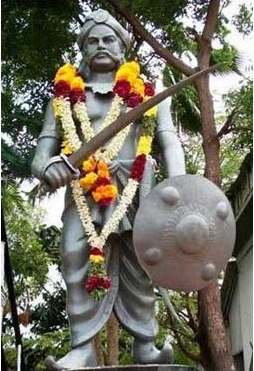 Thevar did not leave Yusuf Khan in peace. His Maravas ravaged Tirunelveli country so much that Yusuf Khan himself realised that he could not crush them by force so he bribed many of them to join his side. Yusuf soon found himself at war with Mysore and Dutch, which bought Thevar time. Yusuf Khan crushed a force of 3000 men sent by Kattabomman. Thevar learnt that the French were besieged in Pondicherry by the English and that Mahfuz Khan had gone over to Nawab, but his Maravas ravaged lands held by Yusuf Khan so much that he soon deployed the bulk of his force in front of Nelkettumseval in order to force the Maravas to abandon his lands.
He bought several pieces of heavy artillery but had no ammunition and sent a message to the British camp in Trichinopoly to send him ammunition. As he awaited, Puli Thevar launched a lightning raid on Yusuf’s camp and after killing and wounding several of Yusuf’s men retreated.
Finally after a long and ardous battle Puli Thevar was captured on his way to pilgrimage, and the rest as they say is the miracle of Mahadeva.
Puli Thevar’s desecendants are spread all over present day Tamil Nadu in the southern part. Most of them are located around the region called as nel kattan sevval (the place which doesn’t pay rice tribute) which before Puli Thevar’s war and after the Mohammaed Aley’s taking over Madura was known as Nel kattum sevval (The place that pays the rice tribute)
.
.
(28846)




 The Kunwars had since set up an alliance with the Shah kings of Nepal from the dynasty of the Hindu monarch Prithvi Narayan Shah and held several important positions under the dynasty, helping to consolidate the Shah rule over Nepal.
 It was at this time that Balbadra supported by only 600 troops (including women, the young and elderly) and fight these foreign mercenaries who had come to occupy his Hindu lands.
 Seeing the condition of his people, Balbhadra decided to ask Kathmandu for more troops as reinforcement to fight the foreigners. Sadly as the Shah’s were still consolidating the Hindu Kingdom, these troops could not be provided on time and so the Commander decided to move on to Gopichand hill fort from Dwara on Nov 18, 1814.
 Bhalbhadra Kunwar did not loose his life in the Gurkha-Anglo war, he procceded to Lahore, then capital of Punjab to join ranks with the new Lahore regiment formed by Maharaja Ranjit Singh. Balbhadra Kunwar in keeping with his brave past was made the General of this new regiment, which consisted of entirely Hindu Gorkhali troops. The word Gorkhali was strictly reserved for those Hindus who served under the Hindu kings, others who had served the Muhammadan warlords were known as “Munglane” and were seen as lowly and unclean.
 Western ‘scholarship’ has generally painted a picture of Hindu society in which women have forever been secluded from public life. This view has penetrated widely into the public mind, and has even been internalised by many Hindus. Yet if fails to take into consideration many facts.
 On taking control of Indore, she declared, “This kingdom belongs to Shankar (Shiva). On behalf of Shankar I will do my duty to manage the affairs for the benefit of the people.” She lived a very simple life. Instead of living in the palace she preferred to live on the banks of the River Narmada at the pilgrimage site called “Maheshwar”. Very few rulers in history have demonstrated such a lifestyle in which they give up all royal comforts but at the same time carried on their job very well.
