As Christianity expanded leaving in its trail genocides,pillage and the destruction of indigenous pagan traditions it couldn’t always break the spirit of the common people it persecuted who still prayed to the old gods and celebrated them in most cases secretly. So the church had another method of destroying the ancient traditions by Christianizing the traditional pagan festivals and legends.For example Easter and Christmas are really old pagan festivals but now Christianized . This was the art of inculturation which still continues and Hinduism being its biggest target.
When India came under the British Empire the native Indians had to be colonised and made subservient to that empire.So the colonial education programme was started and at the forefront of this were educationists who were also christian missionaries who applied the art of inculturation.To keep up with European colonial race theories Indians were divided under the fictional (north) Aryan and (south) Dravidian races.Unfortunately many of these educationists instead of being exposed for what they really were are celebrated for their love of Hindu Culture.There’s probably more proof to that proving the world is flat and if you sail to end of the ocean you fall of the planet.The following is an exposure by writer Thamizhchelvan showing how Tamil language and society came under the manipulation of the art of inculturation…
Misinformation campaigners project missionaries such as G.U. Pope, Constantine Joseph Beschi, Robert Caldwell, Barthalomaus Ziegenbalg, Francis Whyte Ellis and Dr. Samuel Green et al as great champions of Tamil and magnificent contributors to its development, including the introduction of “prose” writing. Of these, Francis Whyte Ellis or ‘Ellis Durai’ in Tamil, was a Madras-based civil servant in the British government and Samuel Green a doctor in Sri Lanka; both supported missionaries in evangelical causes.
All the above mentioned missionaries landed in Tamil Nadu with one “holy” aim of converting Tamil Hindus and christianising Tamil Nadu. Ironically, the writer Dr. K. Meenakshisundaram termed the era of these evangelists as the “Golden Period” of Tamil in his book, The Contribution of European scholars to Tamil, originally presented as the author’s thesis at the University of Madras, 1966. So it is all the more imperative for us to demolish this myth of Christian contribution to the development of Tamil and bring out the truth.
 Missionaries and their Mission
After landing in Tamil Nadu, the padris understood the need to learn the local language to converse with the populace for effective evangelization. They soon realized that the local populace, rooted in a centuries-old civilization, was culturally and religiously strong; hence they focused on Tamil literature to understand the cultural heritage and religious traditions, so they could devise different strategies for conversion. It needs to be understood clearly that these priests learnt Tamil language and literature with an agenda and not out of love or passion or with an intention of contributing to the growth of the language.
Moreover, it would not have been enough if these padris alone understood the cultural heritage and religious tradition of India; it had to be understood by the Church establishments which sent these missionaries on “holy” assignments. Only then could the masters realise the extent of manpower, money power and political power needed to destroy the 5000 year old culture and convert a spiritually strong India. That was why the priests learnt Tamil and translated the main literatures and wrote similar Christian works.
Abrahamic religions are political in nature; they are intrinsically political concepts more than religions, and aim to bring the entire world under their rule. They gain political power, capture territories and convert people. This was also the agenda of the Christian missionaries and the motive for them to learn our languages and literatures.
 The Establishments
Starting from the 16th century, Christian aggression slowly spread to many parts of India. The Portuguese, Dutch, French, German and British establishments landed in places such as Goa, Kerala, Tamil Nadu, Bengal and the North-East, etc., in the guise of trade and missions, and started encroaching fast and armed invasions followed suit. The Portuguese Inquisition in Goa was a bloody and terrible chapter in Indian history and the British oppression started with the advent of East India Company.
After capturing power and establishing Crown rule in 1858, the British government gifted vast stretches of lands to the churches and supported them with other infrastructures. They knew that the combined onslaught of political and religious power would produce quick results. It is pertinent to note that Indians have not woken up to this threat even after Independence, hence the government is being run by an Italian Catholic via a puppet prime minister, and many policy decisions are being taken in deference to the US administration.
Journalist Subbu in Dravidian Maya (Tamil) says that the Christian priests who landed in Tamil Nadu from foreign lands laid the foundation for Dravidianisation in Tamil Nadu as they knew Indians could not be subjugated as long as Hindu Dharma prevails. Speaking about the beginning of Christian encroachment, Subbu says, “The Dutch established their trade centres in Pulicat (Pazhaverkaadu) in 1609, Sadras (Sadurangapattinam) in 1647, Nagapattinam in 1660; the British set up shops in Masulipatnam in 1622, Madras in 1639, Cuddalore in 1683 and also in Calcutta; the French got Pondicherry in 1674 and the Danish settled in Tranquebar (Tharangampaadi) in 1620.”
He adds, “On one hand the Padires straight away indulged in conversions and on the other hand they started creating rift among the Hindus to divide them.” In the chapter “Caldwell’s Cousins”, he explains vividly the various methods of conversion used by the Padires and how they divided Hindu society (Dravida Maayai, Trisakthi Publications, Chennai, 2010; pp. 20-28).
As part of the agenda of grabbing political power and converting the population, the Christian missionaries, to destroy the native culture, also indulged in “Inculturation”.
 Roman Brahmin!
The man who laid the foundation of inculturation was the Italian priest Robert de Nobili (1577-1656). He learnt Sanskrit and Tamil, wore saffron robes, sacred thread (attached with a small Cross!), sandal mark on forehead and called himself a ‘Roman Brahmin’. He set up an “ashram” in Madurai, became a vegetarian and used “Pathukas” (wooden footwear). He claimed the Bible was the “Lost Veda”, the “Jesuit Veda” revealed by God, and was considerably successful in harvesting souls. Fortunately for Tamil Nadu, his European masters were not happy with his inculturation methods and subjected him to an enquiry which forced him to shift to other places like Trichy and Salem. Finally he settled in a small house in Santhome, Madras, and died in 1656. (The Portuguese in India, Orient Longman, Hyderabad, 1990, & Christianity in India: A critical study, Vivekananda Kendra Prakasham).
De Nobili is supposed to have written some 15 books apart from preparing a Portuguese-Tamil dictionary. He is credited with the insertion of many biblical terms in Tamil and no wonder Christianity was developed rather than the Tamil language!
Approving untouchability, he said in 1650, “A person need not disown his caste, creed and culture to become a Christian. Those who say that these would get spoilt if one becomes a Christian are ‘Saathaans’. This teaching is the main obstacle in spreading Christianity”. [A. Sivasubramanian, Kiruththvamum Saathiyum (Christianity and Caste), Kaalachuvadu Publishers; cited in Dravida Maayai, p. 19).
 Italian Munivar!
The next Italian missionary, Constantine Joseph Beschi (1680-1746), called himself Veeramaamunivar (Veer-Maha-Munivar) to pretend he was a great lover of Tamil. Outwardly conducting himself like a Hindu sanyasi, he took care of the conversion business in the districts of Madurai and Thanjavur. His work on a biography of St. Joseph, Thembaavani, was hyped as a great work and projected as equivalent to Kambar’s Ramayana!
Even now it is propagated that impressed with the beauty and richness of Kamba Ramayana, Beschi wanted to create a similar Christian work and hence came out with Thembaavani. It benefitted Christianity by establishing St. Joseph in Tamil Nadu. But it contributed nothing to the development of the Tamil language. How could the biography of a Christian saint help the growth of Tamil? He then came out with another work ,Paramartha Guruvum avarin Seedarkalum (Paramartha Guru and his Disciples), to ridicule our centuries old guru-sishya parampara This “munivar”, who denigrated our guru-sishya parampara, was honoured by Dravidian racists who installed a statue of him on Marina Beach.
 German Iyer!
In the same period, a German missionary Barthalomaus Ziegenbalg (1683-1719) also worked in Tamil Nadu and called himself Ziegenbalg Iyer. This Protestant priest landed in Tranquebar (Tharangampaadi) in 1706 and worked with a Danish company which was the first to bring German printing machines to Tamil Nadu. He printed the first Tamil Bible (New Testament). Even while indulging in conversions, he often quarrelled with the Danish authorities who put him in jail for some time. He was the first to stoke anti-Brahmanism by creating a hatred for Brahmins among other communities. As he fell sick often, he died at the age of 36 in 1719, leaving behind two churches, a training institute for converted Indian priests, and 250 converts in Tranquebar.
When the Lutheran Church, which grew in size over the years, celebrated the 300th anniversary of his arrival in Chennai in July 2006, Tamil Nadu Governor Surijit Singh Barnala eulogized Ziegenbalg for his “services” to the Tamil language and Tamil people. A commemorative stamp was also released.
Ironically, even the British government didn’t bother to celebrate the second century of his arrival in 1906! It is truly unfortunate that a constitutional head of an Indian state eulogised a person who was instrumental in creating caste animosities among the natives in order to convert them and destroy the native culture.
The critical question is, did Tamil grow because of his Tamil Bible and other Tamil Christian works? Of course not! Only Christianity grew.
 Italian Iyer and Thiruvaachakam distortion
Next in the list of Christian Priests who “served” the cause of Tamil was another ‘Iyer’ – G.U. Pope (1820-1907) or “Pope Iyer.” He translated a few Tamil literary works such as Thiruvaachakam, Thirukkural and Naaladiyaar, and said he could find the teachings of Apostle St. Paul and St. Francis of Assisi in Sri Maanickavaachakar’s Thiruvaachakam; innocent Tamil scholars felt elated at his “graciousness”.
Even some Tamil Saivite Mutts felt proud at G.U. Pope’s statement. Tamil scholar Muthukumaraswamy, who has in-depth knowledge on Saiva Siddhanta, demolishes this myth, citing Pope’s own statement, “In the whole legendary history of this sage … there stands out a real historical character, which seems to be a mixture of that of St. Paul and of St. Francis of Assisi. Under other circumstances what an apostle of the East might have become,” as evidence of Pope’s sarcasm and disdain. He exposes the mindset of G.U. Pope who states that a religious guru from the East would not have attained a spiritual level beyond this in order to undermine the spiritual greatness of Sage Maanickavaachakar.
Supporters and admirers of G.U. Pope in general and the Dravidian-Christian combo in particular have spread the following story for years: “G.U. Pope has the habit of beginning with a Thiruvaachakam hymn every time he writes a letter to his acquaintances in Tamil Nadu. One such time, he was so moved by the sacred hymn that the tears rolling down from his eyes fell down and erased a few words. As he thought that the tears (due to the sanctity of the hymn) too were sacred, he decided not to rewrite those words and sent the letter without adding them.”
The story was circulated to show that Pope was a lover of Thiruvaachakam, and a great admirer of Tamil savant Sri Maanickavaachakar.
Dr. Muthukumaraswamy asks, “Who was the recipient of that letter? Which hymn was written in that letter? What happened to that letter? Is there any record of either Pope or the recipient or the recipient’s relatives and friends mentioning about that letter? Had this been a true story G.U. Pope would have certainly included it in the reprints of his translation. But why he had not done so? Even well-known Tamil scholar ‘Thiruvaachakamani’ K.M. Balasubramaniam, who has great admiration for G.U. Pope, has not recorded that story in any of his works. Why?”
‘Thiruvaachakamani’ K.M. Balasubramaniam says, “… the genuine and gigantic efforts of Dr. Pope in uttering ‘Open Sesame’ to throw open the doors of the treasure-cave of Thiruvachakam to the cultured savants of the West stung the Tamils of their callousness and startled them into an awakening and appreciation of their past”. What more need be said about the innocence (or ignorance?) of Tamil Hindu scholars? Balasubramaniam has translated Thiruvaachakam in English!
 In the course of an article in www.tamilhindu.com, demolishing the myth about G.U. Pope, Dr. Muthukumaraswamy exposes how Pope deliberately distorted the hymns titled Neeththal Vinnappam (Praying for Mukti), which becomes an insult to Sage Maanickavaachakar. He explains: “Bhagwan Shiva presents himself before Sage Maanickavaachakar in the Temple at Thruthuraipoondi, blesses him and tells, “You embark on a yatra and finally come to my abode Kailash. Wherever you go, I will present myself before you as your guru”. The Sage embarks on his yatra and one day reaches the temple at Uttarakosamangai near Ramanathapuram. As he didn’t get the darshan of Bhagwan Shiva, he feels let down and unable to bear this parting, with mounting sorrow and emotion sings a hymn earnestly praying for Bhagwan’s appearance.”
Explaining the above context, G.U. Pope infers, “The serene and beautiful environment prevailing in Uttarakosamangai Temple was too ‘testing’ for Maanickavaachakar to continue his sanyas. He also remembers his family life in Madurai married to a beautiful woman, and the patronage which he got from the Pandya King. His retrospection of married life leads him to keep contact with the Deva Dasis serving the Temple. As he lost his control and crashed down from the higher level of sanyas, he developed a sort of complex, which created a guilty consciousness forcing him to sing this hymn.”
To quote Pope, “From the evidence of these verses, we conclude that there were two things from which he suffered. One of these was the allurements of the female attendants who in bands pertained to the temple. We have noticed this elsewhere, Hindu commentators will often find mystic meaning, which are harmless, if unfounded. Again and again in this and other poems he deplores the way in which he has been led to violate his vow. The other difficulty often referred to was the way in which mere ceremonial acts had to be performed, affording no relief to his conscience.” By giving such a blasphemous introduction to this divine hymn, G.U. Pope not only insulted Sage Maanickavaachakar and denigrated Thiruvaachakam, but shocked the Hindu majority and hurt their religious sentiments.
Dr. Muthukumaraswamy explains: “It is a norm in Bhakti literature for the authors to take the sins committed by the people upon themselves… Maanickavaachakar takes upon himself all the sins continuously committed by the people without making any attempts to seek mukti, and sings the said hymn praying for Bhagwan’s appearance and His blessings for mukti. Does the distortion made by G.U. Pope add any value to the beauty and sanctity of Thiruvaachakam? Does it add value to the greatness of Sage Maanickavaachakar? Has it helped the development of Tamil? Will any self-respecting Tamil Hindu appreciate and eulogise G.U. Pope and thereby insult Maanickavaachakar?”
It is also a norm in Bhakti literature for poets to talk about ‘sitrinbam’ (kama) and later surrender at the lotus feet of Bhagwan praying for ‘paerinbam’ (mukti). Many poets have written such poems considering the presiding deity as their ‘nayaka’ or ‘nayaki’. The poets employ the entire range of Nava Rasas in order to create a Kaavya.
 In this case, Sage Maanickavaachakar’s hymn was not a confession, but a prayer for mukti by taking upon himself all the sins committed by the people. He ultimately surrenders to Bhagwan requesting Him to liberate him from this maya called prapancha and bless him with mukti. Pope’s interpretation is a nothing but an expression of Christian fundamentalism.
Dr. Muthukumaraswamy quotes another instance where G.U. Pope ridicules murti worship or vigraha aradana: “G.U. Pope says that a person who attains a higher level of spiritualism also indulges in murti worship and rustic rituals, which go totally against his level of spiritualism.” To quote Pope’s own words, “There is in them a strange combination of lofty feeling and spirituality with what we must pronounce to be the grossest idolatry. And this leads to the thought that in Saiva system of today two things that would appear to be mutually destructive are found to flourish, and even to strengthen one another. The more philosophical and refined the Saivite becomes the more enthusiastic does he often appears to be in the performance of the incongruous rites of the popular worship.
“Pope exhibits the typical Christian hatred for murti puja by terming it an act of stupidity. Dr. Muthukumaraswamy rightly asks, “When Thiruvaachakam is full of Guru Stuti – Invoking the Guru – how come G.U. Pope ridicules murti worship? Was it fair on his part to criticize such a divine act of Bhakti?”
Dr. Muthukumaraswamy cites another instance where Pope deliberately insults Maanickavaachakar: “All must be aware of the specific incidence (mentioned in Thiruvilaiyaadal Puranam – Purana on Bhagwan’s Plays) that Bhagwan Shiva takes the blows from Pandya king’s flog for the sake of Maanickavaachakar, after which the King realizes the sage’s greatness and appeals for pardon and later allows Maanickavaachakar to leave Madurai for Thiiruthuraippoondi. But G.U. Pope distorts this incident as follows:
“As there was a conflict between Madurai and Chidambaram temples, Maanickavaachakar left Madurai for Chidambaram and never returned to Madurai. He was afraid of going back to the Pandya king, who had not pardoned him for misappropriating the money given by the king for the purchase of horses. So, he never got back to Madurai.”
To quote Pope, “It does not appear indeed, that Maanickavaachakar ever revisited Madura after his formal renunciation of his position there. It may almost be inferred that he was never heartily forgiven by the king for the misappropriation of the cost of horses.” So much for G.U. Pope’s love for Thiruvaachakam!
 Dr. Muthukumaraswamy says, “G.U. Pope wrote the translation of major portion of Thiruvaachakam staying in a town called Lugano in Italy, wherein he used to regularly visit the St. Maria degili Angioli Church to have the needed diversion, relaxation and a sort of rejuvenation by seeing the paintings of Bernardinao Luini. He has also recorded that he always used to feel the presence of Sage Maanickavaachakar beside him kneeling down and praying to Jesus. Pope avers that the Sage must have been a follower of Jesus until the time of his (Jesus) going to Heaven, which must be the only reason behind the feeling of great devotion found in his work. He also says that, he believed Maanickavaachakar, Mylapore’s Handloom worker (Thiruvalluvar) who wrote Thirukkural and the Nomad Gnanis (Jain Sages) who wrote Naaladiyar and others who have freed themselves from the flesh must have certainly visited this Church and realized themselves through the history of Jesus and Christian thoughts.”
There is another concocted story about G.U. Pope in Tamil Nadu which says that Pope wanted the statement, “Ingu oru Thamizh Maanavan urangukiraan” (A Tamil student is sleeping here) sculpted on his grave stone and that the statement is still present there on his grave. But those who have gone to the cemetery have confirmed that there was no such statement written on his grave except the ones from the Bible. G.U. Pope’s grave can be seen in this link:
Motivated lies on Thiruvaluvar and Thirukkural
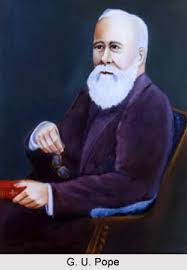 G.U. Pope translated and published Sage Thiruvalluvar’s Thirukkural in 1886. There is an ancient folklore that Thiruvalluvar was friends with a captain of a ship and used to meet him often at the beaches of Mylapore. G.U. Pope accepted this as a true story. As a true Christian, he also believed the myth of St. Thomas and relied on the concoction that Thomas converted a large number of families in and around Mylapore. He then gave an introduction to the Thirukkural as follows:
“Thiruvalluvar worked hard to acquire knowledge by all means. Whenever a ship anchors in Mylapore coast, Valluvar’s ‘Captain’ friend would send him message about the arrival of new visitors including foreigners. Many foreigners could have travelled in his friend’s vessel and landed in Mylapore via Sri Lanka. Within me I see the picture of Thiruvalluvar talking with the Christians gathering information and knowledge. He has gathered a lot of Christian theories in general and the minute details of Alexandrian principles in particular and incorporated them in his Thirukkural. The philosophy of Christian theories from the church situated near Valluvar’s place is present clearly in Thirukkural. Thiruvalluvar lived between 800 AD and 1000 AD. The Christian biblical works were certainly an evidence for Valluvar’s Thirukkural. He was certainly inspired by the Bible.” (Dr. T.N. Ramachandran, Thamizhaga Andhanar Varalaaru, (History of Tamil Brahmins), Vol. II, LKM Publications, Chennai, 2nd pub. 2005, pp. 641 to 643).
This sordid introduction to his translated work shows G.U. Pope’s fanatic mindset and the ulterior motive behind his “love” for Tamil language and literature! Dravidian racists have installed a statue of this Christian missionary on Marina Beach, an inexplicable honour for a man who denigrated the sacred hymns of Thiruvaachakam and insulted Sage Maanickavaachakar and Sage Thiruvalluvar.
No wonder they blithely ignore Saivite and Vaisnavite literary works, the great Nayanmars and Alwars, and sing paeans on Christian missionaries during the so-called Classical Tamil Conference!!! The irony is that Thiruvalluvar’s picture was the emblem of the conference!
 Caldwell the Racist!
Another missionary who inflicted massive damage on Tamil Hindus was the Scot Robert Caldwell (1814-1891) who, along with his wife Elissa Mault, resided in Tirunelvelli and made huge conversions. While he focused on the male population, she converted the womenfolk.
He sowed the poisonous seed called Dravidian Racism. He fully utilised the Aryan-Dravidian theories concocted by German linguist Max Mueller and imposed them on Tamil Hindus as true history. He abused the word “Dravida” to the hilt and projected Tamil Hindus as a separate Dravidian Race. His book, Dravida Mozhikalin Oppilakkanam (“A Comparative Grammar of the Dravidian or South Indian Family of Languages”, Harrison: London, 1856), which gave him the reputation of a great champion of Tamil, spewed venom on Brahmins and accused them of spreading lies. If Ziegenbalg was the founder of anti-Brahmanism, Robert Caldwell was responsible for spreading it throughout the region, giving a stimulus to the radicalization of the Non-Brahmin movement.
Ironically, A Comparative Grammar of the Dravidian or South Indian Family of Languages cannot be termed his own work as he allegedly took lots of passages from Francis Whyte Ellis, who wrote Dravidian Language Hypotheses.. To understand why Caldwell resorted to “research” South Indian languages, one should read Dr. K. Muthaia’s article, Caldwell Oppilakkanaththin Arasiyal Pinnani (“The Politics Behind Caldwell’s Comparative Grammar”), published in the April 1997 issue of the Tamil monthly magazine Kanaiyaazhi.
Muthaia states, “Many research conclusions found in Caldwell’s book on comparative grammar of Dravidian languages have political reasons and undertones. The motive behind his arrival was to convert the South Indians and christianise the southern region. He was also considerably successful in his religious mission… A detailed and in-depth study of his work would make us understand that he had had Sanskrit hatred, anti-Brahminism and denigration of Hinduism as objectives, but not establishing the antiquity of Tamil and the individuality of Tamil people…. Knowing pretty well that he would not be able to spread Christianity among Tamil people unless their mindset on Hindu culture and Sanskrit language was changed, he indulged in creating hatred for North Indians in the minds of the Tamil Hindus. As a first step in that direction, he created the concept of ‘Dravidian Language Family’ ” (Dravida Maayai, Subbu, op. cit., pp. 26-28).
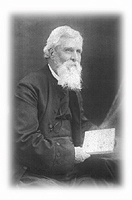 Caldwell’s infamous book Tinnevelly Shanars proved to be his nemesis. Though his focus for conversion was mainly on Shanars (Nadars), the dominant community in Tirunelvelli, he literally denigrated them and their lifestyle in the said book. The outraged and agitated community allegedly decided to punish him which forced him to shift base from Tirunelvelli to Ootacamund, where he breathed his last.
Robert Caldwell was instrumental in creating anti-Brahmin, anti-North, anti-Sanskrit and anti-Hindu feelings among the Tamil people and dividing them through Aryan-Dravidian racial theories. His activities laid the foundation for Tamil separatism, which badly affected the national integration. His Comparative Grammar of Dravidian Languages also played an ugly role in creating racial differences between Sinhalese and Tamils in Sri Lanka, for he argued in that book that “there was no direct affinity between the Sinhalese and Tamil languages”. There is not even an iota of truth in the propaganda that he was a lover of Tamil and helped the development of Tamil. That is a misinformation campaign floated by the Church and supported by Dravidian racist parties.
At a seminar on the last day of the recent Classical Tamil Conference, Prof. Parveen Sultana said, “Protecting our mother tongue is very important. We have come across many instances in world history where nations are conquered by capturing and dominating their languages. For example, a famous quote doing rounds in Africa says, ‘When they came here, they had the Bible and we had our lands. Now we have the Bible and they have our lands!’ This has happened wherever Christianity has landed”.
That she spoke this truth in a conference where the likes of Caldwell were eulogised shows her courage! Delving into the great culture of this land, the learned professor spoke about the construction of temples and their greatness. Parveen Sultana’s speech was one of the rare highlights of the conference which was otherwise dominated by Christianity, Dravidian racism and eulogies for Kalaignar Karunanidhi.
 More on Padires’ love for Tamil!
The history of Tamil Nadu has many more evidences of the “divide and dominate” policy of the White Church. During the reign of Kizhavan Sethupathi in the kingdom of Ramanathapuram, a Portuguese Padire by name John De Britto indulged in heavy harvesting of souls. He even converted the close kin of Sethupathi Raja, but was finally punished by the King. V. Gopalan has written a detailed essay on this missionary and his activities:
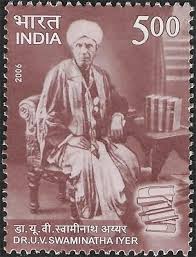
Sri Thyagaraja Chettiar was a great exponent of Tamil literature and had great love for the language. Once a European missionary who claimed to have mastered Tamil grammar came and showed some changes he had made to a few verses of Thirukkural. Outraged by the audacity of the Padire to change verses of such a great work, adored as a Tamil Veda, Sri Thyagaraja Chettiar scolded him and literally drove him away. This incident is mentioned in Dr. Vu. Ve. Swaminatah Iyer Urainadai Noolkal (Dr. U.V. Swaminatha Iyer’s Prose Works, Vol.-3, pp. 520-523).
Sri Pandithurai Thevar of Madurai, another great exponent of Tamil language and literary works, learned that a British missionary had made changes to the very first verse of Thirukkural and printed the same. He immediately purchased the entire lot and burnt them! (Dravida Maayai, op. cit., pp. 21-22).
 Baptising Thiruvalluvar and Blaspheming Thirukkural
Christians who had the temerity to lay their hands on Thirukkural then, have now gone to the extent of baptising Thiruvalluvar! Taking a cue from G.U. Pope’s atrocious introduction to Thirukkural, a fanatical evangelist called Deivanayagam, supported by the Madras Catholic Diocese, has been on a relentless campaign that, “Thiruvalluvar was a disciple of St. Thomas and most of the teachings in Thirukkural have been either taken from Bible or from the preaching of St. Thomas.”
The Roman Catholic Dioceses of Kerala and Tamil Nadu had announced in 2008 that they would be producing a film on the life and times of St. Thomas, wherein they would depict Thiruvalluvar as a disciple of St. Thomas.
Later, as confirmation of the unholy Christian-Dravidian nexus, Tamil Nadu Chief Minister Karunanidhi graced the occasion of the said film’s inaugural function as chief guest. Though himself an expert on the Thirukkural, the Chief Minister chose to participate in the inauguration of a film falsely portraying Thiruvalluvar as a disciple of St. Thomas, a complete concoction and an audacious expression of extremist evangelism.
 Tamil prose and Christian farce!
An oft repeated propaganda is that Christian missionaries introduced “prose” writing in Tamil. A blatant lie! When Tamil Hindus have been adept at art, literature, music, architecture and theatre, wouldn’t they have been good in prose too? Is it not outrageous and insulting to say that people from Europe came and introduced prose writing to Tamil Hindus?
Tamil as a language is at the least 2000 years old. Starting from the Sangam Era, Tamil tradition has been a literate tradition with written records, preserved down the centuries by late classical and early medieval Tamil Brahmin and Saivite Hindu scholars. It was not an “oral” legacy as alleged by Christians and Dravidian racists.
We have had commentaries on almost all ancient literary works, Sangam and post-Sangam, in prose, by learned scholars such as Ilampooranaar, Senavaraayar, Peraasiriyar, Parimelazhagar, Nachinaarkkiniyaar and Deivachchilaiyaar. Saivite Hindu Adheenams have helped preserve the classical Tamil literary tradition down the centuries. The important fact to be noted is that the continuance and preservation of written Tamil literary heritage happened despite repeated invasions and unsettled political conditions.
 The rich tradition continued in more modern times by devout Hindus such as U.V. Swaminatha Iyer, Ramachandra Dikshidhar, Neelakanda Shastri, P. Narayanaswami Iyer and Raghava Iyengar, etc., in Tamil Nadu and staunch Hindu activists such as Arumuka Navalar, C.W. Thamotharam Pillai and Swami Vipulananda in Sri Lanka.
The so-called contribution of Christian missionaries comes nowhere near the contribution of these devout Hindus to Tamil scholarship in recent times. That is mainly because these devout Hindus had Bhakti, involvement in the growth of Tamil language, passion towards the culture of the soil and the mind to sacrifice everything for the development of the language, continuance of the culture and preservation of the tradition.
The missionaries focused destructively on the christianisation of the native culture. They had ulterior motives unlinked to the Tamil language – consolidation of European rule in India and conversion of the natives to the religion of Europe.

The Lexicon story!
The website www.cathnewsindia.com says, “The task of setting down on paper the alphabet, grammar, rules and vocabulary of the Tamil lexicon began in Christian schools, towards the end of the 19th century. It was pioneered by Father Swamy Gnanapragasam, who transcribed hundreds of ancient scripts into print. A statue in his honor can be seen in Jaffna city. His work was continued by Father Hyacinth Singarayer David, a master in Indo-Aryan languages and doctor in linguistics, who published six volumes of the lexicon….”
This is an inappropriate claim – the alphabet, vocabulary and rules of Tamil lexicon by far precede the Christian colonial missionary era. It seems Tamil Scholars in Sri Lanka are divided over the acceptance of Father Gnanapragasam as a scholar and historian. Some say he had made claims on history and linguistics that were not backed by historical evidences. For example, he said Tamil was the mother of all languages in the world! They also say that none of his works were peer reviewed by well known academics on the subject or published in reputed journals of history; he lacked post-graduate training in the historical method and was hardly a scholar of note.
Long before the arrival of Christian missionaries we had “Nigandus” or dictionaries. Tamil scholar/poet Dandapani Desikar’s direct student Sri Maniyan, who had written lexicons for many ancient Tamil literary works, says, “Nigandus were in the form of poetic verses, which made the students, teachers and research scholars to remember them easily. These Nigandus have been there since 11 century CE. But, the dictionary of alphabetical order was introduced by Foreigners”. (Interview in Rasanai monthly magazine, July 2010, Chennai) To claim that “prose” writing was introduced by Christian missionaries and only because of their contribution Tamil got a second life in the 18th century and survived is outrageous.
 Padires; Proselytisers; Printers!
The fact of the matter is that the white Christians imported printing machines from their countries and introduced printing technology here. What for? To help them in proselytisation works and to speed up the process of conversion!
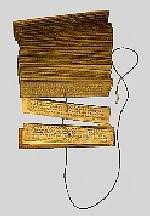
Before the introduction of paper and printing, valuable books in Tamil language were written on both sides of palm leaves and committed to memory. Writing on the palm leaf, a common practice in those days, was a difficult work which only a trained person could do (so also writing on stone, copper plates etc). Several written leaves were bound together with wooden or brass boards at each end and tied up into a book. For referring to anything in a book, it had to be untied, the relevant page spotted, and the matter read. This laborious process was quite easy for Tamil Hindus.
But the missionary found it extremely difficult. So he transported the printing machine, the paper and the techniques, from his native west. Another great handicap with the palm leaf was that only one copy could be written at a time; it could be duplicated only by hand copying one at a time. Every pupil under a teacher copied his own book in manuscript. But for the proselytizing missionary, many copies had to be taken at a time for distribution among prospective converts. Hence the printing machine was essential for them.
We may note that printing for the first time in India was in the Tamil language. Printing machines were imported by Jesuit priests and the first books in Tamil Nadu were printed in Tirunelvelli. The books printed through German collaboration for Danish Protestant missionaries were in vogue in the east coast around Tranquebar in Thanjavur district. (We have already seen that the German Protestant Padire Barthalomaus Ziegenbalg printed the Tamil Bible through a German machine owned by Danish Church in Tranquebar).
Similarly, the British established a printing press at Vepery in Madras for their own missionaries. The East India Company had a law which prohibited natives from opening any printing press or from printing any book. Only foreigners and missionaries (including native Christians) were permitted printing. The admirers among native Christians say the missionaries did great service to Tamil by introducing printing. But, it was done with an ulterior motive. In the matter of printing, only missionaries were encouraged by the Company. Printing in local languages helped the missionaries in their conversion work and the Company wanted proselytisation. The history of printing in India, as of any other progressive enterprise like education, shipping or even medicine, is the history of suppression of Indian activities.
 Ellis, who was a civilian, and Munroe, who was governor of Madras, both took great trouble to get the Press Law annulled, but this was done only in 1835. But for this ban, printing of Tamil books by eminent Tamil Hindu scholars of the day would have commenced even in the 18th century, and a great volume of classical Tamil literature could have been preserved through print.
The Company positively helped only in the loss of a vast literary wealth in the whole of India. The loss is said to be the greatest in Tamil, because Tamil had the largest heritage of ancient classical literature in the whole of India, barring perhaps Sanskrit (“History of Early Printing” in Christianity in India – A Critical Study by Vivekananda Kendra Prakashan).
This being the truth, the claim by Christians and Dravidian racists that Christian missionaries helped the development of the Tamil language is outrageous, atrocious, and simply fallacious. It is evident that the Christian establishment in fact destroyed the Tamil language and culture to a great extent by not allowing natives to own printing presses and print books by promulgating a law to this end. Ergo, this is the “great Christian service” to Tamil!
According to the website www.cathnewsindia.com “It was Father Xavier Stanislaus Thaninayagam who founded the International Association of Tamil Research (IATR) and called the first International Conference of Tamil Studies in 1965. That event ultimately led to this year’s highly prestigious conference”.
While one can agree that Father Thaninayagam founded the IATR, one can only say that the claim of his IATR leading to the just-concluded First World Classical Tamil Conference is dubious. In fact, the Christian website should have had the courage to say IATR refused to conduct the World Tamil Conference this year despite a request from Karunanidhi.
Yet it attempts to take credit for the event even though Karunanidhi ignored IATR and went ahead with the First World Classical Tamil Conference, wherein he announced the setting up of World Tolkappiyar Classical Tamil Sangam (WTCTS) to the utter shock of IATR.
 Depending on the political climate, both may merge tomorrow, for the Church is capable of going any lengths to establish its “love” for Tamil. The IATR has conducted 8 conferences in the last 45 years, of which one was a DMK conference (Madras, 1968, when Annadurai was CM), two were AIADMK conferences (Madurai 1981, by MGR and Thanjavur 1995, by Jayalalithaa); the remaining five (Kuala Lumpur 1966, Paris 1970, Jaffna 1974, Kuala Lumpur 1987, Mauritius 1989) were relatively lacklustre.
And what did the Tamil language, literature, archaeology or culture receive from these eight conferences – NOTHING! Undeniably, the just concluded Classical Tamil Conference was also a DMK jamboree. Television channels clearly confirmed this through their live telecasts. And Christian domination was also quite visible in this conference, which again underlined the Christian-Dravidian nexus.
Rev. Thamil Nesan, in his article on Rev. Thaninayagam in the Christian website www.transcurrents.com says, “At this memorable occasion (Tamil Meet at Coimbatore), it is very much appropriate to remember gratefully Rev. Prof. Thaninayagam (1913–1980) who toiled hard and dedicated his entire life to make Tamil Language, Tamil Literature and Tamil Culture better known and appreciated in the world…. The name, having served so well this Catholic ambassador of Tamil culture, now stands immortalised in the history of the Tamil people and Tamil studies…. Since he was well versed in many European Languages and their literatures, he was able to blaze a trail in the comparative study of Tamil Literature with the literature of European Languages”.
A question arises, what is Tamil culture or rather, what do these Christians define as Tamil culture? Is there such a thing as Hindi culture, Telugu culture, Marathi culture, Gujarati culture, Bengali culture, when all the Bharatiya language communities are united by a single civilisational inheritance, that is, the Hindu in inspiration? That is the culture of this Hindu Bhumi! There may be minor differences in customs and rituals, but the culture and tradition are one and the same. Though the spoken languages are diverse, the Gods and Goddesses, festivals and way of living are all the same for ages. In the Hindu way, Unity is not at odds with Diversity; indeed, Diversity flows from Unity.
 In the above mentioned article Father Thamil Nesan says, “Tamil festivals are celebrated in many parts. All this was possible, thanks to the strenuous efforts by one individual: Xavier S. Thaninayagam, a Catholic Priest from Jaffna.” He does not list the so-called Tamil Festivals. If we ask the Dravidian racists who changed the traditional Tamil New Year to list out the Tamil festivals, they would come out with only one – Pongal, also claimed as Thamizhar Thirunaal. Yet this is none other than the Makara Sankranti celebrated throughout India. But what about other festivals celebrated by Tamils? The Dravidian racists have not included them as they are Hindu festivals.
So why did Father Thamil Nesan use the word “Tamil Festivals”? Here is the answer! In course of his article Thamil Nesan says, “Fr. Thaninayagam has made a tremendous contribution towards internationalising Tamil Studies. He was a Catholic priest who championed Tamil Culture”. As Tamils world over celebrate each and every festival with great fanfare, would it not have added respect and pride to Father Thaninayagam had the Christians addressed him as a “Champion of Hindu culture”? They wouldn’t have, because they wanted to remove the Hindu identity of the Tamils! They have not said “Indian culture” either. Destroying “Hindu” identity and establishing “Tamil” identity would be possible only by hijacking the language, literature and culture. That is why all Christian missionaries have been projected as champions of Tamil, Tamil literature and Tamil culture.
Thamil Nesan literally confesses: “ … Fr. Thaninayagam, an ardent advocate and zealous Apostle of Tamil language of the 20th century… From his younger days, he was quite conscious of the linguistic and literary talents that God had given him and he cultivated them well in order to use them in the service of God and men. As a priest he made a deep study of the Tamil language and literature in order to equip himself better for his ministry among the Tamil speaking people of South India and Sri Lanka.… Fr. Thaninayagam has made a tremendous contribution towards internationalising Tamil Studies. He was a Catholic priest who championed Tamil Culture. Catholic Christianity is an international religion and it seemed to have helped him a great deal in his lifetime task of internationalising Tamil Studies…. In the midst of all his international activities for the acknowledgement of the antiquity, richness and beauty of the Tamil language and literature, he remained always a devoted priest of God.”
Thamil Nesan quotes Prof. C.R. Boxer, University of London, UK, as saying, “He (Thaninayagam) was in the best sense a ‘Citizen of the World’ widely travelled in four continents and on seven seas, he was always alert and receptive to new ideas, people and places; but he was never deflected by them from his vocation as a Roman Catholic Priest.”
 A section of Tamil scholars, unconvinced about Thaninayagam’s ‘contribution’, ask, “what precise contribution did Thaninayagam make to the Tamil language in terms of publications in reputed journals of history, in the study of Tamil linguistics as peer reviewed by accredited academics or the study of Tamil history? Did he add to the store on knowledge?” They aver, “no doubt, his organizational skills were excellent in spearheading the IATR. But let’s not forget that the IATR was a joint endeavour with several others participating in it to make it a success. One cannot confine the credit to just one individual”.
Compare that to U.V. Swaminatha Iyer who did yeoman service in first publishing the Sangam era Tamil classics for posterity. His contribution to the preservation of Tamil classics was phenomenal. Or to the role of Hindu savant Arumuka Naavalar in Sri Lanka who was the first to use the modern printing press to publish early Tamil classics.
As for Vaiyapuri Pillai, noted Tamil lexicographer, he remains the only scholar who critically evaluated the dates of Tamil literature by addressing issues of syntax, vocabulary and literary cross references. He was the only academic schooled in the science of textual criticism. His dating of Tamil literary works would demolish the subsequent exaggerated claims by Dravidian parties in general and DMK in particular on Tamil literature, an exaggeration aided and abetted by the Christian missionary effort.
 Conclusion
All Christian missionaries from Robert De Nobili to Robert Caldwell, all Christian priests like Thaninayagam and evangelists like Deivanayagam, worked and are working for the same agenda of hijacking Tamil language, erasing its Hindu identity, destroying the native culture, converting the natives and ultimately forming a Tamil Christian Nation comprising Tamil Nadu and North and East of Sri Lanka.
Dravidian racists, lacking in pride, passion and patriotism, have joined hands with the Church and Christian establishments to alienate the Tamil region from the national mainstream. The situation is ominous, and we need to defeat the nefarious designs of vested interests at any cost. The present political climate in both Tamil Nadu and Sri Lanka is not encouraging and the political establishments are of no help in both regions. The onus lies on Tamils living in Tamil Nadu and Sri Lanka. They must re-Hinduise their identity and reiterate themselves with pride, passion and perseverance. They must understand that their language, music, art and architecture are all part and parcel of the great Hindu culture inherited from the Vedic civilisation, which evolved along the sacred rivers Sindhu and Saraswati.
 Tamil identity is linked to the broader Hindu identity. We witness this in Carnatic music, the Bharatanatyam dance form, temple architecture, sculpture, classical literature, politics and overseas trade. The Sangam era literature may not have been explicitly religious in theme, but whenever the early poems referred to religious practice, one discerns Hindu observance as in the worship of Mayon or Vishnu, Seyon or Murugan, Kotravai or Durga, Venthan or Indra, and Varuna.
Immediate post-Sangam works like Tirukkural, Silapadhikaram and Manimekalairesonate even more with the broader Indic philosophic currents. The subsequent era of the Thevaram and Naalaayira Dhivya Prabandham or Hindu devotional classics sponsored the growth of Tamil imperial power and the political consolidation of the land which in turn facilitated overseas trade and prosperity. Agriculture and irrigation grew in no small measure. The origins of the Tamil language and its development were linked throughout history with the broader Indic world. Let’s never forget that!
This explains why the Thiruvaachakam is sung at the coronation of the Thai king, why the traditional Tamil New Year in April is the New Year observed in Cambodia and Burma, and the Tamil influence in the Hindu religious iconography of Indonesia. The Hindu identity is connected even to New Zealand. The bronze temple bell presumably gifted by the Maoris (tribals of what later became New Zealand) to Protestant missionary William Colenso (around 1836) contained Tamil inscriptions!
Tamil is Hindu; Tamil culture is Hindu culture; Tamil tradition is Hindu tradition; Tamil heritage is a continuity with the Vedic civilisation which evolved on the banks of Sindhu-Saraswati and flows down to Kanyakumari.
by Thamizhchelvan
 Shortly there after, in 1640 CE the Mughal tyrant Shah Jahan ( of the Taj Mahal fame) dispatched Ghazi Najabat Khan with the orders to extirpate the Kafirs of the Uttarakhand. The warrior queen karnavati is said to have prepared for the invasion by leading the troops herself. She drew the Mughals to an ambush in steep mountain slopes north of Dehradun and fallen upon them with the advantage of height. The Mughal army suffered a major defeat. She is said to have prevented their retreat by blocking their rear in the narrow valley and captured several Jihadis.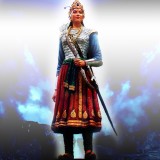
 n 1542, she was married to Dalpatshah, the eldest son of king Sangramshah of Gond Dynasty. Chandel and Gond dynasties got closer as a consequence of this marriage and that was the reason Keerat Rai got the help of Gonds and his son-in-law Dalpatshah at the time of invasion of Shershah Suri in which Shershah Suri died.
 This plan of Mughul invasion was the result of expansionism and imperialism of Akbar. When Rani heard about the attack by Asaf Khan she decide to defend her kingdom with all her might although her minister Adhar pointed out the strength of Mughal forces. Rani maintained that it was better to die respectfully than to live a disgraceful life.
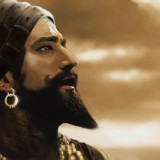
 It started in 1681 with the Mughal emperor Aurangzeb’s invasion of Maratha empire. It ended in 1707 with Aurangzeb’s death. Aurangzeb threw everything he had in this war. He lost it all.
 At the time of Shivaji’s death in 1680, Maratha empire spanned an area far more than the current state of Maharashtra and had taken firm roots. But it was surrounded by enemies from all sides. Portuguese on northern Coast and Goa, British in Mumbai, Siddies in Konkan and remaining Deccan sultanates in Karnataka posed limited challenge each, but none of them was capable of taking down the Marathas alone. Mughal empire with Aurangzeb at its helm was the most formidable foe.
 After the death of Shivaji in 1680, a brief power struggle ensued in the royal family. Finally Sambhaji became the king. By this time Aurangzeb had finished his North missions and was pondering a final push in Deccan to conquer all of the India.
 The beginning went quite well. Shah Alam crossed Krishna river and entered Belgaum. From there he entered Goa and started marching north via Konkan. As he pushed further,he was continuously harassed by Marathas. They ransacked his supply chains and reduced his forces to starvation. Finally Aurangzeb sent Ruhulla Khan for his rescue and brought him back to Ahmednagar. The first pincer attempt failed.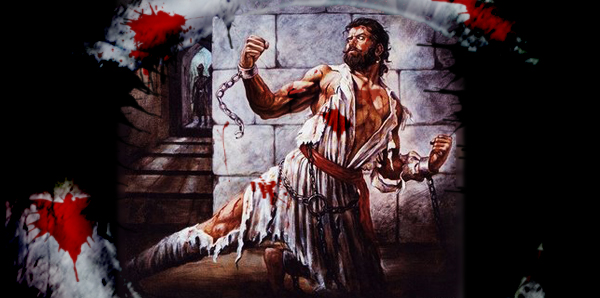
 Julfikar khan, who was orchestrating Jinji siege, left the siege on Aurangzeb’s orders and marched back. Santaji followed him to North, but was defeated by Julfikar Khan. Santaji then diverted his forces to Bijapur. Aurangzeb sent another general Kasim Khan to tackle Santaji. But Santaji attacked him with a brilliant military maneuver near Chitaldurg and forced him take refuge in Dunderi fort. The fort was quickly sieged by Santaji and the siege only ended when most of the Mughal soldiers starved and Kasim Khan committed suicide. Aurangzeb sent Himmat Khan to reinforce Kasim Khan. Himmat khan carried heavy artillery. So Santaji lured him in a trap in the forest near Dunderi. A sudden, ambush style attack on Mughals was followed by a fierce battle. The battle ended when when Himmat Khan was shot in head and died. All his forces routed and Santaji confiscated a big cache of weapons and ammunition.
 Jinji fell, but it did a big damage to the Mughal empire. The losses incurred in taking Jinji far outweighed the gains. The fort had done its work. For seven years the three hills of Jinji had kept a large contigent of mughal forces occupied. It had eaten a deep hole into Mughal resources. Not only at Jinji, but the royal treasury was bleeding everywhere and was already under strain.
 In March of 1700, another bad news followed Marathas. Rajaram took his last breath. His queen Tarabai, who was also daughter of the gallant Maratha Commander-in-Chief Hambeerrao Mohite, took charge of Maratha army. Daughter of a braveheart, Tarabai proved her true mettle for the next seven years. She carried the struggle on with equal valor. Thus began the phase 3, the last phase of the prolonged war, with Marathas under the leadership of Tarabai.
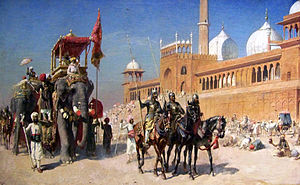 In this war, Aurangzeb’s army totaled more than 500,000 in number (compared to total Maratha army in the ballpark of 150,000). With him he carried huge artillery, cavalry, muskettes, ammunition and giant wealth from royal treasuries to support this quest. This war by no means a fair game when numbers are considered.
 Marathas had one big advantage on their side. They were the expert in fort warfare. The game of defense using forts had two components.
 Marathas mostly launched offensive attacks in the region when Mughal army was away. They rarely engaged Mughal army in open fields till later part of the war. If situation seemed dire, they would retreat and disperse and thus conserve most of their men and arms for another day. The rivers Bhima, Krishna , Godavari and the mountains of Sahyadri, divide entire Maharashtra region is in several North- South corridors. When Mughal army traveled South through one corridor, Marathas would travel North through another and launch attacks there. This went on changing gradually and in the end, Maratha forces started engaging Mughals head on.
 Last but not the least, we must give due respect to one more thing. The seeds of every political revolution can be traced back to a spiritual one and this was no exception. The “Bhakti” movement in Maharashtra that began with 12th Century saint Dnyaneshwar and spearheaded by saint Tukaram (who was contemporary of Shivaji), played a role of social catalyst of immense effect. It created a forum, a pool in society where everyone was welcome.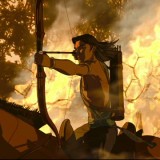
 nAchChittvA para-marmANi nAkR^itvA karma dAruNam |
 Laid low by the prowess of the above gods, all people pay obeisance to them, but not all time to brahms or dhatri or pushan.
 vidhAnaM deva-vihitaM tatra vidvAn na muhyati |
 okayAtrArtham eveha dharma-pravachanaM kR^itam |
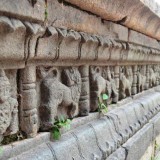
 Local scholars are still unsure about her identity, but what they do know is that this shrine’s unique roots lie not in China, but in far away south India. The deity, they say, was either brought to Quanzhou — a thriving port city that was at the centre of the region’s maritime commerce a few centuries ago — by Tamil traders who worked here some 800 years ago, or perhaps more likely, crafted by local sculptors at their behest.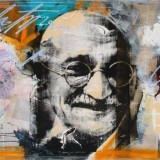


 The common denominator in all these costly mistakes was a lack of realism.
 During his prayer meeting on 1 May 1947, he prepared the Hindus and Sikhs for the anticipated massacres of their kind in the upcoming state of Pakistan with these words: “I would tell the Hindus to face death cheerfully if the Muslims are out to kill them. I would be a real sinner if after being stabbed I wished in my last moment that my son should seek revenge. I must die without rancour. (*) You may turn round and ask whether all Hindus and all Sikhs should die. Yes, I would say. Such martyrdom will not be in vain.” (Collected Works of Mahatma Gandhi, vol.LXXXVII, p.394-5) It is left unexplained what purpose would be served by this senseless and avoidable surrender to murder.
 So, he was dismissing as cowards those who saved their lives fleeing the massacre by a vastly stronger enemy, viz. the Pakistani population and security forces. But is it cowardice to flee a no-win situation, so as to live and perhaps to fight another day? There can be a come-back from exile, not from death. Is it not better to continue life as a non-Lahorite than to cling to one’s location in Lahore even if it has to be as a corpse? Why should staying in a mere location be so superior to staying alive? To be sure, it would have been even better if Hindus could have continued to live with honour in Lahore, but Gandhi himself had refused to use his power in that cause, viz. averting Partition. He probably would have found that, like the butchered or fleeing Hindus, he was no match for the determination of the Muslim League, but at least he could have tried. In the advice he now gave, the whole idea of non-violent struggle got perverted.
 t cannot be denied that Gandhian non-violence has a few successes to its credit. But these were achieved under particularly favourable circumstances: the stakes weren’t very high and the opponents weren’t too foreign to Gandhi’s ethical standards. In South Africa, he had to deal with liberal British authorities who weren’t affected too seriously in their power and authority by conceding Gandhi’s demands. Upgrading the status of the small Indian minority from equality with the Blacks to an in-between status approaching that of the Whites made no real difference to the ruling class, so Gandhi’s agitation was rewarded with some concessions. Even in India, the stakes were never really high. Gandhi’s Salt March made the British rescind the Salt Tax, a limited financial price to pay for restoring native acquiescence in British paramountcy, but he never made them concede Independence or even Home Rule with a non-violent agitation. The one time he had started such an agitation, viz. in 1930-31, he himself stopped it in exchange for a few small concessions.
 The ethical framework limiting the use of force to a minimum is known as “just war theory”, developed by European thinkers such as Thomas Aquinas and Hugo Grotius between the 13

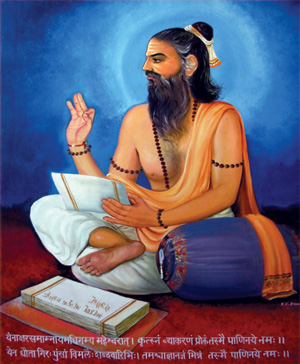 Panini described the grammar of Sanskrit algebraically in complete detail, an achievement that has not been matched for any other language until today. Panini’s grammar is as intricate in its structure as the most powerful computing machine. The scope of his achievement qualifies Panini as one of the greatest geniuses who ever lived. Not only did he influence attitudes in the East for centuries, his ideas led to the development of the subject of philology in the West.
 Five of the thirty-six chapters of the Natya Shastra are devoted to music. Bharata speaks of the 22 shrutis of the octave, the seven notes and the number of shrutis in each of them. He explains how the vina is to be tuned. He also describes the dhruvapada songs that were part of musical performances.
 But Bharata’s great text lay forgotten in India for almost a thousand years, his ideas remembered mainly through secondary sources. This is surprising considering this work has a sweep broader than that of Euclid or Panini. It is easy to understand success in devising a method of geometrical reasoning or finding the algebra of grammar as they are inherently structured. But imagine the audacity of creating a language for gesture, dance and music! Also, Euclid and Panini wrote for the scholar, whereas Bharata’s work influenced millions directly or indirectly. For these reasons alone, the Natya Shastra is one of the most important books ever written.
 Their devotion to their ways earned them grudging respect for exemplifying ‘freedom’ which by the late 18th century had caught the imagination of Europe fighting the suffocation of the Church. Slowly, the Roma (Gypsy) singers began to enjoy the patronage of the middle-class and the aristocracy.
 Bharata stresses the transformative power of creative art. He says, “It teaches duty to those who have no sense of duty, love to those who are eager for its fulfillment, and it chastises those who are ill-bred or unruly, promotes self-restraint in those who are disciplined, gives courage to cowards, energy to heroic persons, enlightens men of poor intellect and gives wisdom to the learned.”
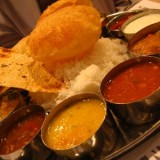
 But the original curry predates Europeans’ presence in India by about 4,000 years. Villagers living at the height of the Indus civilization used three key curry ingredients—ginger, garlic, and turmeric—in their cooking. This proto-curry, in fact, was eaten long before Arab, Chinese, Indian, and European traders plied the oceans in the past thousand years.