Takshashila: The world’s first known university

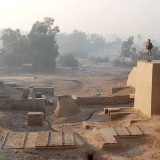
At least 2,800 years ago, circa 800BCE, there existed a giant University at Takshashila (often called Taxila), a town located in the north-western region of India (in today’s Pakistan). According to references in the Ramayana, King Bharata founded the town in the name of his son, Taksha.

The site initially began to develop as a loosely connected group of buildings where learned persons resided, worked and taught. Over the years, additional buildings were added; rulers made donations and more scholars migrated there. Gradually a large campus developed, which became a celebrated seat of learning in the ancient world.

  • Not only Indians but also students from as far as Babylonia, Greece, Syria, Arabia, Phoenicia and China came to study.
  • 68 different streams of knowledge were on the syllabus.
  • A wide range of subjects were taught by experienced masters: Vedas, Language, Grammar, Philosophy, Medicine, Surgery, Archery, Politics, Warfare, Astronomy, Astrology, Accounts, Commerce, Futurology, Documentation, Occult, Music, Dance, etc.
  • The minimum entrance age was 16 and there were 10,500 students.
  • The panel of masters included renowned names like Kautilya (the author of the “Arthashastra”), Panini (the codifier of Sanskrit into today’s form), Jivak (medicine) and Vishnu Sharma (author and compiler of the Panchtantra).

When Alexander’s armies came to the Punjab in the fourth century B.C., Takshashila had already developed a reputation as an important seat of learning. Thus on his return Alexander took many scholars from there with him to Greece.

Being near the north-west frontier of India, Takshashila had to face the brunt of attacks and invasions from the north and the west. Thus the Persians, Greeks, Parthians, Shakas and Kushanas laid their destructive marks on this institution. The final blow, however, came from the Huns (also the destroyers of the Roman Empire) who, A.D. c.450, razed the institution. When the Chinese traveller Huen T’sang (A.D. 603-64) visited Takshashila, the town had lost all its former grandeur and international character.

(31959)

Vajra Mushti : Style of the Thunderbolt Fist

[box_light]Vajra Mushti (Sanskrit vajramuṣṭi वज्रमुश्टि) is a Sanskrit bahuvrihi compound translating to “one who is grasping a thunderbolt” or “one whose clenched fist is like a diamond”. It is a name of Indra mentioned in the Ramayana epic[/box_light]


Prior to his training in Brazil in the late 80’s, author and Brazilian Jiu Jitsu Black Belt, John Will, travelled to and trained in some of the most exotic places in Asia and the sub-continent.It was during those travels, that he sought out and trained with the notorious Jyesthimalla clan in the desert state of Gujarat in India.
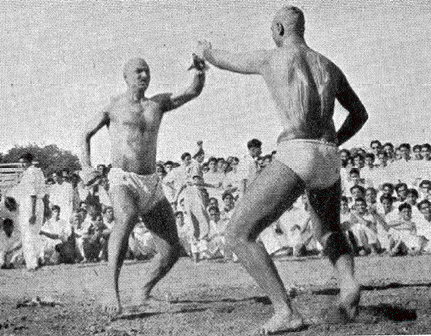
 

Vajramushti Indian Vale TudoThe beginning of the no-rules Vajramushti match – complete with ivory-carved knuckledusters worn on the right hand of each combatant.


Training

The Jyesthimallas are the keepers of this ancient and formidable art; an art in which a knuckleduster is tied onto the wrestlers right hand and used in ways that would make the hardest UFC veteran, wince in disbelief. This art form is by no means, a modern day adaption of the wrestling and striking arts; it has a history, a lineage and traditions that take us back to the middle ages and possibly beyond.
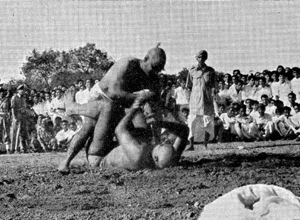
 

The 'Guard' in old IndiaVajramushti wrestling techniques included working from the bottom position – in recent times, Brazilian Jiu Jitsu has brought similar strategies into mainstream focus.


The Mallapurana

Indian culture has produced a plethora of Puranas, (ancient texts), ranging from writings on ancient ayurvedic medicine, classical architecture, from warfare to lovemaking – and these collections of ancient wisdom have been written, re-written and handed down from generation to generation till modern day.

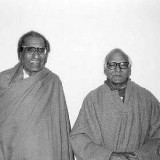
One such Purana, the Mallapurana is kept at the Oriental research Institute in Poona, India. It is written in the Devangari script and dates back to the year 1731 A.D. It describes many of the practises and traditions of the Vajramushti wrestlers in particular; some of which will be described in this article. It also mentions the Jyesthimalla’s or Jyesthi clan of fighters, who still carried on the practice of this art into recent times. The term Jyesthi translates as ‘the best’ and comes from the word Jyestha meaning most prominent or seniormost. The Jyesthimallas still inhabit the Gujarat region of India till this day – two renowned Jyesthimalla’s were Shri Sitaram and Laxminarayana Sagar, both pictured in this article.

This ancient Mallapurana text contains eighteen chapters, describing everything from the diet, training practices and stages of the fight in detail. From the syntax and spelling of certain words contained therein, there is evidence enough to suggest that it was copied in the 1700’s from another, even older source that may have dated back to even centuries earlier.

The word Mallapurana is a term derived from two words; Malla – meaning wrestler or fighter and Purana – denoting ‘ancient or old story’. Hence, Mallapurana, refers to the ancient works denoting the practices of fighters or wrestlers.
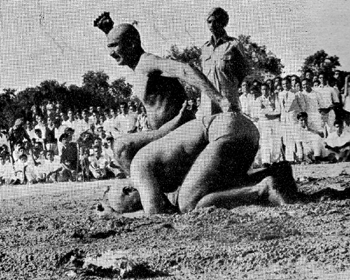
 

Omo Plata in Indian NHBThe victor has won the match by locking up his opponents weapon arm – note that the lock applied in this case is almost identical to the ‘Omoplata’ of modern day brazilian Jiu Jitsu.

The Training


The Mallapurana describes the various types of exercises the wrestlers would undertake to condition themselves for the fight. Among these are:

  • The Rangasrama – refers to the actual wrestling and wrestling techniques. These include all manner of grappling techniques, such as takedowns, fighting from the bottom, fighting from the top, and striking techniques.
  • The Sthambhasrama – the set of exercises performed on a standing upright pole called a Sthamba. There are many kinds of Sthamba, although the most common is an upright pole, some eight to ten inches in diameter, planted into the ground. The wrestler performs various complex callisthenics on it to develop arm, leg and upper-body strength and stamina.
  • The Gonitaka – this refers to the training done with a large stone ring. This weight is lifted and swung in various ways, even worn around the neck to develop neck, back and leg strength.
  • The Pramada – is the set of exercises performed with the use of the Indian clubs – the Gada. These tools are still used by many Indian wrestling Akhada (wrestling schools) today.
  • The Kundakavartana – refers to the callisthenics performed without the use of equipment; tumbling, various styles of push-ups, squats, etc that are used to develop overall strength and stamina.
  • The Uhapohasrama – refers to the discussion of tactics and strategies and is considered an important part of the fighters training regime.

The training of boys did not begin till they were about ten or twelve years of age. Initially, they were taught just the callisthenics and exercises to develop both strength and stamina. Much importance was placed on Baithakas, or squats and Dandes, or Indian pushups.

Once the student has developed sufficient strength, flexibility and stamina, he is introduced to the Mallasthamba or wrestlers pole, where the power to grip, with both arms and legs is developed to a high degree. There are many ways in which the wrestler mounts, utilizes and dismounts this free-standing pillar. Alongside these main methods, practices such as swimming and running were also used to further prepare the fighter to train in actual wrestling techniques and eventually, competition.

The wrestling or fighting training was done in the Akhada, usually a circular or square area of some thirty feet across, filled with soft soil. The earth in the Akhada is kept soft by constant tilling and by the addition of various substances, such as ochre, buttermilk and oil. Water is usually sprinkled over the training area, about every third day.
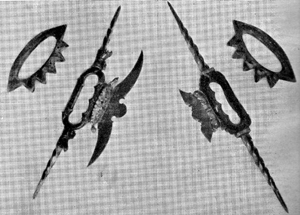
 

Indian WeaponsHere are some examples of the various Vajramushti – the two smaller weapons are used for the sporting aspect, whilst the larger, complete with spiked ends, were used in warfare.


The Vajramushti

In this fierce style of wrestling, the combatants wear the Ayudha or Vajramusti on their right hand. This weapon, commonly known today as the knuckleduster, is usually made out of buffalo horn or ivory. It has several small holes along it’s length, so that it may be tied onto the hand with thread, so as not to become dislodged during the fight.

A weapon similar to the Vajramushti, was also used in the ancient Greek and Roman world. It was used by boxers and Pancrationists, and was called the Cestus. It was a ring, usually made of bronze, worn around the knuckles, to add power to a blow. Many variations of this weapon have been described in both ancient Greek and Indian literature.The Vajramushti’s that were used in warfare had sharp spikes or blades extending from each end.

In training, the Vajramushti wrestlers are taught many ways to lock-up and immobilize the arm that holds the Vajramushti. These locks are applied with the arms, or legs and sometimes a combination of both. Various methods of striking and defending are also part of the mainstream training regimen. Takedowns, knees and elbows are also employed – although striking with the weapon to any target below the chest is considered an illegal technique.
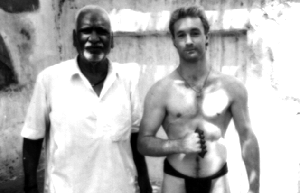
 

John will with Indian WrestlerThe author in the mid 1980’s,alongside renowned Jyesthimalla wrestler, Shri Sitaram, wearing the Vajramushti.


The Vajramushti Match

On the day of the match, the combatants heads are shaved clean, except for a small tuft of hair on the crown of the head. Several Neem leaves are tied to this tuft of hair as a good luck omen. The wrestlers body is then rubbed down with red ochre, which is supposedly mean’t to keep the body cool during the fight.

Before leaving their family Akhada for the match, both fighters pray to their family Goddess, Limbaja. For this worship, a square altar is temporarly constructed in the middle of the wrestling pit, upon which a branch of the Neem tree is planted. To the east of this altar, a small platform is placed, upon which, the weapons of the wrestlers are placed.

After prayers and rituals are completed, the fighter is given the Vajramushti, which is tied to his right hand. Upon leaving their family’s place of training, the wrestlers make their way to the public areana, where they enter in a zig- zagging, jumping fashion.

The object of the match was to bring the other fighter to the point of submission; either by blows or a locking up of the Vajramushti-wielding arm. It is a limited-rules engagement, where knees, kicks and strikes are all legal techniques to be used in conjunction with grappling techniques .

Both fighters receive payment after the match, with the winner receiving double the amount of his defeated opponent. If the match was a draw, and neither fighter was submitted, then the prize was shared.
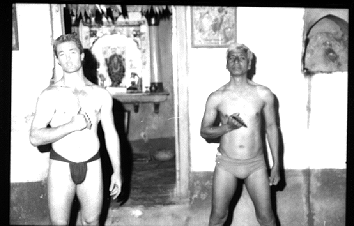
 

John Will with a Vajramushti wrestlerThe author with another Vajramushti wrestler, just prior to a training session in a renowned Jyesthimalla Akhada.


The Jyethimallas

The Jyesthimalla’s are now found in the Indian states of Gujarat, Mysore, Hyderabad and Rajasthan. In Baroda, the capital of Gujarat, several of the better known Jyesthimalla’s have kept training Akhada’s right up to present day. The Jyesthi’s are a sub-caste of the Modha Brahmins, and as such worship the Indian deity, Krishna.

It is interesting to note that the Jyesthimalla’s have been referred to in ancient literature, as far back as the 12th and 13th centuries. They have always had the distinction of being Ayudhajivi Brahmanas, that is Brahmins (the priest caste) living on arms.

The Jyesthi’s living in the 16th century were renowned athletes, and thought of as being synonomous with fighting. In fact, to this day, there is an expression in the state of Gujarat, ‘the Jyesthimallas are fighting’, and it is used to describe any serious duel between two combatants.

The Jyesthi’s have had a long tradition of working as bodyguards to marriage parties, and have been patronised by kings, princes and rulers for many centuries.

In the early 19th century, the Jyesthimallas were sponsored by the Gaekwads, and so, many were invited to Baroda from Dalmal and Hyderabad. Those that came from the Hyderabad continued to maintain their family’s fighting tradition right up until modern day; but sadly, by the late 1980’s there were only several surviving practitioners of this ancient art still living in Baroda. Even then, it was an art on the verge of extinction.
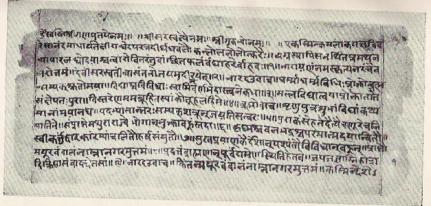
 

Indian Wrestling TextThe 1st page of the Mallapurana text preserved at the Oriental Research Institute in Poona.


Conclusion:


In this the 21st century, we see ourselves at the very pinnacle of evolution in as far as the combative arts go. And this may well be the case – due not to the effort of any single individual, but rather to the advent of the information explosion. We simply have more information at our fingertips today, than we have ever had in the history of mankind. Via the internet and cable television, any 15 year old can keep abreast of what is happening at any given moment. The magazine racks are crammed with publications to cater for every taste. Martial arts schools flourish on every corner.

But it has not always been this way. To put things in context; only twenty years ago, nobody outside of Brazil had heard of Brazilian Jiu Jitsu or Vale Tudo. Forty years ago, the term ‘Kickboxing’ hadn’t even been coined yet. Sixty years ago, no-one had ever heard the words ‘Karate’ or ‘Kung Fu’ outside of the Orient. In other words, our history of professional mixed martial arts is a very short one indeed; some would say, even non-existent.

It is worth the effort, at least in my opinion, to peer back into time, and examine arts such as those practised by the Vajramushti fighters, and marvel at the sheer wonder and history of it all. Over centuries, such arts were developed, who knows to what amazing degree; for no video cameras existed and no cable television networks were there to broadcast the struggles of these time-forgotten athletes.

It takes several decades, and the work of many, to develop an art to the point where it’s level of effectiveness outweighs it’s theoretical musings – but sadly, with the passing of only one generation it can all be forgotten as if it had never existed at all. The world is growing smaller; history and legends fade by the minute – but if we pay attention and keep our hearts open, much can still be preserved.

– John B Will

(8138)
Hindu Mind of Science

In our modernist parlance science and religion are held to be polar opposites. Scientific is equated with being rational, logical and in tune with reason. Religion however is seen as backward, laughable and regressive, as well as totally obscurantist. Yet how does this equate with the fact that many of the scientific strides came from India, a land and civilisation which has endured from ancient times and retains its core spirituality?

The ancient Indus Valley Civilisation dates back 5000 years. Yet the earliest excavations revealed that it must have been developed by a highly complex and intelligent society. Urban centres were planned on a chequerboard pattern with sophisticated drainage and sanitation. The same scientific knowledge was responsible for the reservoir and drainage systems which fed the agricultural base.

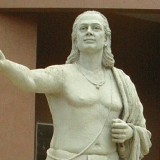
Further centuries saw incredible developments in the forging of bronze and iron weapons. Treatment of diseases such as leprosy, cataracts and smallpox. Trigonometric functions were used by the mathematician Aryabhata in the fifth century. The calculus theorem now known as “Rolle’s theorem” was stated by mathematician Bhāskara II, in the twelfth century. It is that to which we now turn.

The Vedic texts treated numbers as sacred and developed highly complex mathematics, especially in geometric constructions. Despite being known today as ‘Arabic’ the decimal number system originated from India. This is one of the most important gifts Hindu civilisation gave to the world. Modern calculations would be unthinkable without this. Key to this is the use of zero, which represents the empty set, nothing, no value.

To us it seems normal but it was an incredible feat of the ancient Hindu mind to realise that ‘nothing’ could be represented. Is it so logical? After all nothing is ‘nothing’? So why represent it? We cannot possible understand this unless we understand the mind which gave rise to the possibility that even ‘nothing’ could be understood in symbolic terms. And to do this that mind had to think both abstractly and delve into deep spiritual consciousness. This means we must revaluate our prognosis that science and spirituality stand at polar opposites of the spectrum in human understanding.

What led to ‘nothing’ be represented by the now familiar circular symbol which we call ‘zero’? Only a human mind which could understand the idea of ‘nothingness’. In this state of eternal bliss free from materialistic ties. This can only be achieved by moksha which is escape from the cycle of rebirth which one is fated to endure. If the mind is obsessed by hedonism and materialism it is destined to be tied to the wheel of reincarnation. But to achieve moksha is to be liberated from this.

It is the understanding of moksha which led the ancient Indian mind to understand that the empty set had a value, a very important value, the most profound value. Hence in ancient India the spiritual and scientific worlds were united and never separate. That is why Hindu civilisation has endured while others have perished. That is also why what we deem as western scientific development has at its core the essence of Indian spirituality.

Let us end this by looking at the most obvious example. Computing could not have developed without binary. And binary could not have developed without zero. Here ‘nothing’ as a value is essential. It is in fact so essential that without ‘nothing’ there would have been no computing. Technologically we would have all remained in the dark ages. So we can thank the ancient Hindu mind for showing us the light.


(5940)

Baji Rao1st : The Peshwa

By the 1730s the Mughal Empire lay in ruins.The rulers of Delhi, the ‘Padshahs of the world’ had been humbled and the successors of Aurangzeb lived in terror of the revolutions convulsing the subcontinent of India. The spectre of religious fanaticism in the late 1600s had led to a revolt by the Hindu populace of India from the foothills of the Himalayas, the Rajputs of Rajasthan, The Jaats of Bharatpur, the Bundelas of Central India, the Satnamis of North India, The Kolis and Bhils of Gujarat, The Bedars of South India and the Ahoms of Eastern India.

None however provoked as much terror and fear in the hearts of their enemies as the slogan of the Hindu Padshahi coined by the first great leader Shivaji of the irresistible cavalry pouring from the arid hills of Western India. These were the Hindu Marathas. From the inspiration of Shivaji and Sant Ramdas they unleashed such energies into India that the Mughal Empire fell in ruin.

Following the death of Shivaji and the 27 year war of liberation the Marathas freed their homeland from Mughal tyranny when the son of the prime minister, a 19 year old named Baji Rao made an inspired speech in the court of the Maratha king.


[box_light]

‘Strike, strike at the heart of the rotting tree and the branches will fall of themselves. Then this land of the Hindus will be free’

[/box_light]


He then embarked on a ceaseless twenty year campaign in a strike northwards, every year inching nearer to Delhi and the extinction of the Mughal Empire. It is said that the Mughal emperor was in such terror that he refused a meeting with Baji Rao, fearing to sit in his presence. The holy pilgrimage routes of the Hindus from Mathura, to Benares to Somnath were made free of harassment.

The greatest of the warriors of the empire, Mughal, Pathan and Central Asian alike were defeated by Baji Rao: Nizam ul Mulk, Khan I Dauran, Muhammad Khan are but a few of the names of the warriors who failed before the Marathas. The Battles of Bhopal, Palkhed, the victories over the Portuguese invaders in Western India are amongst his great achievements.He died at the untimely age of 39 in 1739, in military camp surrounded by his army.He has been described as the incarnation of Hindu energy, ceaselessly striving for 20 years to establish the Hindu Padshahi.

His sons continued his mission of carrying the saffron flag to the gates of Afghanistan in 1758 to the fort of Attock in the North and simultaneously marching to the Southern shores of India. He represents the creative and destructive power of Dharma as he unleashed the urge of a people yearning to be free and remains as a symbol of victory to the modern day.

What others said :

J. Grant Duff says in “History of the Marathas”:

“Bred a soldier as well as a statesman, Baji rao united the enterprise, vogour, and hardihood of a Maratha chief with the polished manners, the sagacity, and address which frequently distinguish the Brahmins of the Concan. Fully acquainted with the financial schemes of his father, he selected that part of the plan calculated to direct the predatory hordes of Maharashtra in a common effort. In this respect, the genious of Baji rao enlarged the schemes which his father devised; and unlike most Brahmins of him, it may be truly said- he had both- the head to plan and the hand to execute.

“Sir R. Temple says in “Oriental Experiences”:

“Bajirao was hardly to be surpassed as a rider and was ever forward in action, eager to expose himself under fire if the affair was arduous. He was inured to fatigue and prided himself on enduring the same hardships as his soldiers and sharing their scanty fare. He was moved by an ardour for success in national undertakings by a patriotic confidence in the Hindu cause as against its old enemies, the Muhammadans and its new rivals, the Europeans then rising above the political horizon. He lived to seethe Maratha spread over the Indian continent from the Arabian sea to the Bay of Bengal. He died as he lived in camp under canvas among his men and he is remembered among the Marathas as the fighting Peshwa, as the incarnation of Hindu energy.

“Jadunath Sarkar says in his forward to “Peshwa Bajirao I and Maratha Expansion”

“Bajirao was a heaven born cavalry leader. In the long and distinguished galaxy of Peshwas, Bajirao Ballal was unequalled for the daring and originality of his genius and the volume and value of his achievements. He was truly a carlylean Hero as king- or rather as Man of action.’ If Sir Robert Walpole created the unchallengeable position of the Prime Minister in the unwritten constitution of England, Bajirao created the same institution in the Maratha Raj at exactly the same time.

“Surendra Nath Sen says in “The Military System of the Marathas”:

“The lover of Mastani knew well how to appeal to the religious sentiments of his co-religionists, although he could scarcely be considered an orthodox Brahman… Shivaji had given the Marathas a common cry, and none appreciated the potency of that cry clearly than Peshwa Bajirao. Shivaji’s military reforms he would not or could not revive, but he stood forth, as Shivaji had done, as champion of Hinduism. People of Central and Northern India saw in him a new deliverer.”

(11926)

Indus Valley 2,000 years older than thought


The beginning of India’s history has been pushed back by more than 2,000 years, making it older than that of Egypt and Babylon. Latest research has put the date of the origin of the Indus Valley Civilisation at 6,000 years before Christ, which contests the current theory that the settlements around the Indus began around 3750 BC.Ever since the excavations at Harappa and Mohenjo-daro in the early 1920s, the civilisation was considered almost as old as those of Egypt and Mesopotamia.

The finding was announced at the “International Conference on Harappan Archaeology”, recently organised by the Archaeological Survey of India (ASI) in Chandigarh. Based on their research, BR Mani, ASI joint director general, and KN Dikshit, former ASI joint director general, said in a presentation: “The preliminary results of the data from early sites of the Indo-Pak subcontinent suggest that the Indian civilisation emerged in the 8th millennium BC in the Ghaggar-Hakra and Baluchistan area.”

“On the basis of radio-metric dates from Bhirrana (Haryana), the cultural remains of the pre-early Harappan horizon go back to 7380 BC to 6201 BC.” Excavations had been carried out at two sites in Pakistan and Bhirrana, Kunal, Rakhigarhi and Baror in India.

Source

(2643)

Panipat 1761: Going Down in a Blaze of Glory

On the afternoon of January 14th over fifty thousand men lay dead on the ancient battlefield staining the holy ground with their blood. Afghan and Indian Muslim lay locked in a deadly embrace with their arch enemies, the Hindu Marathas of the Deccan.

After six hours of desperate combat the Marathas were overwhelmed by the tide of numbers of their enemies and their lines broke in despair. Their commander Sadashiv Bhau lay dead on the field surrounded by the bodies of twenty Afghans eventually giving his life in the hour of defeat .The Muslim coalition of Afghans, Pathans, Rohillas, Awadhis were victorious and marched to Delhi to celebrate their victory.

The Maratha Empire lay shattered with the death of Sadashiv Bhau and Vishwas Rao swiftly followed by the death of the Peshwa himself in grief, Balaji Baji Rao. Any yet in the defeat lay the seeds of recovery and their eventual victory over the Muslims.

The desperate struggle against the pan Islamic coalition unaided by any of the other Hindus in the regions such as the Rajputs, or Jats  their campaigning in far flung regions such as Punjab and the borders of Afghanistan thousand of miles from their Deccan homeland gave them a sense of pride and achievement not seen for a thousand years amongst the Hindus of India. The hoisting of the saffron flag, Bhagwa jhanda, in the fort of Attock in modern Pakistan’s’ border with the Afghans fulfilled the prophecy of their first king Shivaji the Great.

By 1772 they were back in Delhi defeating the Pathans and in revenge pulled down their tombs and monuments of victory even consigning the remains of Najib Khan to the fire after pulling it from his grave.The courage of the army in 1761 became as a legend to the Maratha warriors who followed. The fight to the death of 60,000 famished soldiers on starving mounts against 120,000 Afghans led by one of the best generals of the day,Ahmed Shah Abdali.

On the morning of January 14th after being besieged for over two months and facing imminent starvation the Maratha soldiers clamoured around the tent of their commander Sadashiv Bhau asking to be led in a final struggle as it was better to die fighting than of starvation. Their commander dipped their hands in henna and impressed them upon some parchment as a signal of their determination. The Marathas then lined up to face their foes, twice their number. The rest is best described by an eyewitness in the Afghan army quoting from his memoirs and the letters of Ahmed Shah Abdali himself,

[box_light]
“Across the centre of the Maratha army a huge saffron banner hung, and after the marching ceased and some discharge of cannon we saw the flashing of thousands of swords raised in defiance and a great battle cry arose from the ranks of the enemy – Har Har Mahadev. Suddenly in a tremendous rush they came at us in an irresistible charge with the ground shaking and the war cry of Har Har Mahadev ringing in our ears.

Right through the centre of the army they broke through, the wild charge and courage of our enemies smashed through the ranks of the battle hardened Afghans sweeping all before their path On the right wing battalions of Telegus from South India were locked in shoulder to shoulder combat with the Pathans of Shah Pasand Khan. Despite being half their number the shorter dark skinned South Indians killed almost double the number of Muslim warriors in shoulder-to-shoulder combat raging for three hours. In this dark moment the reserves of the Afghan army, the camp followers and any man we could lay our hands on were sent into the battle to hold the breaking Afghan lines, many hundreds had taken the road to Kabul sensing defeat but were pushed back by the king’s bodyguards”.

[/box_light]

Even then, hopelessly outnumbered and outgunned the Marathas fought on. The sky was darkened with arrows and shot as it fell among them but they did not yield the ground. Three times again under Sadashiv Bhau and the sixteen year old Vishwas Rao they rallied again under the giant saffron banner and charged again like a tidal wave of the ocean till the very ground disappeared in a hail of dust, blood and bodies where only the sounds of ‘Yah Ali’ and ‘Har Har Mahadev’ could be heard.

The Afghans were still pressed back by the wild courage of their Maratha enemies until further allies’ came to reinforce the Afghan lines and push the Marathas back. Almost six hours of ferocious fighting had left the Marathas utterly drained but again they formed again and again under the saffron banner and came charging at us in a final attempt to secure victory, Before them all darted the Peshwas son, Vushwas Rao leading the attacked until just after three o clock he was shot through the temple and his body brought before the Bhau.

[box_light]”In that black moment the Bhau tasted the bitter dregs of defeat and knowing that he could not return to his home in Poona, a thousand miles distant with the dead body of the heir to the Maratha Empire. He dismounted from his mount along with his commanders and bodyguards and charged into the advancing mass of the Afghan army and was never seen alive again by any man. In the last moments with broken muskets, they kept fighting with spears and swords until these fell from their hand, they then fought with rocks and stones and eventually grappled us with their bare hands until death took them to the home of brave warriors”[/box_light]

The Abdali had won ! but at such a cost that he gave up his dream of a permanent Indian Empire forever. Another Maratha army was marching from the Deccan to continue the fight and after a brief stay in Delhi Abdali returned to Afghanistan.

A survivor from the lost field was Mahadji Sindhia, wounded for life and escaping after a perilous journey home he recovered and helped reform and refit the Maratha forces Sindhia, The kingmaker of India, marched victoriously into Delhi in 1772 and defeated the last Pathan rising in 1788 after slaying Ghulam Khan.

The recovery of the Marathas was complete after just ten years of the Panipat saga and it is said that in the last moments of Abdalis life he was informed that his arch foes were back in Delhi, mingling the call of death with the bitterness of eventual defeat after his repeated attacks on India. The powers of fanaticism and bigotry combined with utter mercilessness were repelled by the steadfastness and resolution of the Hindus of India, a tribute and reminder that freedom is never cheaply bought with confronted with the politics of ‘Terrorisation’..


(11527)