The Vedic Yoga and Yoga as a Whole

[box_light]In classical Indian thought, Yoga in the general sense refers to a particular way of spiritual practice and as such has been taken up by most of the spiritual traditions in India, Hindu, Buddhist and Jain . In this regard, Yoga suggests to us characteristic practices of asana, mantra, pranayama and meditation.[/box_light]

Yoga in this broader sense as spiritual practice has five basic types.

1)      Jnana Yoga, the Yoga of Knowledge, using meditation for Self-realization

2)      Bhakti Yoga, the Yoga of Devotion, seeking union with God as the Divine Father or Divine Mother

3)      Karma Yoga, the Yoga of Service, emphasizing ritual worship of the Divine and service to living beings

4)      Raja Yoga, the Royal Yoga of higher techniques and methods, mainly of mantra and meditation.

5)      Hatha Yoga, the Yoga of Effort or of lower techniques and methods, mainly asana and pranayama.

All schools of Indian spiritual thought, orthodox and unorthodox, employ one or more of these approaches of Yoga, which they may define in different ways or use relative to different philosophical backgrounds. Many groups employ an integral approach using aspects of all five of these.

Yogic methods can be found in all branches of Indian spiritual and religious literature, whether the Vedas, Epics, Puranas, Agamas and Tantras, as well as in many special Yogic texts or Yoga Shastras. The integrative approach of Yoga pervades the culture of India as well, including its literature, drama, music, dance, science, medicine, and even grammar. It is this broader approach to the meaning of Yoga that we find in Vedic teachings going back to the Rigveda, not simply Yoga as asana as in modern parlance.

However, besides this general meaning and not to be confused with it, Yoga in a specific sense refers to one of the six classical schools of Vedic thought, those philosophies that accept the authority of the Vedas. This is the Yoga school or Yoga Darshana, which is also called ‘Samkhya-Yoga’ owing to its connection with the Samkhya school of Vedic thought, with which it is intimately associated. Unfortunately many people, particularly in the West, confuse Yoga as a general term with Yoga as one of the six Vedic schools, which breeds many distortions. They tend to see Yoga Darshana, particularly the Yoga Sutras of Patanjali as the basis of all Yoga, when it is more accurately the main text of one important branch of Yoga, but not the entire field of Yoga. There are Shaivite, Vaishnava and other Yogas as well, which have their own primary Yoga texts and teachings.

Yoga and the Vedas: Vedic Mantra Yoga

It is difficult to think of the Vedas without thinking about Yoga, as the Vedas promote spiritual knowledge born of meditation, the way to achieve which is the practice of Yoga. Yoga is a term that is first found in the Vedas, where the root for Yoga, ‘yuj’, meaning to unite, yoke or harness is common, not only relative to horses and chariots, but also relative to the mind and senses. Even the yoking of the Vedic chariot (ratha) is symbolic of deeper Yoga practices of controlling the mind.

Sometimes people today fail to see the yogic nature of the Rigveda because we are approaching Yoga with a recent modern idea of Yoga as mainly asana or physical postures. Asanas do not have a major role either in the Vedas or in classical yogic texts, including the Yoga Sutras, which only devotes two of two hundred sutras to them.

The Vedas do address with Yoga in an obvious but different way. The Vedas as mantras begin with Mantra Yoga. This is not uncharacteristic of Yoga as a whole as even the Yoga Sutras emphasizes Pranava or the Divine Word as a prime principle of Yoga practice, implying importance to Mantra Yoga The Vedas are themselves mantras and reciting them is itself a path of Mantra Yoga.[i] Even later Mantra Yoga continues to use Vedic mantras like Gayatri as well as resting upon the Sanskrit language, the origin of which is in the Vedas.

Yet mantra has an application in action, which is ritual or karma. Vedic Mantra Yoga has its corresponding Karma Yoga. The Vedas outline the original rituals behind the practice of Karma Yoga, which in India today still extensively employs Vedic fire offerings. Mantra is meant to teach Dharma or the laws of life. As such, the Vedas encourage sacrifice, giving and helping others that is the basis of Seva or service, another important aspect of Karma Yoga.

Ritual can be defined as a way of sacred action in which we use name and form to approach the nameless and the formless. The implements, substances and materials used in the ritual are not employed for their literal or practical value, though there are correlations. The Vedic fire offerings are not done to produce heat or cook food but to carry messages to the higher worlds. The consecrated Vedic fire is not simply a fire. The substances offered into it are not used merely as fuel for the fire. They indicate movements and offers of the heart. Ritual is way of bringing the sacred or Brahman into action. When that ritual action is turned within, it becomes Yoga.

Yet this Vedic ritual is not only outward but also inward. The inner sacrifice involves the offering of speech, prana and mind to the deity within the heart. Yoga can be traced to this inner sacrifice (antaryaga) that includes mantra, pranayama and meditation, a point already noted.

Just as the Vedas imply Yoga, so does Yoga imply the Vedas. The science of Yoga arose in a Vedic context and employs a Vedic terminology like the Purusha and the use of OM, the great Vedic mantra. Most of the great Yoga teachers who have come to the West have been steeped in Vedic teachings as well. Many have been Swamis in Vedantic orders.

The term Yoga arises in the Rigveda itself and is first explained in more obvious terms in s early Upanishads like the Svetashvatara and Katha, which are said to be Yoga Shastras or Yoga texts. Many great Vedic Rishis were regarded as great Yogis including Vasishta, the most famous among them. Hiranyagarbha, the reputed founder of the Yoga tradition, is a Rigvedic deity often connected to Savitar, the Vedic Sun god, with Vasishta as his main disciple

Some modern scholars – generally not trained in the inner meaning of the Vedas – have tried to separate Yoga from the Vedas because Yoga as a specific term is not common in the Rigveda. They fail to note that many other synonyms of Yoga practice do occur in the Rigveda, including karma, yajna, mantra, tapas, svadhyaya, and dhyana.[ii] The Vedic rishi or seer is also a Yogi who has higher powers of consciousness, can commune with the deities, and becomes a deity as well.

The Vedic Yoga and Other Yoga Texts and Teachings

Yoga is a common topic in all Hindu teachings whether the Tantras, Puranas, Mahabharata or Vedas. The Mahabharata, which includes the Bhagavad Gita, has long sections on Yoga. The Upanishads teach the main principles of Vedantic philosophy and Samkhya that the Yoga system uses. The Upanishads deal with the themes of Yoga as Om, mantra, meditation, control of the mind, knowledge of the Purusha, and so on that are of value in Yoga. Many Upanishadic sages like Yajnavalkya (who represents the solar line of Vedic thought) were regarded as great yogis as well. In addition there is a whole set of Yoga Upanishads that arose at a later period.

The Vedic Yoga is arguably the origin and seed of the other Yogas. The Rigveda with its thousand hymns is one of the longest Yogic texts and reflects the teaching of the greatest number of rishis and Yogis. Many yogic and Vedantic teachings, starting with the Upanishads, look back to Vedic teachings or paraphrase them. Others recast Vedic teachings but in a new language. Yet for others Vedic principles are there, like Agni and Soma, which are common in Tantras that do not explain specifically their Vedic connections.

The Mahabharata, the great epic in which the Bhagavad Gita, occurs has many explanations of Vedic teachings in its Moksha Dharma section, which like the Gita deals with the highest Self-realization. The Gita is filled with allusions to the Vedic Yoga, but largely recast in a later language around the figure of Lord Krishna. Krishna says that he taught the original Yoga to Vivasvan, who in turn taught it to Manu. This specifically identifies Krishna’s Yoga with the Vedic Yoga. Among the seers, Krishna says he is Ushanas, who is the foremost among the Bhrigus.

Shaivite Yoga goes back to Shiva, along with Rudra and the Maruts in the Vedic language. Rudra is said to be the personification of the Vedic sacrifice, as in the famous Rudram chant of the Krishna Yajur Veda. Shaivite Yoga was earlier called the Pashupati Yoga in the Mahabharata, from Shiva as Pashupati or the lord of the wild animals.

Vedic Yoga and the Yoga Sutras

Yamas and Niyamas

Among the most obvious connections of the Vedic Yoga with classical Yoga can be found in the Yamas and Niyamas, the yogic principles and life-style practices that constitute the first two of the eight limbs of Yoga, and the three aspects of Kriya Yoga. The Vedas are first of all an attempt to embody and teach dharma. Classical Yoga, as a Vedic tradition, rests upon the dharmic foundation of the Yamas and Niyamas, the Yogic principles of right living.

The Yamas and Niyamas of Yoga are nothing new but a summation or essence of Vedic Dharmic principles found throughout older Vedic texts.[iii]The Yamas and Niyamas reflect the Vedic idea that one must have a dharmic foundation in daily life in order to truly approach the spiritual path.

Kriya Yoga of the Yoga Sutras consists of the three principles of Tapas, Svadhyaya and Ishvara Pranidhana, which form the foundation of the Niyamas. Tapas is perhaps the key principle of Vedic practice, relating specifically to Agni, the basis of the Vedic Yoga and is often identified with the Yajna or the Vedic sacrifice. The Rigveda states that it is through Tapas that the universe is created.[iv] Agni gives us the power of tapas, self-discipline, aspiration, will-power, and inner heat. Agni is connected with Tapo Loka or the realm of Tapas, in Puranic thought. Tapas is the first word of the second section of the Yoga Sutras.

Svadhyaya commonly means study of the Vedas in Vedic texts, including the Upanishads.[v] It does not simply refer to Self-study in a general sense but to the study of those specific Vedic teachings that were part of one’s family background or given by one’s guru. Its fruit in the Yoga Sutras is the vision of the Ishta Devata,[vi] or chosen form of the Divine that one worshipped in traditional India. These were the prime Hindu Gods and Goddesses of Shiva, Vishnu, Brahma, Surya, Ganesha, and the many complimentary forms of the Goddess or Divine Mother.

Yet perhaps the most obvious connection between Patanjali Yoga with the Vedic Yoga is the emphasis on Ishvara Pranidhana. Ishvara pranidhana involves surrender to the Divine as the supreme inner power, which is reflected in the Vedic Bhakti or Namas Yoga that involves surrender to the deity in the form of the Vedic Ishta Devatas. Ishvara, or the Lord, is a synonym for Indra, the ruler of the Vedic Gods. Ishvara-pranidhana is primarily Indra-pranidhana in Vedic terms.

Relative to Ishvara Pranidhana, Patanjali emphasizes the importance of Pranava, the primary Pranava which is OM.[vii] As the Vedas are the development of Pranava, he is thereby referring to not just the chanting of OM but the study of the entire Vedas. This makes sense as Patanjali was also a famous Sanskrit grammarian. Sanskrit grammar is also said to develop from Pranava or Om. It is one of the Vedangas or limbs of the Vedas.

The Yamas are common dharmic principles in Vedic texts. Ahimsa or non-violence is a key principle of Yajna or sacrifice, and is commonly extolled in the Bhagavad Gita and Mahabharata. Sacrifice or Yajna does not mean harming other creatures. It means offering everything to God. Even the rare animal sacrifices that were performed in Vedic times, like Native American ritual killing of the buffalo, were mainly for people who depended upon animals for food.

Satya or truthfulness is one of the main principles of Vedic thought. In the Rigveda, the Vedic Gods are called satya, particularly Indra. The triune principle of Satyam Rtam Brihat, the truth, the right and the vast is a prime Vedic principle.

Brahmacharya is a key Vedic principle meaning dwelling in Brahman, not simply celibacy but the internal consecration of all one’s energies. It is widely extolled in Vedic texts. Saucha is an important Vedic principle of cleanliness, particularly various forms of ritual bathing that were done on a daily basis. The text Yogi Yajnavalkya goes into great detail into various forms of Snana or bathing as a Yogic practice including the Mantra Snana or using mantra to bathe the mind.

Pranayama and the Other Limbs of Yoga

The dominant deities of the Vedas are those of the Pranic sphere like Indra, Vayu and Vata, Rudra, the Ashwins and the Maruts. Indra as the Supreme Deity of the Vedas is first of all the cosmic and supreme Prana. He is the lord of the air and atmosphere. While we find specific pranayama practices taught in Vedic texts, we do see many hints about them, as well as a frequent extoling of the power of Prana and Vayu. The five Pranas are discussed in detail in the Yajur Veda.[viii]

The Vedas also deal with meditation and particularly with Samadhi. The Rigveda itself speaks of various states of bliss, spiritual intoxication or the flow of Soma. These are not simply drug-based inebriations but a poetic rendition of the Vedic experience of Samadhi that was the goal of all the teachings embodied in the Soma hymns.[ix]

Tantric Yoga and Hatha Yoga

Traditional Tantric Yoga consists of using ritual, mantra, pranayama and meditation, much like the Vedic approach, including recognizing Agni and Soma or the cosmic fire and nectar powers. Agni relates to the Kundalini Shakti and the three lower chakras that are the seat of Agni in Tantric thought. Soma relates to the nectar of immortality or the Moon in the crown chakra and the three higher chakras in general. In this way, Tantric Yoga develops from the Agni-Soma Yoga of the Rigveda, but recasts Agni as the Goddess and Soma as Shiva as its dominant symbolism. The inner Vedic Yoga of Agni and Soma could easily be called Vedic Tantra and supplemented with all the practices of later Tantric Yoga, which may reflect older secret Vedic practices as well. Tantric Yoga rests upon the mysticism of the Sanskrit alphabet whose roots are in the Vedas. It includes the use of many mantras, including a number of Vedic chants like the Gayatri Mantra.

The main different between the Vedic and Tantric Yoga is that the Vedic Yoga rests upon a symbolism of light whereas the Tantric reflects a more anthropomorphic symbolism of male and female energies. This gives Tantra an iconic presentation, whereas the Vedic is naturalistic. But even here there is considerable overlap.

It is actually easy to see the Vedic basis of traditional Hatha Yoga, because Hatha Yoga is first of all a Yoga of the Sun and the Moon, which are Agni and Soma. Hatha Yoga looks at the Sun and the Moon through the solar and lunar nadis or the Ida and the Pingala. It looks at Agni as Kundalini and the digestive fire, and Soma as the crown Chakra.

Primary Practices of the Vedic Yoga

The Vedic Yoga like classical Yoga is a complex and many-sided discipline designed to address the needs of all the different levels and temperaments of human beings. The Vedic Yoga addresses all of life and works with all of nature, like a symphony using many instruments, with many movements, scales, tones and harmonics. Though it has its practical methodology and precise application, the Vedic Yoga cannot be reduced to any simple pattern, formula or method. One could compare it to a great banyan tree, with roots in both the air and on the ground, and many trunks and branches, on which many creatures can live and find nourishment. Its very complexity is daunting as it reflects the teachings of numerous seers over many centuries. Yet we can still access it today, if we learn how to reorient our vision and awareness in the right way.

Vedic deities represent various yogic approaches, principles and values but in a symbolic or hidden form. This is one reason why later Yogas, philosophies and Vedic sciences could find their inspiration in looking at Vedic mantras in different ways. Yet it also caused some later thinkers to hold that the Vedic teaching lacked depth and spirituality and was only ritualistic in nature. To enter into the Vedic Yoga requires an inward turning of the mind and heart, a turning away from our current civilizational boundaries, and an ability to embrace the language and mentality of an earlier humanity.

However, beyond its seemingly immense intricacy and labyrinthine maze of forces, the Vedic Yoga follows a coherent and structured process that unfolds in each human being in a similar way. Though we are all different at one level, at another level, we are all part of the same species, the same life, and the same consciousness, following the same rhythm of action and expression. In our inmost souls, we are all part of the onrush of an imperious Divine Will to reach the Supreme, which power has its own law and follows its own seasons. Once we understand the basic principles of the Vedic Yoga, we can begin to discern how its apparently discrete elements fit together into an integral and organic whole. That is why in the end, whatever Vedic deity is followed, one merges the deity into light, bliss, oneness and transcendence.

Vedic Deity or Devata Yoga

The Vedic is a ‘Deity Yoga’ or Devata Yoga, just as is common in Hindu, Buddhist and Native traditions, including Tantric and Puranic approaches. The Vedic Yoga requires that we awaken the deities within our own minds and hearts and learn to work with them in all the forces of the universe. The Rigveda in particular is the Vedic book of the deities or Devatas, revealing their names, natures and functions. It is through these Divine powers that the Vedic Yoga and Vedic Dharma proceeds.

Mere practice of Vedic mantras or techniques is not enough to constitute a true Vedic Yoga. It is the Vedic deities that are the agents and the instruments of the Vedic Yoga, not we ourselves, our ordinary minds or human personalities. To understand the Vedas, we must understand the meaning the Vedic deities and come to a living experience of their manifold powers.

Each Vedic deity represents an important approach to inner knowledge, energy and delight. It is both a reflection of the Supreme Godhead and a way to its realization. We can experience these Vedic deities like Indra and Agni as vividly as any other Divine form or manifestation. Ultimately, the Vedic Yoga requires that we understand the deities or cosmic powers behind all that we do. This begins with the biological forces behind our body, breath, and senses and extends to the spiritual principles behind the cosmos

Agni, Awakening the Soul’s Search for Divinity through its Many Lives

The first step not only of the Vedic Yoga, but also of most inner development, consists of awakening the soul or the deeper consciousness of immortality within us. Yoga in the inner sense is a process for the soul or our eternal being to unfold. Yoga is not for the profit or entertainment of our transient personality caught in the illusions of this present birth. Yoga’s purpose is to develop the greater potentials of our inner being, of which our outer personality and self-image is but a veil or an impediment. One must first be willing look beyond the ego self, its urges, demands and expectations to even approach Yoga in the classical sense of the term.

In yogic thought, what could be called the soul or inner being is the individual Self, our internal or core consciousness that persists throughout the karmic cycle of birth and death, the Jivatman of Vedantic thought. The soul has many bodies, many lives and many personalities. Yet behind these outer formations, the soul has an inherent sense and sure awareness of its own immortality, its Divine purpose, and its Divine goal. For Yoga to be an authentic spiritual practice, it must be done by the soul. Yoga done by the ego or by the mind is a Yoga done only in the shadows, in the darkness of ignorance, not in the light of higher awareness. Our practice of Yoga should be a practice of the heart beyond any social, commercial, personal or cultural concerns. Yet this Yoga of the heart is not a Yoga of the physical, emotional or psychological heart. It is a Yoga of our immortal essence as an eternal soul, whose true labor in its many lives is Yoga, the search to realize its divine and cosmic potential.

Awakening the soul of Yoga requires bringing our inner fire or soul flame forward as the guide and master of our being. It means awakening to our inner guru and linking up with the inner tradition of truth. This usually requires the light of the outer guru, teaching and tradition, in one form or another, to help us. Lighting our inner fire and keeping it burning through our daily lives and throughout all our states of consciousness as waking, dream and deep sleep is the foundation of all deep Yoga and meditation. This ‘Yoga of the Inner Fire’ or Agni Yoga consists of the cultivation of higher awareness through mantra, inquiry and meditation.

For this there is a wonderful Vedic verse that Sri Aurobindo emphasized:

The mantras love him who remains awake. The harmonies come to him who remains awake. To him who remains awake the Soma says, I am yours and have my home in your close friendship.

The fire remains awake, him the mantras love. The fire remains awake, to him the harmonies come. The fire remains awake, to him the Soma says, I am yours and have my home in your friendship.

Rigveda V.44.14-15

At first, this Agni or sense of God-consciousness is but a spark, a flicker or a small flame hidden deep in the subconscious mind, a mere latent potential. The Vedic Yoga rests upon a surrender to that fire, a cultivation of that fire until it can guide us back to the universal light that is its origin and goal. Yoga consists of various offerings of body, speech, senses, mind and heart into that inner fire. The fire in turn grows with each offering, granting us greater illumination, understanding and well-being.

Eventually that small spark becomes a mighty flame that consumes all impurity – and then expands into a great spiritual Sun within us, full of truth and light, with unlimited powers of illumination. The power of Agni, its tapas-shakti, purifies, heats, ripens, transforms and delivers us from the darkness to the light. We cultivate that fire through right intention, consecration, mantra, inquiry and meditation. This inner fire develops through a higher power of the will, attention, concern, higher values, and a deeper search and inquiry in life.

Through this power, our own spiritual striving, all the other Divine powers have a place to manifest within us, and do so in various ways to different degrees.

Developing Indra, the Master Force of Self-realization

Once the flame of the soul is awakened and has come forth to guide our development, manifesting the Gods or Divine powers, we must soon contact and set in motion the master force, the Divine consciousness in order to achieve the ultimate goal.

The Vedic God Indra represents the cosmic consciousness that descends into the human being as the lightning flash of direct perception that reveals the highest truth. This descent of grace from above links up with the ascending power of our soul fire from below. Indra is the God-consciousness within us that carries the cosmic and supracosmic Divine in seed form. As ascending and descending forces, Agni and Indra complement one another and comprehend the yogic quest.

This Indra consciousness enters through the fontanel and takes its seat in our heart along with Agni. Indra manifests through the perceptive power of the higher or great Prana (Maha Prana), the master life-force behind the universe that is ever seeking greater self-expression, self-mastery and self-realization, ever marching forward to the goal of realizing the entire universe within the mind. These two great powers of Indra and Agni, enlightened Prana from above and awakened will-power from within, overcome all obstacles and manifest all the other Gods or truth principles.

The cultivation of the master force consists of pranayama, discriminating insight, and deep meditation. It involves a revolution at the core of our consciousness itself. This means an inner battle between the powers of light and darkness, a movement from the darkness to the light, in which we can no longer accept anything limited or superficial into our being. Indra is the spiritual warrior who causes us to see the supreme.

Though the Indra force begins to manifest at an early phase of the Vedic Yoga, it is only when the Yoga is complete that his full power can be known. Otherwise that Indra energy must face various obstacles and opposition, the various enemies that he must defeat and conquer along the way.

Developing Surya, the Enlightened Mind

There are many Vedic Sun Gods, called Adityas, which mean ‘powers of unbounded energy and forces of primal intelligence’. The Adityas represent the different powers and principles of the illumined mind and heart. Following a solar symbolism, they are usually said to be seven or twelve in number. The Adityas reflect the principles of Dharma and modes of conduct. Each indicates a teaching that is necessary for our higher realization.

Most important of the Adityas are the pair Varuna and Mitra, who much like Soma and Agni – which they are often identified with – represent the overall cosmic duality. Varuna and Mitra are great Lords of Dharma and instill in us Dharmic values, allowing us to lead a Dharmic life.

In terms of sadhana, Varuna, which means the vastness, represents the discrimination between truth and falsehood, the recognition of karma and the necessity for purification. There is something stern about our meeting with Varuna, who effaces the ego into the higher truth. Yet Varuna protects the Soma principle or cosmic waters, which his grace releases once we have purified ourselves.

Along with Varuna is Mitra, who is the deity of compassion and love, opposite to and complementary to Varuna’s stern judgment. Mitra, which means friend, is the Divine Friend who leads us like a friend and causes us to seek friendship and harmony with all. Mitra connects us to Agni as the principle of light and the inner guide.

Besides these Mitra and Varuna as the third Aditya is Aryaman, the one who holds the power of nobility and refinement (Arya). Aryaman represents law and force in action, the ability to help, mediate and harmonize. Mitra, Varuna and Aryaman govern the three higher luminous heavens (rochanas) beyond the ordinary three realms of earth, Atmosphere and Heaven.

The fourth Aditya is Bhaga, who holds the power of bliss and delight. He is much like a masculine counterpart of the Goddess Lakshmi, granting not only worldly wealth but spiritual abundance and the richness of devotion. Along with Mitra, Varuna and Aryaman, Bhaga forms the four kings or great rulers of Dharma. Bhaga is connected to Savitar, the transformative aspect of solar energy, which represents the ascending Divine will in creation.

Our Agni, the flame of our inner mind as it develops unfolds the truth principles or dharmic powers represented by the Solar Godheads. They show a progressive development and expansion of the light of truth from the flame to the Sun. They complement the master force and insight of Indra, with various powers of knowledge and illumination. The Yoga of the higher mind (Buddhi) includes meditation on the Adityas and awakening their powers within us. Indra is also present behind the Sun Adityas as their ruling force.

Developing Soma: The Ecstasy of Samadhi

Yoga is a methodology of achieving the state of Samadhi, the level of bliss or Ananda, in which the mind is absorbed in God or in the Self that is its origin. Soma is the Vedic deity of Samadhi, in which all the Vedic deities merge. Soma is lauded as the king of the Gods. All Vedic deities drink the Soma, are energized by the Soma, and are themselves manifestations of the Soma power of bliss. This Soma or bliss is the creator of all but also the goal of all.

Agni is enkindled to prepare the Soma. Indra reaches its fullness of power by the Soma or ecstatic essence of delight that he is the main drinker of.  It is his drinking of the Soma that energizes Indra and affords him his master power. The Sun as an enlightenment force exists to take us to the higher bliss of Soma. Soma is the food, milk and lifeblood of all the Vedic deities. It is the unfoldment of the inner Soma that makes one into a rishi or a seer and gives great creative powers. The Vedic Yoga reaches its culmination in the free flowing of Soma that is the highest Samadhi. In Samadhi one learns to drink the immortal Soma that is the consciousness of immortality.

Other Vedic Deities

The many other Vedic deities that we find lauded in the hymns serve mainly supplementary roles, generally relative to the sphere of the main deity that they relate to as Earth, Atmosphere or Heaven, which are the spheres of Agni, Indra and Surya (Aditya).

There are many forms of Surya or the solar force of light and dharma of the world of heaven. We have mentioned several. There is a group of deities the Adityas. There is also Ushas as the Goddess of the Dawn. The solar deities reflect the principles of Dharma or illumined intelligence.

There are many deities of the atmosphere that connect to Indra. These include Rudra and Brihaspati. In addition, there are group deities the Maruts, Rudras and Ashvins. These atmospheric deities reflect Prana and energy.

Agni and Soma do not have so many associated deities but there are some and they have many hymns of their own. With Agni is most commonly the group of deities the Vasus. With Soma are various watery deities and Goddesses.

The Yoga of Light

The Vedic deities are primarily in their natural symbolism forms of light, with four forms being most prominent: Agni or Fire, Soma or Moon (reflected light), Indra or lightning, and Surya or the Sun (illumination). Yet these aspects of light function not only in the outer world but also in the inner world. In the psyche, Agni or Fire is will, Soma or Moon is the reflective aspect of mind and emotion, Indra or lightning is the energetic aspect of the mind as the power of perception, Surya or the Sun is the illuming power of the mind as awareness. There are four related light centers in the subtle body:

Surya – Sun Spiritual Heart Awareness
Soma – Moon Crown chakra Reflection
Indra – Lightning Third Eye Perception
Agni – Fire Root Speech

Through understanding these four energy centers, we can see how the subtle body and its chakra system was well known to the Vedic seers and integral to the Vedic mantras. The Vedic Devatas or Godheads of light reflect the deepest energies of our own consciousness and their integral unfoldment.


[i] Pranava in Yoga Sutras

[ii] However it is true that classical Yoga came from the late Vedic period and does not always reflect its Vedic roots. Yoga also was employed to some degree by non-Vedic schools like Buddhism and Jainism, but these also employed other Vedic factors like using the mantra Om, Vedic like fire rituals and other Vedic deities and mantras.

[iii] This simple observation seems to be lost on scholars who would like to see Jain or Buddhist influences in the Yamas and Niyamas, rather than common Dharmic values for Dharmic traditions. The Yamas and Niyamas are Vedic principles like tapas and svadhyaya, or related to them like Saucha and Santosha. They do not require any extra Vedic origin.

[iv] Rigveda X.

[v] Note Taittiriya

[vi] Yoga Sutras

[vii] Yoga Sutras Pranava

[viii] Five pranas Yajur Veda

[ix] Note author’s Soma in Yoga and Ayurveda

(27040)
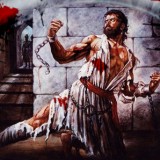
A Heroic Death that Changed the Course of Indian History


After the death of the great king Shivaji in 1680 the nascent Maratha kingdom faced a great challenge. The Moghul Emperor Aurungzeb had been confounded and defeated by the repeated battles with the Marathas and the high spirit of Shivaji. With the forces of fanaticism released throughout South Asia and to sustain himself the aged emperor leaned ever heavier on the clerics and upon religious exclusivism. The king of the Marathas with his slaying of the Afghan war leader, Afzal Khan, the daring attack on Shaista Khan and the escape from the very depths of the Mughal Empire in Delhi were the stuff of legend in the lifetime of Shivaji himself. The deaths of the great Rajput Chiefs, Jai Singh and Jaswant Singh around the same time seemed to open the floodgates of repression and extremism even further. Orders were issued to demolish the Hindu temples and impose the hated poll tax on non-Muslims – the jaziya.

As the empire groaned in its agony resistance began to multiply and grow leading to further repressions. The Bundelas in central India began fighting; the Jats of the Mathura region and the Rajput clans of the Rathores and Sisodiyas in Rajasthan even leading to a son of Aurangzeb named Akbar  to join the Rajput’s. In fury the enraged Emperor led the main imperial army to crush his son and his erstwhile rebellion.

Further south the Mughals believed that the Marathas would be unable to repeat their exploits under the son of Shivaji, Shambaji thinking that the sustenance of this new Hindu kingdom rested on one able man alone. Like so many other rebellions in that period, he thought the Maratha movement too must have received its death blow with the passing of its able leader, and by the fact that Shivaji had been succeeded by his brave but incapable son, Sambhaji. Sambhaji had courage, which he indeed demonstrated on various occasions, but also indulged in excesses leading his father on occasion forced to consider a severe punishment for his own son. Sambhaji in his rage left and joined the Moghuls! This was an intensely painful time in Shivaji’s life. Sambhaji left the Moghuls and begged for forgiveness when he witnessed first-hand the atrocities against Hindus.

Shambaji offered refuge to Akbar and in 1682 the lost son of Aurangzeb escorted by the Rajput’s arrived in safety in Maharashtra. Close behind the Emperor entered the Maratha Kingdom in the same year. Few would have guessed that he would never return to the north spending the last 27 years of his life in a futile and eventually failed war with the Hindus.

The war was engaged and raged from this period onwards in a steady ebb and flow in the hills of western India with neither side able to emerge over the other. The steady courage of Shambaji was only matched by his impetuous and rash nature. Only his minister Kavi Kalash was able to exercise any control over the headstrong king. An equal measure of the rage of shamabji was directed towards any perceived rivals or dissenters in his kingdom and he dealt with the same with extreme severity and with all the rage for which he was justly famous.

Blood flowed over the mountains and the land was ruined but the people fought on. The full force of the empire was now borne down on the barren hills and the prime generals and troops of the Mughals now all entered into the fray. For seven years more that war continued with its monotonous tale of attack and counter attack – of determined sieges and equally determined sieges. Of forts falling to the Mughals only to be retaken months later and for the cycle of destruction to continue.

In 1689 however the situation changed. The Maratha king was at Sangameshwar unaware of the nearness of his enemies and with a scant force around him. After a sudden raid under Muqarrab Khan a Mughal force reached the place and after a bitter fight succeeded in capturing Shamabaji and Kavi Kalash.

The next chapter is best described in the words of the : Masir I Alambiri, the official history of Aurangzeb’s reign:

Shamba was brought before the court. The Emperor out of his devotion to Islam ordered that from four miles before the camp Shambha should be made an object of ridicule …..so that the Muslims might be encouraged and the Hindus discouraged by the sight. The night in the morning after which he was brought to the Court …in the joyous expectation of seeing the spectacle, and the day was like the day of Eid because all men, old and young went out to see such a scene of joy and happiness.

The Emperor ordered that man to be removed to the prisons and in that moment Aurangzeb descended from the throne and kneeling down on the carpet of prayer bowed his head to the ground in thanksgiving and raised his hands in prayer to Allah….and drops of marvel(lit tears) fell from his far reaching eyes As the destruction of this wicked infidel in consideration of the harshness and disgrace that he had inflicted by slaying and imprisoning Muslims and plundering Muslims — and by the decision of the Doctors of the Law all were in favour of killing Shamba and thus he was killed with Kavi Kalash.

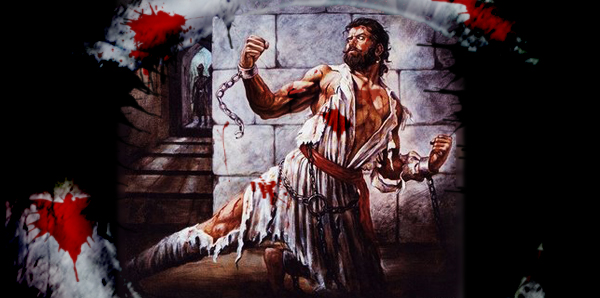
After two days the Emperor ordered Ruhullah Khan to ask Shamba where he had kept his treasure . In these circumstances that haughty man opened his mouth in defiant and vain words about the Emperor (Aurangzeb) – So the Emperor ordered him to be blinded by driving nails into his two eyes -So it was done. But that proud man from his high spirit gave up taking food from that day onwards and continued to shout defiance to The emperor and the tenents of Islam.

Maratha sources report:

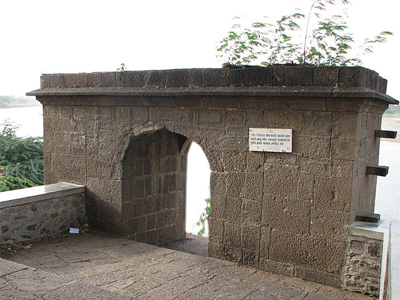
When they were brought face to face with Aurangzeb, the latter offered to let Sambhaji live if he surrendered all the Maratha forts, turned over all his hidden treasures and disclosed the names of all the Mughal officers who had helped him. Sambhaji refused, and instead sang the praises of Mahadev (Lord Shiva). Aurangzeb ordered him and Kavi Kalash to be tortured to death. Sambhaji and Kavi Kalash were brutally tortured for over a fortnight. The torture involved plucking out their eyes and tongue and pulling out their nails. The later part involved removing their skin. On March 11, 1689, Sambhaji was finally killed, reportedly by tearing him apart from the front and back with ‘Wagh Nakhe’ (‘Tiger claws’, a kind of weapon), and was beheaded with an axe. This grievous death was given to him at Vadhu on the banks of the Bhima river, near Pune.

From the Persian history (Fatuhat I Alamgiri) :

“At last the case was reported to the Emperor and by his order Shambaji was taken to the place of execution and his limbs were hacked of one after the other- his severed head was publicly exposed across the Empire and taken to Delhi and hung on the gate of that city”

All accounts refer to days of horrific torture and agony which were borne with astonishing firmness and stoicism by Shambaji and his Brahmin minister Kavi Kalash. Even the purported offers of clemency on the public display of submission and/or an escape from the horror by conversion to Islam had little effect on the unfortunate Maratha king. After being blinded and his tongue cut from his mouth he surprisingly with great difficulty was still able to communicate and to continue to offer defiance to his oppressors.The memory of his inspirational father must have been close to Shambaji in the last days – given just sufficient time to rest between the tortures and removal of limbs after nearly two weeks of horrendous and unthinkable pain the broken and limbless king was executed – His head was cut off and placed in public display around the cities and towns of Maharashtra as a warning. But it did not have the desired effect.

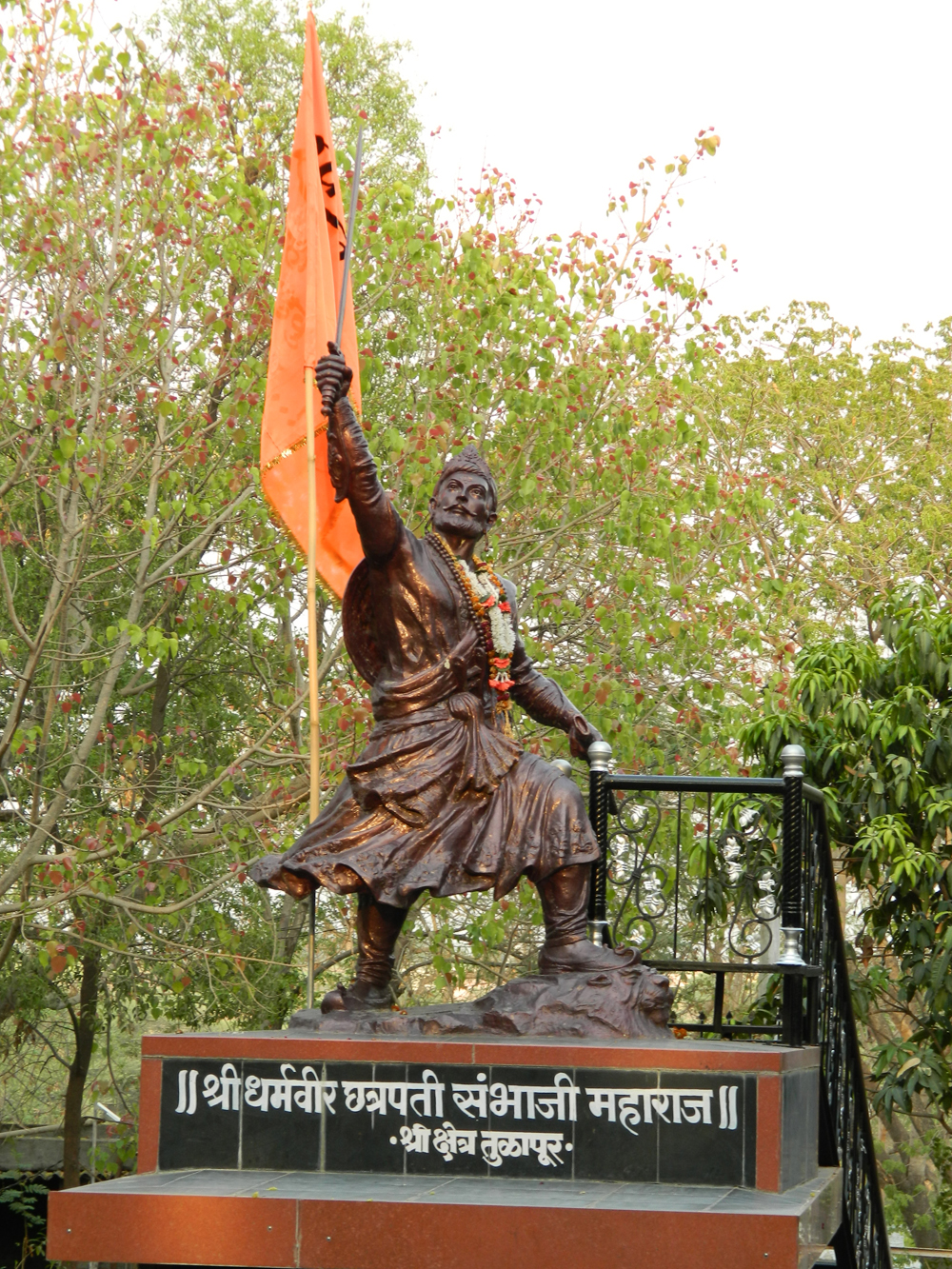
The news of the execution of the son of the much revered and loved king Shivaji send a wave of horror and revulsion throughout the land. His brother Rajaram took the crown and retreated to the great fortress of Jinji to endure a 10 year long siege by the Mughals. The excesses of Shamabji were forgotten – news of the method of his death and more importantly the accounts of the dead king spread like wildfire amongst the Marathas. For his adherence to the Hindu Dharma the people named him ‘Dharamveer’ the warrior of Dharma

In the moment of his apparent triumph Aurangzeb was beset by an even greater tide of enemies. The Marathas under their war bands and leaders took to fight all over the western and southern parts of India from coast to coast. Their soldiers everywhere continually harried and fought the Mughals in an even greater tidal wave of resistance. The harried and worn emperor continued to fight in the face of ever increasing odds. The peoples of the north of India began to rise in rebellions and struggles eventually leading to the destruction of the Mughals. For 27 long years Aurangzeb continued with his fight against the Marathas only to die in despair in 1707.

The son of Shivaji had redeemed the pledge of his father of Hindu Padshahi – His heroic death led to the eventual victory over the forces The Maratha Hindu empire rose on the ruins of the Mughals and a hundred years after the execution of Shambaji a defeated and blinded Mughal Padshah, Shah Alam fell at the feet and mercy of the Maratha warrior and kingmaker Mahadji Sindhia.

The dreams and inspirations of the great Hindu Monarch Shivaji echo through history as a lesson against the forces of fanaticism and prejudice.


(132168)

The Vedic Basis of Classical Yoga

[box_dark]Many people today look to Patanjali, the compiler of the famous Yoga Sutras, as the father or founder of the greater system of Yoga. However, while Patanjali’s work is very important and worthy of profound examination, any extensive study of the ancient literature on Yoga reveals that the Yoga tradition is much older than Patanjali – and that its main practices already existed long before his time. Patanjali was a compiler, not an originator of Yoga teachings.[/box_dark]

The traditional founder of Yoga Darshana or the ‘Yoga system of philosophy’ – which the Yoga Sutras of Patanjali represents – is usually said to be Hiranyagarbha. It is nowhere in classical Yoga literature said to be Patanjali.  The Mahabharata (Shanti Parva 349.65), the great ancient text in which the Bhagavad Gita of Sri Krishna occurs and which is sometimes called the ‘fifth Veda’, states: “Kapila, the teacher of Samkhya, is said to be the supreme Rishi. Hiranyagarbha is the original knower of Yoga. There is no one else more ancient.”

Elsewhere in the Mahabharata (Shanti Parva 342.95-96), Krishna states, identifying himself with Hiranyagarbha: “As my form, carrying the knowledge, eternal and dwelling in the Sun, the teachers of Samkhya, who have discerned what is important, call me Kapila. As the brilliant Hiranyagarbha, who is lauded in the verses of the Vedas, ever worshipped by Yoga, so I am also remembered in the world.” Note that Krishna identifies yogic Hiranyagarbha with the deity of the same name in the Vedas.

Other yogic texts like the Brihadyogi Yajnavalkya Smriti XII.5 similarly portray Hiranyagarbha as the original teacher of Yoga, just as they do Kapila as the original teacher of the Samkhya system. So do commentaries on the Yoga Sutras. For example, Vijnana Bhikshu, the great Samkhya teacher in his Yogavartika commentary on the first sutra of the Yoga Sutras, also explains Hiranyagarbha as the Adiguru or primal guru of Yoga, quoting the Yogi Yajnavalkya.[i] While the depth, clarity and brevity of Patanjali’s compilation is noteworthy, it is the mark of a later summation, not a new beginning.

The vast literature of the Vedas, Mahabharata and Puranas speak of numerous great yogis but does not mention Patanjali, who was of a later period.[ii]  Even the Yoga literature that is later in time than Patanjali, like that of Kashmir Shaivism, Siddha Yoga or Hatha Yoga, does not make Patanjali central to its teachings, though they my mention him, but rather emphasize the deity Shiva as Adinath or their original guru.

The earlier Yoga literature before Patanjali can perhaps be better called the Hiranyagarbha Yoga Darshana as it is said to begin with Hiranyagarbha. In fact, most of the Yoga taught in Vedas, Upanishads, Gita, Mahabharata and Puranas – which is the main ancient literature of Yoga – appears to be part of this Hiranyagarbha tradition. Such ancient Pre-Patanjali texts speak of a Yoga Shastra or the ‘authoritative teachings on Yoga’ and of a Yoga Darshana or ‘Yoga philosophy’, but by that they mean the older tradition traced to Hiranyagarbha.

Patanjali in the Yoga Sutras is only referred to as a compiler, not as an inventor of the Yoga teachings. He himself states, “Thus is the teaching of Yoga” (Yoga Sutras I.1). This is quite unlike Krishna, the avatar of Yoga, who states, “I taught the original Yoga to Vivasvan” (Bhagavad Gita IV.1).

Patanjali is sometimes regarded as a devotee of Vishnu/Narayana, whose main human avatar is Krishna. This suggests that Patanjali himself was a devotee of Krishna. Traditional Sanskrit chants to Patanjali laud him as an incarnation of Lord Sesha, the serpent on which Lord Vishnu/Narayana resides. This Sesha attribution links Patanjali and his darshana to Krishna/Vishnu. Yet others view Patanjali as a Shaivite Yoga, for his emphasis on Ishvara and Om, which are more commonly associated with Shiva than any other deity formulation.

However, it is the Bhagavad Gita is the primary text lauded as a Yoga Shastra or ‘definitive Yoga teaching’ in the ancient literature. This connection can be carried to the Mahabharata as a whole, in which the Gita occurs. Bhishma in the Mahabharata (Shanti Parva 300.57) also speaks of a Yoga teaching “established in many Yoga Shastras.” The Anu Gita section of the Mahabharata (Ashvamedha Parva 19.15) has an interesting section that begins, “Thus I will declare, the supreme and unequalled Yoga Shastra.”

Several Upanishads like the Katha, Kena and Svestasvatara are said to be Yoga Shastras, besides numerous Yoga Upanishads that also do not emphasize Patanjali and have Yoga taught by a variety of teachers, including famous Vedic figures like Yajnavalkya and Shandilya. The Puranas, which are large encyclopedic works of traditional knowledge going back to medieval and ancient periods, contain many sections on Yoga but do not give importance to Patanjali. When such texts teach Yoga, they often do so with quotes from the older Vedas, as we mentioned with the Svetasvatara Upanishad in the previous chapter.

This means that the Patanjali Yoga Darshana is a later subset of the earlier Hiranyagarbha Yoga Darshana. It is not a new or original teaching meant to stand on its own. Such Sutra literature like the Yoga Sutras or Brahma Sutras were regarded as short axioms that required interpretation in the light of the existing more detailed traditions, mainly through authoritative commentaries. The topics addressed in the Yoga Sutras from yamas and niyamas to dhyana and samadhi are already taught extensively in the older literature. In the Mahabharata (Shanti Parva 316.7), the sage Yajnavalkya speaks of an “eightfold Yoga taught in the Vedas.” The Shandilya Upanishad (1) refers to an eightfold or ashtanga Yoga but does not mention Patanjali.

While no Hiranyagarbha Yoga Sutras text has survived, quite a few of teachings of the Hiranyagarbha have remained. In fact, the literature on the Hiranyagarbha Yoga tradition may be as large as that of the Patanjali Yoga tradition, which itself represents a branch of it. This means that we cannot speak of a Patanjali Yoga tradition or of a Patanjali Yoga literature as apart from an older set of Yoga teachings rooted in the Hiranyagarbha tradition.

The Patanjali Yoga teaching occurs in the context of a broader Yoga Darshana that includes other streams. This Yoga Darshana existed long before Patanjali and was taught in many ways. It is the Yoga Darshana originally attributed to Hiranyagarbha and related Vedic teachers.

Yet even this Yoga Darshana that is connected to the Samkhya system, and could also be called the ‘Samkhya-Yoga darshana’, is not the only line of Yoga. The Mahabharata and other ancient texts speak of the Vaishnava Yoga that relates to Krishna and the Shaivite or Pashupata Yoga that goes back to Shiva himself. Indeed the main Yoga traditions in India are largely Shaivite and only use the Yoga Sutras in a peripheral manner. This includes the traditions of Hatha Yoga and Siddha Yoga, which are more rooted in the Shaivite Yoga than in the Yoga Sutras. While we should certainly honor this Samkhya-Yoga tradition, we should remember the greater diversity of yogic paths.

[box_dark]Parallel With the Samkhya Tradition[/box_dark]

A similar situation, in which the main Sutra text of a Vedic philosophy is later in time than its original teachings, also occurs relative to Samkhya. The main sutra text on Samkhya philosophy is the Samkhya Karika of Ishvara Krishna. Ishvara Krishna (who is not the Krishna of the Gita) is a figure of the early centuries AD who debated with Buddhist teachers near the time of Vasubandhu, the main teacher of Yogachara Buddhism. Ishvara Krishna is a much later teacher than the original founder of the Samkhya system, the sage Kapila, who is regarded as legendary even at the time of the Upanishads and Bhagavad Gita. Ishvara Krishna is more recent than Patanjali, though Patanjali Yoga rests upon the Samkhya philosophy.

There are many Samkhya teachings in the Vedic and Puranic literature older than the Samkhya Karika. The Samkhya Karika has its prominence as a late and clear compilation of an older tradition, not the original presentation. This means that there is no need to regard the main text on a Vedic darshana as the original teaching, or its compiler as the founder of the tradition.

[box_dark]Hiranyagarbha and Vedic Mantra Yoga[/box_dark]

Who then was Hiranyagarbha, a human figure or a deity? The name Hiranyagarbha, which means “the gold embryo”, first occurs prominently as a Vedic deity, generally a form of the Sun God, which has many names involving Hiranya or gold.[iii] There is a special Sukta or hymn to Hiranyagarbha in the Rig Veda X.121, which is commonly chanted by Hindus today in their daily rituals, in which Hiranyagarbha refers to the Supreme Being or Ishvara.

The Mahabharata speaks of Hiranyagarbha as he who is lauded in the Vedic verses and taught in the Yoga Shastra (Shanti Parva 339.69). As a form of the Sun God, Hiranyagarbha can be related to other Sun Gods (Adityas) like Savitri, to whom the famous Gayatri mantra used in many Yoga traditions is addressed, and is important in many early Yoga teachings including Vedic mantras and the Svestasvatara Upanishad. Therefore, the Hiranyagarbha Yoga tradition appears to be a Vedic tradition strongly rooted in the use of Vedic mantras. We could accurately call it the Hiranyagarbha Vedic Yoga tradition. It would place the origins of Yoga in the mantras or Mantra Yoga of the Vedas. As mantra is central to all Yoga traditions, this may not be surprising. Indeed if we b begin Yoga with mantra and sacred sound, rather than the current fixation on asana, we can easily understand the Vedic basis of Yoga.

Krishna states in the Bhagavad Gita (IV.1-3) that he taught the original Yoga to Visvasvan, another name of the Sun God, again suggesting Hiranyagarbha. Vivasvan was said to have taught this Yoga to Manu, the original man or first king, making it into the prime Yoga path for all humanity. Here, however, Krishna gains prominence over Vivasvan/Hiranyagarbha as the original teacher of Yoga.

The Mahabharata (Shanti Parva 340.50) additionally identifies Hiranyagarbha, as other texts do, with Brahma or Prajapati, the creator among the Hindu trinity, who among other things represents the Vedas and is the source of all higher knowledge. Most of the Vedic sciences are said to have been first taught by Lord Brahma, who represents the cosmic mind. The Mahabharata also identifies Hiranyagarbha with the Buddhi or Mahat, the higher or cosmic mind (Mahabharata 302.18).

Hiranyagarbha appears more as a deity than a human figure, though it is possible that a teacher of that name once existed. The chief disciple of Hiranyagarbha in the ancient texts is said to be the Rishi Vasishta, the foremost of the Vedic seers (seer of the seventh book of the Rig Veda), who passed on the Yoga teachings to Narada (Mahabharata Shanti Parva 308.45).  Vasishta teaches the Yoga Darshana in the Mahabharata (Shanti Parva 306.26): “The Yoga Darshana has so been declared by me according to the truth.” Vasishta also passes on his knowledge to his son, Parashara, in whose line was born Veda Vyasa, who compiled the Vedas and wrote the Mahabharata.

Vasishta is the prime early human teacher of other Vedic disciplines as well like Advaita Vedanta (the tradition of Jnana Yoga or the Yoga of Knowledge), and carrying on the Yoga teachings of the deities Shiva and Vishnu as well as that of Hiranyagarbha. There are several important Yoga texts in the Vasistha line including the Vasishta Samhita and Yoga Vasishta, the latter of which is often regarded as the greatest work on both Yoga and Vedanta. While these texts are much later than the Vedic Vasishta, they do show a continuity of tradition, as well as its diversity.

The original Yoga darshana tradition appears not as the Patanjali tradition but the Hiranyagarbha tradition. It teachings are found not only in the Yoga Sutras but in the Mahabharata, including the Bhagavad Gita, Moksha Dharma Parva and Anu Gita, which each contain extensive teachings on Yoga. These in turn connect to the Vedas, Upanishads, Puranas and Tantras, which address Yoga in many forms like mantra, ritual (Karma Yoga), knowledge (Jnana Yoga), devotion (Bhakti Yoga), and so on.  The Hiranyagarbha Yoga tradition appears to be the main Vedic Yoga tradition. The Patanjali Yoga tradition arises as an offshoot of it or a later expression of it.

Samkhya, Yoga and Vedanta – the three main Vedic philosophical systems – are presented as interrelated aspects of the same tradition in the Mahabharata. Ayurveda and Vedic astrology are set forth important aspects of its outer application. If we want to go back to the traditional roots of Yoga and restore the original teachings of Yoga, we should examine the Hiranyagarbha Yoga Darshana. In addition, we should look to its Vedic connections and associations with all Yoga paths and branches. This will take us back to the original Vedic Yoga that encompasses all the Vedic deities

[box_light]Misinterpretations of the Yoga Sutras[/box_light]

Much of modern Yoga rests upon a misinterpretation and misunderstanding of the Yoga Sutras. The first problem is that many people try to look at the Yoga Sutras as an original text that stands in itself, when it is a later compilation that requires knowledge of its background in order to make sense of it. This causes people to separate Yoga from the earlier traditions that form the context of Patanjali’s teachings, which is why the Hiranyagarbha tradition is so little known in the world of Yoga today.

The second problem is that the Yoga Sutras, consisting of short enigmatic aphorisms, can be easily slanted in different directions according to the inclinations of the interpreter, particularly if they do not give credence to the classical commentaries and connections to earlier teachings. This causes people to invent or imagine meanings in the Sutras that may actually not be there in the original.

Third, the Yoga Sutra tradition has been made into something sectarian, for example, opposing Yoga and Samkhya as competing Vedic philosophical systems to Vedanta. This causes people to separate Yoga from related Vedic spiritual traditions that also employ Yoga practices.[iv] This complication is not something of the modern age only, but occurs in debates between Indian philosophical systems going back to the Middle Ages, a time in which precise logical analysis was often emphasized over broader synthesis.

The original Hiranyagarbha Yoga teachings, such as we find it in the Mahabharata, however, is presented there as in harmony with Samkhya and Vedanta. The synthesis of these three systems is in fact as old as Krishna, if not older.

Such an older integral Yoga is the same general type of Yoga-Vedanta taught by many of the great modern Yoga gurus of India like Vivekananda, Yogananda, Aurobindo, Shivananda and his many disciples, as well as many others – the very teachers who first brought Yoga to the West in the last century. They teach the Yoga Sutras, the Bhagavad Gita and the Upanishads together as part of the same broader tradition. The differences between Samkhya, Yoga and Vedanta are regarded by them as minor variations within the same greater tradition.

So, how can we best approach the Yoga Sutras in order to understand their real intent? It is arguably best to do so in the context of the older and broader Yoga Darshana. There is one greater Yoga Darshana that exists like a thread through all the texts and traditions of Yoga. There is no Patanjali Yoga Darshana as an entity in itself apart from the older Hiranyagarbha Yoga Darshana, nor is the Hiranyagarbha tradition rigidly delineated from other Yoga teachings.[v]***

If we want to understand the meaning of the technical terms in the Yoga Sutras, we should do so with recourse to the older literature, not by inventing our own meanings, or by trying to make these terms unique to the Yoga Sutras. Whether it is the yamas and niyamas (particularly tapas, svadhyaya and Ishvara pranidhana), the different types of samadhi, or the different aspects of Yoga practice – such terms often alluded to briefly in the Sutras can be found explained clearly and in detail in the older and broader literature.

In addition, we should look at the Yoga Sutras in light of Vedanta, not only the Bhagavad Gita but also the Upanishads, which the Yoga Sutras as a Vedic philosophy accept as authoritative While Patanjali emphasizes the Purusha rather than Brahman (the Absolute), we must remember that the Hiranyagarbha tradition gives Brahman its place and that Brahman and Purusha are often synonyms.  We can also look to Vedanta for a greater description of Ishvara or God, which Patanjali only alludes to, but which Vedantic texts examine in great detail. This includes both the traditions non-dualistic (Advaita) and dualistic (Dvaita) traditions of Vedanta, which have their important Yoga teachings.

We should discriminate between the greater tradition of Yoga, which includes all branches and types of Yoga, and Patanjali’s Yoga Sutras, placing the latter in the context of the former. We should look at Yoga not only through the Yoga Sutras but use the Sutras to lead us into the greater tradition of Yoga. This includes the ancient Yoga literature before Patanjali and the later Yoga literature after him, the various lines of Vaishnava, Shaivite, Shakta and Vedantic Yogas, regardless of their philosophical differences.

Besides looking at Patanjali in a new light, we should work to restore the teachings of the Hiranyagarbha Yoga Darshana. These can be compiled from the Mahabharata, Upanishads, and other ancient Vedic teachings. Through the Hiranyagarbha tradition, we can gradually reclaim the older Vedic Yoga that was regarded as its basis. In this way, we can restore the spiritual heritage of the Himalayan rishis and yogis in all of its grandeur. This is an important task for the next generation of Yoga aspirants, if they want to go back to the origins of Yoga, particularly as a spiritual practice.


[i] Vijnana Bhikshu, Yoga Sutras

[ii] There is not a single reference to Patanjali that I have found in this literature, though I have not examined all the Puranas.

[iii] Hiranyapani most notably

[iv] Non-dualistic or Advaita Vedanta, for example, teaches Jnana Yoga or the Yoga of Knowledge, while dualistic or Dvaita Vedanta emphasizes Bhakti Yoga or the Yoga of Devotion.

[v] For example, the Mahabharata also gives prominence to the Shaivite Yoga tradition called the Pashupata line, which is also very ancient.

(12553)

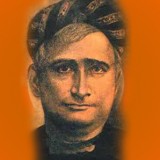
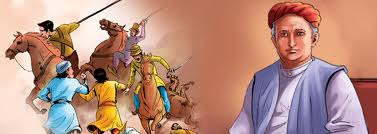
Bankim Chandra Chatterjee (1838 – 1894)


Through his writings, this man breathed a new passion and life into an entire civilisation, particularly his native region of Bengal, which became kindled with religious, nationalistic and artistic fervour after being infused with the powerful visions contained in his writings.

Born on 27 June 1838 in the Kantalpara district of Bengal, the first striking event we have of his life was that he mastered the alphabet as a child in a single sitting. This was an image and prophecy for the rest of his life.

Apart from the breathtaking legacy of his literary works – his life was quite “normal” and not in any way out of the ordinary. He was a man who never clamoured for place or power, but did his work in silence for the love of his work, even as nature does. And just because he had no aim but to give out the best that was in him to his people, he was able to create a language, a literature, a freedom struggle, and steer the course of history.

Bankim was 19 years of age when India’s First War of independence (known in the west as the “Sepoy Mutiny”) was waged. The following year (1858) India had lost the war. Bankim was finishing his studies at the time, and in that same year graduated from the University of Calcutta. The British authorities immediately appointed him to the post of Deputy Magistrate.

Young Bankim had suffered a shock in seeing the failure of India’s War of Independence. He could not rest until he knew why the great movement for liberation ended up being crushed in the manner in which it was, and that too with the help of many Indian’s themselves (most notably the Sikhs). In his effort to discover the causes of that failure he set his sharp intellect to the task of analysing the great problems that India was facing. Influenced and inspired by three great figures of that epoch, Raja Rammohan Roy, Iswarchandra Vidyasagar and Rani Lakshmibai of Jhansi (the Hindu queen who led her soldiers against the British during the war) – he soon recognised the existence of a number of startling facts.

Foremost among these was that the people of India were fast becoming denationalised by English manners and customs, English fashions, and English whiskies and wines – not to mention the Christian missionaries (who had made Bengal their storm centre). The British government used their educational system to further this agenda (after abolishing and outlawing the traditional Indian education systems). Chatterji’s soul winced when he perceived that the Indian who spoke good English was more honoured by his own people than the man who spoke and wrote their own tongue exquisitely. Wherever he looked, he saw educated Indians jumping frantically on the bandwagon of British culture.

From the moment he had first learned to think for himself, Bankim realised that there was a titanic struggle ahead to reverse the trend and bring physical and cultural freedom to the sacred motherland. He felt that he had his own divinely ordained effort to make in this veritable battle – which he played silently and humbly. If India was to be uplifted, her children must once again create literature and language dynamic and inspiring to enlighten and inspire the entire people of India.

Soon, the profound effect of Chatterji’s novels and essays, with their compelling beauty, subtle humour and inspiring themes could be seen, firstly in Bengal and then spilling over into greater India. Indians who were nurtured on Shakespeare, Milton and Shelley began to read the works of Kalidas, Bhavabhuti, Chandidas and Vidyapula. They turned eagerly to the Puranas, Upanishads and the Bhagavad Gita. Whereas before, elite Indians took pride in their knowledge of the Magna Carta strugle, the times of Oliver Cromwell and the tragedy of Charles the First, they began to relish the ballads of Rajasthan and Maharashtra. A new feeling was born. Millions began to hold their heads high once again and talk in terms of “our language”, “our literature”, “our history”, “our country”.

His Literary History

Bankim began his literary career with a desire to write in English, and wrote a novel called Rammohan’s Wife.” He at once realised his mistake with the realisation that the his work was much more natural and powerful in his own mother tongue.

The major novels he wrote were: Chandrashekhar, Kishna Kanta’s Will, Debi Chaudhurani, Sitaram, Indira, Kamal Kanta and Anandamath.

The last of these, Anandamath deserves special mention here. It wasn’t necessarily the best of Bankim Chandra’s works, though still great in its own right. Yet because of its astonishing political consequences, with no other of his works is Bankim so closely identified.

The Anandamath story is set in 18th century India, when a group of warrior sannyasis mounted a guerilla war against Muslim rule (based on a true historical attempt by sannyasis to do precisely this). It was a riveting story line with amazing characters and meaningful dialogues. Yet more importantly, hundreds of thousands of Indians (primarily Hindus) took the story as a metaphor for their own present day situation, understanding it as a call to arms to drive the new tyrants (the British) away from the sacred soil. Indeed, the main revolutionary group in Bengal chose its name as that of the sannyasin group from Anandamath. The most important and widely known section of this book was the poem “Vande Mataram” which means “Hail to the Mother(land)”. The song became the battle cry for India’s freedom struggle. It was set to become India’s National Anthem, but was rejected because a section of Muslims considered the song as idolatrous due to its metaphor comparing India to the tiger-borne Goddess Durga “with instruments of punishment in each of her ten hands”. To placate the Muslims (and Jawahalal Nehru) the constituent assembly rejected it as the National Anthem. Incidentally, Rabindranath Tagore, the great poet whose “Jana Gana” eventually became India’s National Anthem had stated on several occasions that he desired very much that Bankim Chandra’s “Vande Mataram” should become the National Anthem of free India. For example, in 1928, he said in an interview with Mulk Raj Ananda “I share his ideas of inheriting the past – if made relevant for the present! Bankim Chandra is our master in this respect. In our school here, students sing “Bande Mataram” every morning…..I hope it becomes the national anthem of free India!”

Bankim Chandra’s Anandamath demonstrated the most powerful example in modern history of how art can affect real life to a tremendous extent – especially in an artistically orientated civilisation like that of the Hindus.

Towards the end of his life, Bankim Chandra turned his attention to write about spirituality – the very essence of Hindu civilisation. A Life of Krishna and a book on the Essence of Religion, a rendering of the Bhagavad Gita and a commentary on the Vedas were his aims to give to his fellow countrymen. The first two he managed to complete, and the rendering of the Bhagavad Gita was three parts finished, but the commentary on the Vedas, which should have been a priceless possession, never got into the stage of execution. Death, in whose shadow he had so long dwelt, with his ailing health, took the pen from his hand before he could accomplish this feat. Yet his contributions to literature are enough to immortalise his memory.

Vande Mataram!

Vande Mataram is the national song of India. The song was composed by Bankim Chandra Chatterjee

(33517)

Swami Vivekananda (1863 – 1902)

[box_light]Swami Vivekananda is one of the most famous Hindu saints of the modern age. He is considered by many as a heralder of a new era for Hinduism, being the first person in the modern age to travel to the West and give the message of Vedanta to an international audience. Yoga practitioners in the west recently celebrated the centenary of his first journey to the west as the birth of the international practice of yoga.[/box_light]

Early Life

Vivekananda was born in Calcutta, named Narendra. He was imbued with virtues at a young age, and was a melodious singer, alert student and powerful athlete. His spiritual longing led him to search far and wide for ideas about God, from all religions and teachers. But his scientific nature would not let him believe. Doubts flooded his mind. Yet these doubts far from being a bad thing, actually propelled him on his journey. On the advice of his schoolteacher, Narendra visited Ramakrishna Paramhansa. Narendra was taken aback by the reply he got to his questions about God: “not only have I seen God, but I can show you God if you like.” Narendra was uncertain, but Ramakrishna knew he would be back. “My son I’ve waited my whole life for you,” Ramakrishna cried with emotion. Narendra subsequently made Ramakrishna his Guru, and he both studied the masses of ancient Hindu knowledge both from a scholarly and experiential perspective. Later he attained the name of Swami Vivekananda.

Social Revolutionary

Swamiji traveled extensively around India and was shocked by what he saw. He saw the beauty of the ancient spirituality of the land still intact, but unimaginable poverty, poor health, social ills that rent his heart. He tried to mobilise the affluent classes to come to the aid of their fellow countrymen. He was shocked observing the massive and ruthless conversion campaigns of the Christian missionaries who were flooding India with government support. He warned that India may become a land with barely a memory of its past and true culture, much like Africa of today (which is today dominated by Christianity and Islam, and forgetful and ignorant about any insights and achievements of their ancestors). Many people were impressed with Swami Vivekananda and slowly his following grew. He also set up the Ramakrishna Vedantic Mission.

Travels to the West

Swami Vivekananda journeyed to the West, speaking at the Parliament of Religions at Chicago. He was allocated only 5 minutes, but held the audience in rapture for much longer, drawing large applause. He travelled to many places. For the first time, people realised that there is something unique and different about the culture and religion of the sub-continent of India, that provided a spirituality beyond the cold confines of organised and authoritarian creeds that they were accustomed to. He developed a following, some of whom would provide a mighty service to India’s upliftment, including Margaret Nobles, who later became Sister Nivedita. Swami Vivekananda was also met with bitter hostility and resistance at the hands of some. Stories of slander and scandals would appear in newspapers regularly, to try and stunt his influence. Swamiji later narrated that the more resistance he encountered, the more determined he became.

Restoring India’s Battered Confidence

Understandably, due to being in the midst of the second great colonialisation many thinkers and activists in India had lost faith in their heritage and were on the way to have their minds and hearts totally yearning after an imitation of England and Europe. Swamiji’s life had a deep impact on the Indian elite. A later Prime Minister of India later declared “We were at that time depressed at the state of our country, but Swami Vivekananda returned to us a lost dignity. We realised that while at present we do not have the wealth or power of Britain, we still had the real article, something that they did not have.”

His vision

It was Swamiji’s hope that India would create a new social order and a new civilisation by combining her best spiritual traditions with the latest advancements in science and technology. She would be rich both materially and spiritually. He knew affluence was not enough to make humanity satisfied, and that it was humanity’s place to manifest the will and light of the divine in the world. He wanted India to set an example in this, and be a harbinger in a new age, where the world would be both materially and technologically healthy, but spiritually and culturally advanced also.

(2769)

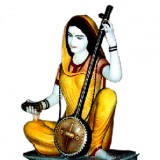
Mirabai (1540 – 1597)

There are few Hindus who will not have heard of Mirabai, the Rajput princess whose devotional compositions have provided a voice to the spiritual yearning of millions, and have a distinct, even a feminist, emphasis to them. Many stories exist about Mira, and it is difficult to produce a factual account of her life, although she lives perpetually through her songs, famous throughout India. The following is a shortened account about popular folk-lore about Mirabai:

Born in Rajisthan a land of warriors and sages, sadhus and kings, but also instability and sorrow, Mirabai showed great devotion for Lord Krishna in her childhood years. One day, a holy man came to her family’s palace and was carrying a small image of Krishna. Knowing that Mirabai would appreciate it, her mother brings her the little statue of Krishna. As the wandering sage left the palace he took his image of Krishna with him. Mirabai was very upset – in fact for days she lost her appetite and was very sad. But after a few days the sadhu returned. The night before, he explained, Krishna had appeared to him in a dream, telling him to return the image to Mira!

Mira grew up to be a beautiful young lady, and was duly married to the warrior Prince Bhoj, and went to live at his palace. However, despite being a devoted and dutiful wife, devotion to Lord Krishna was always foremost on her mind, which annoyed the family of her husband. Uda, her sister in law was most annoyed at Mira’s ways. They tried to stop her from visiting the temple. Prince Bhoj came to accept his wife’s nature, and thought of her as a great devotee of the Lord. He built her a small Krishna temple within the palace. However, for company with other devotees, Mira still sought to go to the village temple. She became acquainted with the great saint Ravidas, who was a humble shoemaker by profession, and learnt much about aspects of religion that she did not know about through him. She considered Ravidas her spiritual preceptor (Guru). Although her in-laws were becoming enraged with her behaviour, several of them could see their was something very special about her. Ravidas is turn was very impressed and moved by the intensity of her devotion to Krishna. He brought her a sitar with his own meager resources, which she used to compose and play soul stirring devotional songs to all who would listen. Through her songs Mirabai’s fame grew exceedingly, spreading far and wide throughout India. Even the Moghul Emporer Akbar (who was tolerant unlike other fanatical Moghul rulers, even renouncing Islam) came to visit her, and was so moved by her songs that he gave her a precious necklace.

Meanwhile, Prince Bhoj, Mirabai’s husband was killed in battle, against the predatory Moghuls. Bhoj’s cousin seizes the throne, who was one member of the family who had harboured dislike for Mirabai. Finding Akbar’s necklace, he accused Mirabai of being a traitor. He confined her to her room, and ordered her precious image of Krishna to be thrown into the river. She still had her devotion to Krishna, but was distraught at not being able to be amongst her fellow devotees and resented being locked in a confined space. She is believed to have write to Tulsidas, who advised her to attempt to leave, which Mirabai did so. Mira’s sister-in-law, Uda had grown fond of Mira over time and was very saddened by Mira’s departure.

Mira roamed India in devotion to her beloved Lord Krishna. She could see Krishna everywhere and in everything, and her songs describe her rapture in this vision. She grew very famous and loved. This enraged the king, the cousin of Mira’s husband Bhoj’s. He was determined now that Mira should die. Many attempts were subsequently made on Mira’s life, none of which bore fruit, due to her unfathomable love and trust in Krishna.


Selections from Mira bai’s works:

Priceless Gift (pâyo jî)

I have found, yes, I have found the wealth of the Divine Name’s gem.
My true guru gave me a priceless thing. With his grace, I accepted it.
I found the capital of my several births; I have lost the whole rest of the world.
No one can spend it, no one can steal it. Day by day it increases one and a quarter times.
On the boat of truth, the boatman was my true guru. I came across the ocean of existence.
Mira’s Lord is the Mountain-Holder, the suave lover, of whom I merrily, merrily sing.

I Will Dance (citanandana âge nâcûngî)

I will dance before the Consciousness-Charmer.
Having danced and danced, I will please my enjoyer. I will feel my lover.
I will tie on the ankle bells of love and affection. I will wear the dancing-garment of His Face.
Worldly modesty, family honor—I will not care for either of these.
I will go and lie in the bed of my beloved. I, Mira, will dye myself in Hari’s color.

Oh Oh I’m Love-Crazy (he rî maim to prema dîvânî)

Oh oh! I’m love-crazy. No one knows my pain.
My bed is over the gallows. How could I sleep?
My lover’s bed is in heaven’s mandala. How could I get to him?
The one who is wounded knows what a wound means, what it means to be burned.
The jeweler knows what it means to be a jeweler, what it means to have a jewel.
Afflicted by pain, I wander from forest to forest. Can’t get a doctor.
O Lord, Mira’s torment will be wiped out when the doctor is the Dark Lover.

Torn in Shreds (mere to giridhara gupâla)

Mine is Gopal, the Mountain-Holder; there is no one else.
On his head he wears the peacock-crown: He alone is my husband.
Father, mother, brother, relative: I have none to call my own.
I’ve forsaken both God, and the family’s honor: what should I do?
I’ve sat near the holy ones, and I’ve lost shame before the people.
I’ve torn my scarf into shreds; I’m all wrapped up in a blanket.
I took off my finery of pearls and coral, and strung a garland of wildwood flowers.
With my tears, I watered the creeper of love that I planted;
Now the creeper has grown spread all over, and borne the fruit of bliss.
The churner of the milk churned with great love.
When I took out the butter, no need to drink any buttermilk.
I came for the sake of love-devotion; seeing the world, I wept.
Mira is the maidservant of the Mountain-Holder: now with love He takes me across to the further shore.

The Divine Name (râma nâma rasa pîjai)

Drink the nectar of the Divine Name (Rama), O human! Drink the nectar of the Divine Name!
Leave the bad company, always sit among righteous company. Hearken to the mention of God (for your own sake).
Concupiscence, anger, pride, greed, attachment: wash these out of your consciousness.
Mira’s Lord is the Mountain-Holder, the suave lover. Soak yourself in the dye of His color.

Holi Raining Colors of Bhakti (sîla santoSha kî kesara gholî)

The saffron of virtue and contentment
Is dissolved in the water-gun of love and affection.
Pink and red clouds of emotion are flying about,
Limitless colors raining down.
All the covers of the earthen vessel of my body are wide open;
I have thrown away all shame before the world.
Mira’s Lord is the Mountain-Holder, the suave lover.
I sacrifice myself in devotion to His lotus feet.

(5895)

Sant Eknath

SANT EKNATH is one of the great rishis of Maharshtra. Starting from the life of Jnaneshwar (1275-1298), whose treatise on the Bhagavad Gita sprang new life into the religious life of the land, Maharashtra was blessed with a stream of great religious figures, who sustained the faith of the people in the religion of the land through many hardships. The religious renaissance eventually transformed the society completely, culminating in Independence from Islamic rule for most of India.

The life of Eknath acted like a bridge between his predecessors Jnaneshwar and Naamdev and his successors Tukaram and Ramdas His teachings of philosophy and practice is a synthesis of the quest for the eternal and transcendent while living within the imminent. This great saint of Maharashtra was born sometime around 1530 AD in a Brahmin family which had brought forth great teachers in the past. Eknath’s father, Suryanarayan, and mother, Rukmini died shortly after his birth, hence Eknath was brought up by his grandparents, Chakrapani and Saraswatibai. Throughout his childhood Eknath devoted his time significantly to devotional practices.

When about twelve years old, Eknath heard about a man named Janardan Swami. This great scholar lived in Devgiri renamed as Daulatabad by the Muslim rulers of the time. Eager to become his disciple, Eknath trudged all the way to Devgiri. Janardaswamy was amazed by this extra-ordinarily gifted boy and readily accepted him as his disciple. He taught Eknath Vedanta, Nyaya, Meemansa, Yoga etc. (i.e. a broad based education of Hindu dharma) and most importantly, Sant Jnaneshwar’s works.

Janardan Swami was a devotee of Lord Dattatreya, the son of Atrimuni and his wife Anasuya. Eknath soon achieved self-realisation through his dedicated practice. The Guru then asked Eknath to proceed on pilgrimage. He himself accompanied Eknath upto Nasik-Tryambakeshwar. Here, Eknath wrote his famous treatise on Chatushloki Bhagavat. Which was a treatise on the application of four sacred shlokas of the holy “Bhagavat.” Eknath’s work consisted of 1036 specially metered verses known as “ovee”s. After completing his pilgrimage of various holy places of west and north India, Eknath returned to Paithan where he was born. His grandparents were extremely delighted to see him again and implored him to marry. Eknath married a lady named Girija. The couple were truly made for each other and established the ideal examples of ethical living. In time, the couple was blessed with two daughters, Godavari and Ganga and a son Hari.

During the intervening period of about 250 years between Dnyaneshwar and Eknath, various Islamic invaders ravaged Maharashtra. Defeats after defeats had completely demoralised people. The great legacy of Jnaneshwar was nearly forgotten. Eknath devoted himself to change this situation. His first task was to locate the “samadhi” of Jnaneshwar and trace the undistorted version of “Jnaneshwari” (Jnaneshwar’s treatise of the Bhagavad Gita). In fact, without Eknath’s all-out efforts, the legacy of Jnaneshwar could well have been lost to the succeeding generations. He also devoted him self in fighting against untouchability and other ills, which were rotting the society. His inspiration to fight untouchability were the teachings of Sri Krishna. Eknath’s teachings may be summarized as “Vichar, Uchchar and Achar” – i.e., purity of thought, speech and practices. Exemplifying the way of ethical and spiritual living, he practised what he preached. His works, verses and preaching kindled hope among the people at a time when they needed it most. At last following the example of the great Jnaneshwar, he left for his heavenly abode by voluntarily laying down his life in the sacred Godavari on the Krishna Shasthi day of Phalguna in the year Shaka 1521 (1599AD).

(56995)

History of Asana and Exercise in India

[box_light]Asana is the aspect of Yoga least detailed in older Vedic and Yogic texts and is the aspect of classical Yoga given least importance overall. Sometimes little more about asana is said in the older texts than the need to sit straight ( Bhagavad Gita and Upanishads), or to maintain a comfortable pose (Yoga Sutras).[/box_light]

This has led some people to think that the active asana approaches and movements, such as practiced by many modern Yoga groups, were not part of the older Yoga traditions or were not known in India. It has also gotten some to hold that active or strong exercise methods, like calisthenics type movements, only entered India recently through Europe and were previously unknown, with Yoga asanas being the main form of exercise taught in India. This plays into cultural stereotypes that Indians are physically weak and the Europeans physically strong – a view that arguably borders on racism.

To adequately approach this issue, we must first examine the greater exercise traditions of India, including Vedic martial arts, and not limit ourselves to yogic texts. We must also understand how Yoga asana and exercise in general relate, their similarities and differences, and their respective places in Indian culture.

Yoga was never primarily an exercise tradition and we cannot look to yogic texts for understanding the exercise traditions of India. Dhanur Veda or the Vedic martial arts is the main basis and oldest form of exercise tradition of India and one that has continued to develop over time.

Yoga and Dhanur Veda overlap to some degree, but more active forms of exercise connect primarily with Dhanur Veda and only secondarily with Yoga.

[box_light]Asana and Exercise Traditions: Related but Different[/box_light]

There has been a tendency to look at asana or yoga postures as the main exercise system practiced historically in India, with any more active exercise approach like calisthenics and weight lifting, being perhaps a recent borrowing from the West, or even something not particularly Indian, with Indians being more mental than physical types. This plays into stereotypes of India as not having strong martial or military traditions, some arising from the recent emphasis on Gandhi ahimsa in the country. Several scholars of modern Yoga have proposed something of this kind. A deeper examination, however, finds this view to be inaccurate or incomplete.

First of all, Yoga asana, as part of classical Yoga traditions like the Yoga Sutras, was never meant as a merely an exercise or fitness system.

Asana in Sanskrit means a chair or a seat, and in terms of bodily positions implies a seated pose, and by extension any pose assumed or held for an extended period of time.Asana in classical Yoga was not meant as simply a type of physical exercise, which is called vyayama in Sanskrit, but as part of Yoga practice, called Sadhana, a spiritual discipline resting upon the ability to sit or be still for long periods of time for the practice of meditation. Traditional Yoga asana was not meant as a workout or fitness drill. However, we must recognize that other exercise traditions did exist in India, besides Yoga asanas, which were more active in nature, and sometimes did use asanas and vinyasas along with other stronger exercise practices.

Yoga asana could be used as part of other Indian exercise approaches, sometimes serving a role like preliminary warm ups or stretches. In these cases, case such asana practice was not regarded as Yoga, which means a spiritual path in Sanskrit, but as a means of bodily health and strength. In other words, asana as exercise did exist in ancient India but as a different orientation from asana as classical Yoga, which was a tool to still the body for meditation, not meant as a physical workout.The use of asana in exercise approaches should be discriminated from its role in meditation approaches, though some natural overlap exists.

India as a vast subcontinent and great ancient civilization has its own ancient and diverse traditions of exercise, martial arts, gymnastics and dance that cover the full range of exercise practices, including every sort of callisthenics. India did not require the Europeans in order to bring the idea of physical fitness or exercise into the region. The same situation existed in China and the rest of Asia that also had slower or more internalizing forms of exercise like Yoga or Tai Chi, which did not mean that they did not also have stronger exercise approaches as well. India has its own long traditions of martial arts.

[box_light]Martial Arts and Indian Exercise Traditions[/box_light]

India has a great heritage of its Kshatriya, its martial, military, aristocratic or princely class, just as most of the world had until recent times. It is among these traditional martial arts that we can find the most diverse and extensive traditions of exercise. Even the Vedas speak of the unity of Brahmin and Kshatriya or spiritual and warrior traditions and the need to honor both.[ Hindu warrior traditions continued through history and developed along with changes of warfare through the centuries.

The Vedas have a special tradition of martial arts called Dhanur Veda, which is one of the four Upavedas or secondary Vedas.  Such Vedic martial arts like Kalari remain popular in South India to the present day, though many others have probably been lost in the course of time. Dhanur literally means a bow, so archery was one of these martial arts. Yet India has had a long tradition of sword fighting as another martial art.

The most famous ancient guru of the martial arts or Dhanur Veda, who is found in the Ramayana as well teaching the martial arts to Rama and Lakshman, is the rishi Vishvamitra, a famous Rajarshi or royal sage, combining both Kshatriya and Brahmin lines. Vishvamitra is the seer of the third of the ten books of the Rigveda and of the famous Gayatri mantra, the most widely used Vedic mantras for all the Hindus.

Hindu history and stories like the Puranas laud many ancient warriors and kings, along with their great victories, a number as chakravartins, meaning world-conquerors or universal rulers. The Vedas themselves contains many verses in praise of ancient kings and their martial exploits, like Trasadasyu, with some Vedic hymns composed by royal sages like Sudas or Mandhata. Great warriors like Arjuna or Rama had special weapons or astras created through the use of mantra and meditation, and harnessing the forces of nature. This martial aspect was always there with the different Hindu, Buddhist and Jain dynasties in the region.

Martial arts are well known in Buddhist monastic traditions of China and Japan. These are attributed an Indian origin to Bodhidharma, who came from the famous city of Kanchipuram, not far from modern Chennai. Bodhidharma was said to have brought both Zen and Martial arts to China.

Hindu monastic and sadhu traditions are well known for their martial lines, like the famous Naga sadhus who wield tridents or Trishulas to the present day, leading the marches of monks for the great Kumbha Mela gatherings. A Hindu monastic order today is called an akhada, which also means a gymnasium (much like the Greek Academy). The monastic orders have asanas, exercises and martial arts, in part to keep the monks active and physically fit.

Many Hindu monastic orders over the past thousand years were formed to help protect Hindu society from the attacks of Islamic armies and had such martial sides.

The Indian warrior class also used mantras and called upon deities for success in battle, like the famous battle cry “Jai Sri Ram”, that is still the war cry of the Indian army of the state of Uttar Pradesh.

The Goddess Durga was said to have given the royal sword to the kings, including such figures as Sivaji of Maharashtra.The colonial British army owed its prowess to its  Gurkha soldiers from Nepal. Gurkhas mainly worship the Goddesses Kali and Durga, Hindu martial Goddesses, and claim connection to Gorakhnath, the main Nath Yogi behind Siddha Yoga and Hatha Yoga traditions. Their war cry is “Jai Ma Kali, Here Come the Gurukhas.” Hatha Yoga itself arose as part of a martial and monastic approach to Yoga. Hatha itself means force in Sanskrit.

[box_light]Weight Lifting, Weapon Lifting and Physical Development[/box_light]

Indian martial arts training involved the use of heavy weapons including swords and the mace (gada). Bhima, one of the five Pandavas and companions of Lord Krishna, was famous for his use of the mace and defeated Duryodhana in a mace fight. Hanuman also was famous for his mace. Such heavy weapon training served like weight lifting to build the muscles.

Even the use of the bow, particularly the long bow that we find in India depictions like that of the Ramayana, requires a lot of muscular strength in order to use. Rama’s story was that only he could string the bow of Lord Shiva as it was so difficult that no other warrior could do so.

All the other princes tried and failed. Rama gained Sita as a wife as his reward for stringing the bow. Rama was well known for his expertise at archery.

India has extensive traditions of wrestling. In fact Lord Krishna was regarded as a great wrestler and was thought to have defeated his enemy Kamsa in a wrestling match. Such wrestling traditions employed different exercise approaches than Yoga and much like wrestling from throughout the world.

India has a long tradition of depiction of athletes, warrior and muscle men, as does most of the cultures of the world. The great avatar and emperor Lord Rama is the forest of these, portrayed with his long bow and a strong physique. Hanuman, his monkey companion, is a kind of Indian superman, noted for his muscular strength and miraculous powers. Bhima, the strongest warrior in the Mahabharata, is another. Another is Parashurama, who precedes Rama as an avatar of Lord Vishnu, who wielded an axe to conquer the deviant Kshatriyas or adharmic and unrighteous kings.

Modern Hindu Yogis were not all emaciated ascetics and many developed great physical strength. Even the forms of Hindu deities like Shiva are not portrayed weak in form or stature, but as physically strong. In addition, the typical Himalayan Hindu Sadhu lives in a cold mountain climate, with little food and clothing, developing an ability to adjust to the elements, relying on physical strength and endurance.

[box_light]Gymnastics of India and the Gypsies[/box_light]

India has had a long tradition of gymnastics as well. This is best revealed by the circuses in India, which remain popular today, and have a great antiquity.

The gypsies, who originated in India, brought these gymnastic traditions to the Europe, along with their circuses.

There were whole castes or communities who kept up such traditions of physical prowess and dexterity and are still found in India today.There were entire classes of such circuses and entertainers in ancient texts called  Sutas and Magadhas, mentioned as early as the Manu Smriti, the main ancient Hindu law code.

[box_light]Indian Dance[/box_light]

India has many traditions of classical dance like Kathak, Bharat Natyam, Odissi, and Kathakali. Each region of India has its own type of dance. These require strength and include gymnastic movements of various types. Asanas are used by Indian dancers to gain great flexibility, which is an old tradition.

Shiva who is the Lord of Dance is also the Lord of Yoga and the Lord of Asana in Hindu thought. The 108 dance poses of Lord Shiva include many movements and vinyasas. The cross over between classical Indian dance and Yoga is quite extensive historically and extends to the present day in which dancers practice various asanas to help gain greater flexibility.

[box_light]Older Vedic Origins        [/box_light]  

We find ancient Indus or Harappan seals with figures in various Yoga postures, sitting and stretching. The Vedas themselves reflect traditions of martial art and dance. Many Vedic deities have warrior characteristics and are portrayed as possessing great strength and energy including Indra, Agni and Soma. Indra and Rudra among the Vedic deities are also referred to as dancers. Rudra, who is later connected with Lord Shiva, is also a famous archer in Vedic texts, bringing in the Dhanur Veda connection.

The Mahabharata, India’s great epic, abounds with stories of great warriors and their magical powers, combining martial arts like archery with yogic tools like mantra and meditation, like the case of Arjuna, Krishna’s companion. The same is true of the Ramayana, the most famous epic of South Asia.

Rama performs a series of mantras to the Sun God to enable him to defeat Ravana in battle. Hanuman was well known for his yogic and martial prowess. We can therefore speak of a long history of ‘martial Yoga traditions’, which have included a variety of active exercise traditions as well.

[box_light]Conclusion[/box_light]

Callisthenic traditions tend to be alike worldwide because they are working with the same human body and its normal range of movements. Similarities in such approaches between India and the West does not prove that India had no exercise traditions before the modern period. It is part of the prejudice that portrays Indians as physically weak and the Europeans as physically strong.

This is not to say that there was no borrowing of exercise methods between different cultures, but that similar practices had existed in India, just as in other Asian countries like China. Modern Yoga in the West does include influences from western movement, exercise, massage and body work practices.

But this does not mean that there was no similar exercise approaches in India going back for many centuries, or that anything of this type that one may see in recent India must have recent western origins and cannot be India based.

Asanas have been used as part of exercise traditions in India, just as they have by part of meditation or Yoga Sadhana traditions. This is a different application of asana, however. We must discriminate between these two different usages, rather than think that one excludes the other. It would be good if there were more research on the exercise, martial arts, gymnastic and dance traditions of India and the place of asana within these. No doubt much is yet hidden, particularly how asana can be applied with more active forms of exercise approaches.

This means that the active type of Yoga commonly practiced in the West today does have antecedents in India, but that it was not necessarily called Yoga, a term used more specifically for meditation practices.

It was part of Indian martial arts, dance, exercise and gymnastic traditions, which had their own spheres of application that included areas of fitness not ordinarily covered by Yoga. These exercise approaches did extend to India’s Yogi, monastic and sadhu traditions and communities, however, and could be connected to deeper meditation practices. They were also part of India’s Kshatriya or warrior class traditions that included using various weapons.

Asana has an important place in exercise traditions as well as in spiritual traditions like classical Yoga, and there is a good deal of overlap between the two.

Yet we should discriminate between these two levels of its usage. Classical Yoga was not a fitness system, but asana was also used as part of other Indian fitness systems, particularly martial arts, even when the rest of Yoga was not brought in along with.

Hatha Yoga crosses over both these practices, having a connection to martial arts as well, but primarily uses asana mainly to prepare the body for meditation.


(25184)

Gokul 1757 : War of the Nagas ~ Shiva’s Sacred Warriors


Amongst the sacred points of pilgrimages of Hinduism one of the most popular regions centre around the fabled birthplace and playground of Sri Krishna known as the Braj Matsya region. This area centred around the south of Delhi is annually visiting today as in the past by thousands of the faithful often humbly treading the paths between Mathura, Vrindavan and Gokul.

However in 1757 the sacred soil of Gokul was streaming with blood. The invasion of the Afghan invader Ahmed Shah Abdali sent hordes of his soldiers pouring into the holy places. After a desperate resistance by the Hindu Jats under their prince Jawahar Singh and the death of 10,000 of his solders the city of Mathura was sacked and brutalised.

Amidst the wholesale destruction of temples and holy places thousands of women flung themselves into the Yamuna River to escape rape and slavery. Vrindavan faced a similar horror. He had detached Jahan Khan and Najib with 20,000 men, telling them,

[box_light]“Move into the boundaries of the accursed Jat, and in every town and district held by him slay and plunder. The city of Mathura is a holy place of the Hindus ;… let it be put entirely to the edge of the sword. Up to Agra leave not a single place standing”[/box_light]

Vrindavan, seven miles north of Mathura, could not escape, as its wealth was indicated by its many temples. Here another general massacre was practiced upon the inoffensive monks of the most pacific order of Vishnu’s worshippers, (c. 6 March.) As the same Muhammadan diarist records after a visit to Vrindavan,

[box_light]“Wherever you gazed you beheld heaps of slain ; you could only pick your way with difficulty, owing to the quantity of bodies lying about and the amount of blood spilt. At one place that we reached we saw about 200 dead children lying in a heap. Not one of the dead bodies had a head . . . The stench and effluvium in the air were such that it was painful to open your mouth or even to draw breath.”[/box_light]

The prime general of the Afghans, Sardar Khan ; launched an attack on Gokul. Here however stirred by the atrocities of the Afghans thousands of ash smeared warrior monks barred the way. The grim Naga sadhus armed with swords, matchlocks and cannons had called together their wandering bands to rise in defence of dharma.

In the mid seventeenth century the bands of sadhus and assorted holy men coalesced into larger groups often numbering more than 10,000 strong – they provided protection to the temples, the travel routes and even towns and rival armies. For many centuries the monks and disciples began to take up arms amidst the upheavals of northern India and during the fall of the Mughal Empire they emerged as a serious force to reckon with.

One of their notable leaders Rajendra Giri Gosain held such a reputation of bravery that his band of Nagas would contend with over ten times their numbers of enemies with utter abandon and fury. Later times saw some of the larger bands under Himmat Bahadur and Anupgir Gosain lead vast armies across the northern Indian plains

The famed Afghan cavalry launched itself against the Nagas to be met with a wild and reckless counter charge by the Nagas. The utter disregard for their own lives displayed by the Hindu holy men sent the initial Afghan attackers retreating in confusion and defeat. Reinforced some time later the Afghans returned to the attack and a bitter struggle ensued.

Both parties believed they fought for a higher power but the similarities ended there. The Afghans fought for loot, plunder and rape whilst the Naga Sadhus had already given up their worldly and material attachments and in a long tradition of warfare fought solely for dharma and faith. The Afghans fought with the reckless valour for which they were much wonted and the Nagas fought with a determination that spoke of their contempt of death.

The battle cry of ‘Har Har Mahadev’ and ‘Ya Ali’ rose above the groans and shrieks of the wounded and dying. The battle raged as dusk fell and the protagonists continued their fight stepping on the bodies of the slain until the writer observes grappling in a deathly embrace whilst slipping on the mounds of gore and blood flowing on the hallowed grounds. Still the Nagas did not give ground.

Enraged the Abdali threw further troops into the battle. His as yet undefeated soldiers who had marched victoriously from the borders of India to Central Asia were met with renewed charges and attacks from the Naga Sanyasis. They fought so desperately that the Afghans began to lose hope of victory and as their losses rapidly mounted in the failing light their leader Sardar Jahan Khan called a retreat and the Afghans fell back in defeat and humiliation  leaving many thousands of their brethren dead and wounded on the battlefield. The holy town of Gokul was saved but at an appalling cost in lives.

The Naga Sadhus saved the shrines of their faith and the thousands of refugees behind them. They exemplified the age old tradition of valour mixed with dharma – the concept of rising in arms each time they were required. They went on to fight bitter decade’s long struggles with the British expansion in India to be so famously celebrated in the late nineteenth century novel Ananda Math. Their exploits became the inspiration for the freedom fighters of the 20th Century and the living image of the warrior saints can be found in India today.


(35562)

Time for Aryan Invasion Theory to Invade the Dustbin of History

Crass racist theories which are both laughable and offensive are thankfully a thing of the past. Or are they? The Holocaust put the nail in the coffin that race theory could be anything other than murderous and beyond the pale. Yet apartheid was instituted in South Africa only 3 years later. Western democracies remained by and large on friendly terms with the apartheid regime until almost the very end. The irony was not lost on the anti-apartheid lobby which struggled long and hard against official racial discrimination in South Africa. Western democracies had fought Nazism. But Hitler’s New Order in Europe was a masterplan to have inferior Slavs segregated into native reservations where they would provide a ready source of labour for the master race of Aryans to exploit. While apartheid may not have actually had slaves or carried out an extermination program, the black homelands were established so that the white master race could exploit black labour on the cheap. It was this idea of a master race which had actually culminated in Nazism and caused global conflict.

South Africa was but the most glaring and long-lasting example of how colonialism put its stamp around the world. It was a time when not only was Europe the master but whites were recognised as the master race. Exterminating or severely depleting the indigenous peoples of Australasia and the Americas, in Africa and Asia they established themselves as rulers even if the demographic disaster was not as high. Nevertheless colonisation by white settlers was prevalent in many parts of Africa, as it was in Australasia and the Americas. Hence was born the idea of the Aryan race and Aryan Invasion Theory. It took many forms. Most notable was that Aryans had conquered India and imposed the caste system on the dark natives. But we also had the Hamitic invasion of Africa where a primeval lighter skinned race had brought the light of civilisation to the inferior dark-skinned ‘Negroes’. The stone structures of Zimbabwe built by the ancestors of the Mashona, were attributed to the Phoenicians. Ancient Egyptians were said to have been wholly white. Then there were the lost Israelites which turned up all over the place: from the Zulus, to Maoris and Native Americans. Even whites were not spared. Superior Anglo-Saxons were said to have cleansed Britain of its native Celts.

These various race theories were inevitably laden with incredible contradictions. Brown and black people could suddenly be categorised as ‘white’ if their ancient past was deemed too civilised. Even when the Nazis conquered Poland in order to enslave and deplete the native Slaves, Poles who agreed to be Germanised became part of the Volk. Blond haired Polish children were seen as especially important to the Aryan gene pool. Of course children taken in this way from their natural parents had to have all links severed with their Polish past. Hence orphanages were special targets of this racial policy. Because Poles were officially deemed as racially inferior the whole adoption and Aryanisation project was kept secret. It was also an incredibly sick joke in that many of this Slavic children had more Aryan feature’s than much of the ruling Nazi leadership. The only actual Aryan invasion to have taken place was therefore a racial fiasco where demographic warfare and enslavement went hand in hand with assimilating members of the inferior race into the Volk by virtue of hair and eye colour. All of this was done under a symbol used in many ancient cultures including that of India: the swastika.

I said the ‘only’ Aryan invasion to take place because while colonialist race theories such as the Hamitic invasion of Africa have been quietly discarded that of a primeval white race invading and conquering India lives on and is taught as mainstream. Any attempts to counter it with facts is denounced as itself racist. So here we have the incredible paradigm of denouncing as Nazi anyone who refutes the Aryan Invasion Theory and idea of an Aryan race. Can intellectual bankruptcy and stupidity go any further? The Aryan Invasion Theory of India is a toxic resin which unites both the old colonialist mentality which looks upon anything Hindu as obscurantist and irrational, with the spawn of Leftist dogma who take it upon themselves to define what is racism while simultaneously keeping quiet their dirty little secret of Marx himself supporting colonialism in India. In this poisonous vice like grip of suffocation any scholar exposing the idea of Aryan invasion and an Aryan race is labelled racist, Hindu extremist and Nazi, and the discussion is shut down by academia’s very own Gestapo.

However this should to detract the seeker of truth from pursuing a higher aim. It must be remembered at the time when the idea of ‘Aryans’ was manufactured racism was mainstream thinking. It was only a relentless struggle from the end of the nineteenth century which detoxed anthropology, biology, history and other disciplines from the stranglehold of racist thought. It took the Holocaust to reveal the full nightmare of what would happen if such ideas were to run rampant.

Nevertheless the struggle by no means ended with the discovery of mass killing of millions of decent innocent men, women and children in gas chambers such as those of Auschwitz, just because they were deemed to be of an inferior non-Aryan race. The post-1945 White Australia immigration policy explicitly stated that people of Aryan background should be given preference. Apartheid put stringent laws on preventing race mixing that would have had Hitler smiling in his grave. Even the Hamitic invasion theory did not fully die as the killing fields of Rwanda in 1959 and 1994 demonstrated in their full horror.

The horrific massacres between Hutu and Tutsi were a direct result of colonialist racial myth making. The idea of outside origin came to be used by the majority Hutu to massacre Tutsis, using the words “final solution” to make it obvious what the intentions were in both 1959 and 1994. The Hutu were labelled as the indigenous Bantu, truly African inhabitants, who were oppressed by the “Hamite” invaders known as Tutsi, who remained the unnatural foreign element.

Hence the Aryan Invasion Myth is not just a theoretic concern of ivory tower intellectuals who are inherently hostile to Hindu civilisation, culture and beliefs. It has manifested itself in caste conflict over scarce resources in India where quotas are imposed for those deemed to be non-Aryan natives. It has inspired a whole genre of anti-Hindu, anti-Semitic and racist literature from western-sponsored academics such as Kancha Iliaih of Osmania University and VT Rajashekar of Dalit Voice.

Most of all it has stunted India’s political and economic development through policies of excessive state interference, crushing of intellectual creativity and the emergence of an effective civil society via the psychological cul-de-sac which has been created. Just like the swastika to reclaim not just their sacred symbols but also their sacred past from the western academics and Indian Marxist allies who continue to use colonialist theories in order to interpret and impose a racist theory of Indian history. It is not just offensive. It is not even accurate. It therefore belongs in the loony bin of ideas along with the myth of Atlantis, inter-galactic beings carving UFO landing pads in the Atacama Desert, or alien lizards ruling the earth as illuminati.


(9084)