
The idea, however, that the British have wrested the Empire from the Mohamadans is a mistake. The Mohamadans were beaten down — almost everywhere except in Bengal — before the British appeared upon the scene; Bengal they would not have been able to hold, and the name of the “Mahratta Ditch” of Calcutta shows how near even the British there were to extirpation by India’s new masters. Had the British not won the battles of Plassey and Buxar, the whole Empire would ere now have become the fighting ground of Sikhs, Rajputs, and Mahrattas and others.
Except the Nizam of the Deccan there was not a vigorous Musalman ruler in India after the firman of Farokhsiar in 1716; the Nizam owed his power to the British after the battle of Kurdla in 1795), and it was chiefly British support that maintained the feeble shadow of the Moghul Empire, from the death of Alamgir II. to the retirement of Mr. Hastings. Not only Haidarabad but all the other existing Musalman principalities of modern India owe their existence, directly, or indirectly, to the British intervention. British author, H.G.Keene
A myth that endures is often harmless – there are others that despite being utterly baseless serve to propagate the most absurd and extreme views of both history and towards their fellow man. One of these is the myth that British Imperialism saved the Hindus from Islamic rule and domination.
The myth is of almost breathtaking audacity given that the facts of history reveal very clearly the truth of the Islamic empires and kingdoms being destroyed by a steady wave of Hindu revolts and then attacks with their remnants rushing to the western powers for protection from their Hindu rivals.
By 1759 the Maratha flag fluttered over Peshawar – in the early 1800’s the Hindu Gurkhas contented with the Chinese Empire for control over Tibet a feat repeated by the Dogra Hindu warriors some decades later.
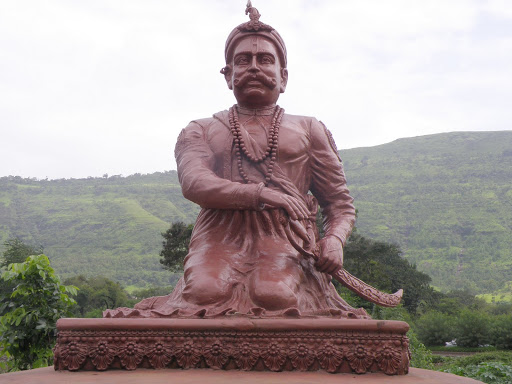
The warlord Mahadji Sindhia recovered the silver gates of Somnath from the hands of the Afghans in a symbolic gesture of the Hindu reconquest. And yet this myth endures – in fact endures to such an extent that the defeated believe that their visions of Muslim rule over the subcontinent was thwarted only by the advent of the British and the Hindus believing that they were saved from utter extinction by the Imperialist interventions.
The propagation of myths and half-truths served to prop the edifice of Imperialism during the British sojourn in India.
This edifice was supported in numerous forces and bodies that were propped up by their erstwhile colonial masters , and this the seeds of hatred and self-loathing that still afflict the subcontinent remains today.
With the fall of that once mighty edifice of the British Empire these very forces were unleashed upon the subcontinent. These very groups weaned on the education system and myths propagated by colonialism were content to allow the same system and ideas dominate India. A new set of western educated elite preferred to maintain the myths of cultural superiority which allowed a narrow elite to lord over the vast toiling masses that comprised the majority of the nation.
The myths of Hindu defeat and slavery designed to destroy and dampen the morale of the majority population continued to be taught – the need by the imperialists to destroy the ardour and fighting spirit of the people was also grabbed upon eagerly by Islamic and other anti Hindu forces.
The myth that Hinduism was a dying and decayed body waiting to be preyed upon by its more aggressive competitors has become almost folklore to Islamists and other extremists.

To hide and cover the resistance of 800 years – the rolling back of the forces of Jihad which by the 18th century has ended in utter failure before the rise of the nascent Hindu forces leading to the climactic failure of arms by the remaining Muslim kingdoms in South Asia by the close of the 1700’s only brought to a sudden end by the entry of western powers.
The same ideology promoted the so called discredited martial race theory of certain communities being more ‘martial’ than others (once again flying in the face of historical evidence) the same ideology allows cross border terrorism to be pushed from the Islamic republic of Pakistan – that allowed it to engage four time in war with its Hindu neighbour each time resulting in humiliating defeat and yet continues to attempt to cause trouble for India.
And yet – despite the above- the myth remained – and even stranger the myth remained propagated by the very forces that otherwise espouse Hindu revivalism – Thus you will find otherwise very earnest Hindus in organisations such as the RSS being weaned on the diet of Hindu passivity and non-aggression despite flying in the face of all known historical evidence and truths.
To the myth of the thousand year slavery being exposed in our previous article composed of two parts – the first being the attacks from the 11th century to the 16th century by various Islamic intruders. The second part being that of the period of colonialism – in this case the rise and establishment of the British Empire.
Having heard ad nausea the view that the British ruled over the Indian subcontinent for a two hundred year period (i.e. from 1757 to 1947) I decided that it was worthwhile into looking into the veracity of this view.
Apart from various small port colonies by the British and French living under the sufferance of local grandees it was the Portuguese who made a serious attempt to establish a lasting empire in the subcontinent. The foundation of Goa, Daman, Diu and other small settlements as part of their attempt to thwart their Ottoman enemies the Portuguese sought to dominate the trade routes to India.

Their own limited resources combined with the hostility aroused amongst both Hindus and Muslims due to their violence and religious oppression together with the fact of living within the shadows of powerful empires such as Vijayanagar, Bahmani and others created a cap on European expansion in the middle ages.
Thus over e long period of decline they were beaten into insignificance by the Marathas in the 1730’s under a vigorous set of campaigns by Chimnaji Appa.
The same period saw the dramatic decline of the Mughal Empire in India – the long period of relative stability based on a tenuous compromise between the Hindus and Muslims of the subcontinent was shattered by the violent and extreme policies of the Emperor Aurangzeb. Led by the strictures of Islamic law his jaundiced administration was faced by a tidal wave of revolts and risings from the Jats, the Satnamis, Bundelas, Ahoms, Rajputs and the Marathas under the famed king Shivaji.
The initial decades of the 18th century saw the Maratha power spread across the face of India, at first under their famed leader Baji Rao and then by his generals, Sindhia, Holkar, Gaekwad and Bhonsle each given his own special area of operation
Now British rule is said to have begun after their victory at the Battle of Plassey in 1757 over the Mughals and their subsequent triumph over them at the Battle of Buxar in 1764. Following this the right to govern, albeit in the name of the Mughals was granted to the British over Bengal and Bihar.

By way of background it is worth noting that Bengal, Bihar and Orrisa were governed by the same appointee from the court in Delhi – in the early 18th century with the Mughal Empire cracking under the repeated hammer blows from the Marathas this province under Alivardi Khan broke off to become for all intents and purposes an independent kingdom.
It was their ill fortune that at the same time the Maratha leaders had demarcated their own spheres of influence over all of India – This region was the hunting ground of the Bhonsle family under their war leader Raghuji Bhonsle.
From the 1730’s onwards in an ever expanding series of raids the regions of Orrisa, Bengal and to a lesser extent Bihar was subject to devastating attacks by the Marathas. The Nawab Alivardi Khan made determined and energetic efforts to defend his province to no avail. Each year he drive further back with the Maratha raiders covering what is modern day Bangladesh up to the Hindu kingdom of Assam.
The only defeat suffered by the Marathas was when the Maratha leader Balaji Baji Rao chastised the Bhonsles and drove them back to their base in Nagpur – the following year they were back however and in utter failure the Nawab of Bengal agreed to cede in perpetuity parts of Bihar, Bengal and the whole of Orissa to the Marathas – This was further compounded by having to pay a yearly tribute to the Marathas (the chauth – or one fourth of their income) – As stated above some years later the British won a victory over the Mughals in 1757 at Plassey .
At the same time Maratha expansion was halted at the Battle of Panipat a thousand miles away in 1761 – this setback the Marathas for a decade – in the interim the British who after assuming governance over Bengal had continued to pay the tribute adroitly stopped paying.

The efforts of the Marathas were then directed at North India – mainly around Delhi to hammer home their final influence over the now fast decaying Mughals – In the interim the British buoyed by their successes in Bengal sought to expand their range of influence over the region of Awadh – the Nawab of the region which covers the northern part of modern-day Uttar Pradesh was best on all side by enemies – to one side the Hindu Jat tribes were seeking to expand their power over his holdings -to the south the warriors of Bundlekhand held sway – the martial Naga Sadhus marched with impunity through the land to protect the holy sites in ranks of thousands armed with matchlocks and artillery and from 1769 the Marathas were back at his borders when a large warband under Holkar attacked their province .
The weak and incompetent ruler – Shuja Ud Dualah fled under British protection in an attempt to preserve his kingdom against his Hindu enemies and thus the British were planted within striking distance of Delhi –
Their interference began to expand and with the establishment of armies in (what was then referred to as) Bombay, Calcutta and Madras the British sought to drive a necklace around the Marathas and thus led to the First Anglo-Maratha war – this was fought across the subcontinent over a period of 7 years – it saw the sensational defeat of British arms at the Battle of Wadgaon (leading to a humiliating British surrender) to the march of Captain Goddard across north India to the capture of Gwalior and the final stalemate at Sipri after which peace was sought and secured by all parties – the Marathas were led by their maverick minister Nana Fadnavis who managed to coordinate a series of alliances to push back the British threat and pushing the East Indian company to the brink of bankruptcy – coupled with the military genius of Mahadji Sindhia the Marathas resumed their march across India and by 1788 had defeated the remnants of the Mughal forces and stretched their sphere of influence to the Sutlej river in Punjab
In 1795 there remained only two Muslim kingdom in India – that of the Nizam of Hyderabad and Tipu Sultan of Mysore (whose infantry was predominantly Hindu) – In 1795 the Marathas delivered a crushing defeat to the Nizam – a defeat which destroyed his power so utterly that he clung in desperation to the British for succour which they gladly gave thus allowing the recovered British arms entry into the south of India – Tipu Sultan however resisted and alone amongst his coreligionists he refused to accept the British alliance and thus perished at the Battle of Seringapatnam in 1799.

The unemployed Muslim soldiery across India could only observe with horror as Hindu arms emerged triumphant over them on all fronts. Many joined the ranks of the Hindu armies others became votaries and supporters of Hindu groups with many even joining the dreaded Thugee cult of Northern Indian becoming devotees of the Goddess Kali.
By 1799 the two great Maratha leaders were dead – Nana Fadnavis and Mahadji Sindhia – who had kept this rising tide of colonialism at bay – their untimely deaths however plunged the Maratha Confederacy into chaos and a civil war beginning in 1799 resulted in chaos and bloodletting across the face of the country – with Sindhia’s fighting the Holkars, battling with their leader the Peshwa and other warrior bands.
A climactic battle before the city of Poona in 1803 left the Maratha capital city in utter confusion and with a series of fast moving manoeuvres the British entered the fray to face a fractured Maratha Confederacy.
Rather than combine and fight on a common ground each component of the famed Maratha army faced the British separately – Led by Arthur Wellesley (Later the Duke of Wellington) and Lord Lake the British fought a series of blooding engagements -the Battle of Assaye – the Battle of Assaye which delivered defeats to the Sindhias and Bhonsles Marathas – following this, when all seemed lost Holkar under their maverick leader Jaswant Rao attacked the British – defeating them in Rajasthan under Col. Monson and then attacking them at Delhi itself – following a setback he took support from the Jats of Bharatpur who then faced the famed infantry and artillery of the British – four times the British tried to attack then walls each ending in utter failure with the loss of thousands of troops – Eventually the British made a peace with Holkar each agreeing not to disturb the other
But the effects of the above were not lost on anyone – the British had by 1805 cast their sphere of influence over the whole of India – although not ruling the majority of the country they had secured their position which was decisively contested once again by the Marathas in 1818 – In a last attempt to drive the British from their positions the Marathas were finally defeated in the Third Anglo-Maratha war and the true establishment of British rule can in some degree be said to commence – This has to be seen in light of the fact that they (like the Marathas before them) maintained the fiction of ruling in the name of the by now impotent Mughal Emperor issuing coins in his name and issuing order in the same vein .
Thus many of the inhabitants could maintain the happy fiction of being independent and free.

The Himalayan foothills had been conquered by the Hindu Gurkha clans who then clashed with the Imperialist powers in 1816 almost leading to a humiliating British defeat – the only part yet outside of the British influence was the rising empire of Ranjit Singh and his allies in Jammu.
The death of the Maharaja in 1839 led to utter chaos and whilst the allies of the Sikh kingdom – the Dogra Rajputs of Jammu managed to expand the empire into Ladakh, Gilgit and Baltistan and even conducting a daring march in the heart of Tibet to fight the Chinese empire the machinations and violence that engulfed the kingdom allowed the British to deliver, despite hard fighting the destruction of the kingdom of Punjab and hits absorption into the British sphere of influence.
By now the reality of Empire was dawning on most of the inhabitants of the subcontinent – Increasing British interference in personal and religious matters as well as their obnoxious policy of wantonly grabbing the kingdoms of their supposed native allies burst into fury and violence in 1857 in a great rising that engulfed a huge portion of northern India – the fighting was bloody and intense and led by the mostly Hindu soldiers of the Bengal army – in a valiant attempt to unite the disparate factions the name of the Peshwa and the Mughal were invoked together with all of the symbolism of the old India that they sought to recover against the imperialist aggressor – After wading through an ocean of blood and violence the rising was finally suppressed in 1859 which led to the final and emphatic establishment of Imperial rule over India for the next 90 years until freedom came in 1947.
90 years – not quite 200 years as we have often been told – Even in regions where the British influence was felt the deepest and lasted the longest it was a slow and gradual process only really being deeply felt after the end of the great rising in 1859 –
The student of history cannot help noticing that barring the battle of Tipu Sultan his co-religionists had failed to make a notable stand against the British – indeed it can been said that they were amongst the first to flee to British protection from their Hindu Enemies – The major struggles of the Old India – from the three wars of the Marathas, the battle of the Jats, the Gurkhas – the Sanyasi rebellions in Bengal, wars of the Sikhs, the Nayar and poligar battles of the south were almost all by Hindus – This is further compounded by the great rising of 1857 which was led by the predominantly Brahmin and Rajput soldiers of the army

90 years of imperial rule were first contested by Vasudev Balwant Phadke in 1875 – these were then followed by the revolutionaries from Bengal, Maharashtra and Punjab which by the 1920’s had thrown British rule into chaos (almost all Hindus) – in response the policies of divide and rule through religion, caste and region were played (ultimately unsuccessfully) by the British due to which the subcontinent still suffers today.
It is important to have an honest and open appraisal of history and not to succumb to failed ideas and slogans – we have found even otherwise well meaning people propagate some of the most absurd and baseless theories without a modicum of basis in truth – the History of colonialism and resistance to it has to be seen in light of the facts of history.
Also Read The Myth of “1000 Years of Hindu Slavery
(4526)
 Vijaynagar. Imagine no hosts of fearless Sadhus and Saints traversing the subcontinent spreading the message of dharma and bhakti.
 In the vast open regions of Central Asia lay the fabled Silk Route. Mighty Empires rose and fell and the wild horse borne archers of the steppes were feared for the skill and ruthlessness. Over all ruled the benign image of the Buddha – the quintessential image of peace and serenity created a curious dichotomy between the nomadic tribesmen and the practitioners of non violence.
 The ancient seats of learning of Nalanda and Taxila were razed to the ground and the monks massacred in the sacred premises where students from across three continents would come to learn. Stupas, Temples and Holy sites were leveled to the ground or converted into mosques. Swathes of people bereft of their political and spiritual leadership were converted to the faith of the invaders.


 Shortly there after, in 1640 CE the Mughal tyrant Shah Jahan ( of the Taj Mahal fame) dispatched Ghazi Najabat Khan with the orders to extirpate the Kafirs of the Uttarakhand. The warrior queen karnavati is said to have prepared for the invasion by leading the troops herself. She drew the Mughals to an ambush in steep mountain slopes north of Dehradun and fallen upon them with the advantage of height. The Mughal army suffered a major defeat. She is said to have prevented their retreat by blocking their rear in the narrow valley and captured several Jihadis.
 It started in 1681 with the Mughal emperor Aurangzeb’s invasion of Maratha empire. It ended in 1707 with Aurangzeb’s death. Aurangzeb threw everything he had in this war. He lost it all.
 At the time of Shivaji’s death in 1680, Maratha empire spanned an area far more than the current state of Maharashtra and had taken firm roots. But it was surrounded by enemies from all sides. Portuguese on northern Coast and Goa, British in Mumbai, Siddies in Konkan and remaining Deccan sultanates in Karnataka posed limited challenge each, but none of them was capable of taking down the Marathas alone. Mughal empire with Aurangzeb at its helm was the most formidable foe.
 After the death of Shivaji in 1680, a brief power struggle ensued in the royal family. Finally Sambhaji became the king. By this time Aurangzeb had finished his North missions and was pondering a final push in Deccan to conquer all of the India.
 The beginning went quite well. Shah Alam crossed Krishna river and entered Belgaum. From there he entered Goa and started marching north via Konkan. As he pushed further,he was continuously harassed by Marathas. They ransacked his supply chains and reduced his forces to starvation. Finally Aurangzeb sent Ruhulla Khan for his rescue and brought him back to Ahmednagar. The first pincer attempt failed.
 Julfikar khan, who was orchestrating Jinji siege, left the siege on Aurangzeb’s orders and marched back. Santaji followed him to North, but was defeated by Julfikar Khan. Santaji then diverted his forces to Bijapur. Aurangzeb sent another general Kasim Khan to tackle Santaji. But Santaji attacked him with a brilliant military maneuver near Chitaldurg and forced him take refuge in Dunderi fort. The fort was quickly sieged by Santaji and the siege only ended when most of the Mughal soldiers starved and Kasim Khan committed suicide. Aurangzeb sent Himmat Khan to reinforce Kasim Khan. Himmat khan carried heavy artillery. So Santaji lured him in a trap in the forest near Dunderi. A sudden, ambush style attack on Mughals was followed by a fierce battle. The battle ended when when Himmat Khan was shot in head and died. All his forces routed and Santaji confiscated a big cache of weapons and ammunition.
 Jinji fell, but it did a big damage to the Mughal empire. The losses incurred in taking Jinji far outweighed the gains. The fort had done its work. For seven years the three hills of Jinji had kept a large contigent of mughal forces occupied. It had eaten a deep hole into Mughal resources. Not only at Jinji, but the royal treasury was bleeding everywhere and was already under strain.
 In March of 1700, another bad news followed Marathas. Rajaram took his last breath. His queen Tarabai, who was also daughter of the gallant Maratha Commander-in-Chief Hambeerrao Mohite, took charge of Maratha army. Daughter of a braveheart, Tarabai proved her true mettle for the next seven years. She carried the struggle on with equal valor. Thus began the phase 3, the last phase of the prolonged war, with Marathas under the leadership of Tarabai.
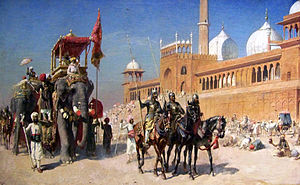 In this war, Aurangzeb’s army totaled more than 500,000 in number (compared to total Maratha army in the ballpark of 150,000). With him he carried huge artillery, cavalry, muskettes, ammunition and giant wealth from royal treasuries to support this quest. This war by no means a fair game when numbers are considered.
 Marathas had one big advantage on their side. They were the expert in fort warfare. The game of defense using forts had two components.
 Marathas mostly launched offensive attacks in the region when Mughal army was away. They rarely engaged Mughal army in open fields till later part of the war. If situation seemed dire, they would retreat and disperse and thus conserve most of their men and arms for another day. The rivers Bhima, Krishna , Godavari and the mountains of Sahyadri, divide entire Maharashtra region is in several North- South corridors. When Mughal army traveled South through one corridor, Marathas would travel North through another and launch attacks there. This went on changing gradually and in the end, Maratha forces started engaging Mughals head on.
 Last but not the least, we must give due respect to one more thing. The seeds of every political revolution can be traced back to a spiritual one and this was no exception. The “Bhakti” movement in Maharashtra that began with 12th Century saint Dnyaneshwar and spearheaded by saint Tukaram (who was contemporary of Shivaji), played a role of social catalyst of immense effect. It created a forum, a pool in society where everyone was welcome.



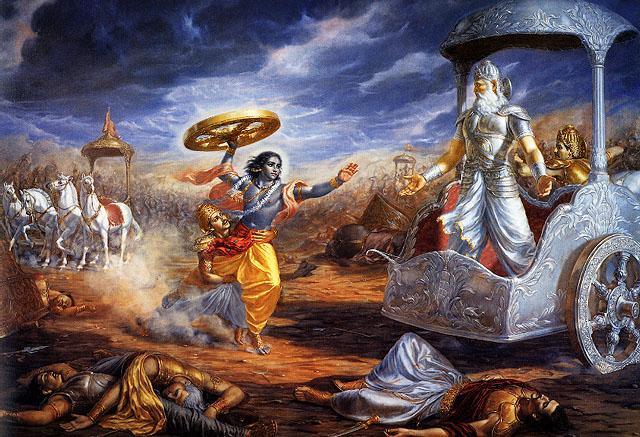 However some thoughts rankled in my mind. If the Hindus were truly slaves for a thousand years plus, then how have we survived to this day with dignity and honour and with a spiritual tradition stretching back to the mists of time and beyond? Many other cultures, civilisations and spiritual traditions have been reduced to museum pieces, but the words of the Holy Vedas are recited in an identical fashion today as they were thousands of years ago when first revealed to the Rishis.
 Following the death of their founder, Muhammad we see the Arab Khilafat expand swiftly over the Middle and Near East, pouring over the deserts of North Africa and crossing the waters to begin a six century occupation of Spain and beyond. The combined might of Christian Europe struggled again and again to reclaim the ‘holy lands’ to end in bitter failure with the rise of the Ottoman Empire, who ruled over a large part of Eastern Europe for centuries.
 With the inspiration of Sant Gorakhnath the warrior clans of the Rajputs united under their legendary king Bappa Rawal and in a series of Battles known collectively as the Battle of Rajashtan inflicted a heavy defeat on the Arab invaders in 738 CE. Any further advances by the Arabs were repelled, impelling the formation of large organised Hindu states in the centre and west of India. Frustrated by their failures in India the Arabs turned northwards shortly after defeating the Chinese Empire in the Battle of Talas in 751 CE opening the gate for the Islamisation of Central Asia. India remained unaffected for another three hundred years. (the “thousand years of slavery theory” was beginning to shake)
 Two further centuries passed as further advances were resisted until a breakthrough around 1200 CE allowed the invaders access to the North Indian plains. The remaining Buddhists were slaughtered or converted in an unprecedented orgy of violence and horror. The majority Buddhist regions of Afghanistan, Kashmir and West Punjab joined the crescent banner of Islam. However the conversion of Hindus was slower and the resistance was more fierce. Hindu warrior clans kept up a relentless resistance fighting from the deserts, the mountains and the forests. The heavy cavalry of the Muslim Turks which had proved fatal to the Crusaders of Western Europe were victorious on the plains of North India but this did not prevent an endless cycle of attack and counter attack by the Hindus.
 The religious traditions of India had been severely mauled by the endless bloodletting over the past two centuries. Many important institutions and temples were destroyed. Prosperity suffered, as it tends to in times of continuous war. This created a certain weakening of Hindu society. Religion became preserved in rituals which were less and less understood. Sanskrit learning was on the decline. Caste became more rigid.
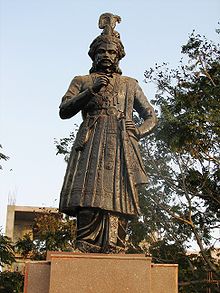 Other larger organised resistance emerged in the Vijaynagara Empire of South India around 1336 CE which consolidated Hindu resistance for over two centuries. In the north the revival of the Rajput kingdoms and the defiance of kings like those of Orissa under the Gajapati Kings, the hills of Punjab under Jasrath Khokhar and the rise of neo Hindu kingdoms in the north east of India along with the entire hill region signaled the revival of Hindu rule over vast tracts of India.
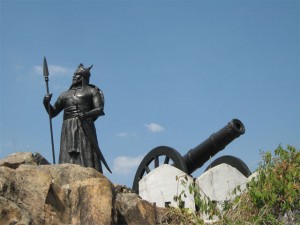 He instead moved away from the tenets of Islam to a new faith of the Din i Ilahi. By following the age old traditions of religious toleration in India he endeared himself to the majority population and through a period of compromise and alliance brought a brief period of peace to the troubled land.
 The march of western civilisation ended the Hindu revival at a time when Hindus exercised control over almost the entire subcontinent. But it took Three wars with the Marathas, two wars with the Gurkhas, war with the Jaats, also smaller ranging wars with the Santhals, Sanyasis and many others .
 However the theories propagated by the British found challengers from the Hindus. Spurred by a revaluation of their history and the knowledge of western theories a new revival began to take fruit. From the universal preaching of Swami Vivekananda to the guns of the Anushilan Samiti the Hindus were at the forefront of a growing anti colonial challenge to the most powerful empire in the world. Finally finding control of the subcontinent untenable in the teeth of endless opposition the British Indian Empire collapsed in a wave of unprecedented bloodshed which has seen a slow and steady spread and reach of the Hindu world.
 Attack after attack was defeated. Horrific massacres did not force the people to abandon their religion and identity. The destruction of holy places did not see dharma die but rise again and overcome their opponents with the power of truth. The banner of freedom was raised generation after generation despite the best attempts of some vested parties to blur the truths and sacrifices made again and again.