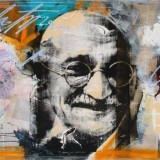
Mahatma Gandhi is often praised as the man who defeated British imperialism with non-violent agitation. It is still a delicate and unfashionable thing to discuss his mistakes and failures, a criticism hitherto mostly confined to Communist and Hindutva publications. But at this distance in time, we shouldn’t be inhibited by a taboo on criticizing official India’s patron saint.
Gandhiji’s mistakes
 Without attempting to approach completeness, we may sum up as Gandhi’s biggest political failures the following events:
(1) Recruiting Indian soldiers for the British war effort in 1914-18 without setting any conditions, in the vain hope that this unilateral gift to Britain would bring about sufficient goodwill in London for conceding to India the status of a self-ruling dominion within the British Empire, on a par with Canada or Australia. While it was already off line for a pacifist to cooperate in such a wasteful war (as contrasted with World War 2, to both sides a kind of holy war where fundamental principles were at stake), Gandhiji’s stance was also a glaring failure of political skill, since he neglected to extract any tangible gains for India in return for the thousands of Indian lives which he sacrificed to British imperial interests.
(2) Committing the mobilisation potential of the freedom movement to the Khil’fat agitation in 1920-22, again a non-negotiated unilateral gift. The Khilafat movement was a tragicomical mistake, aiming at the restoration of the Ottoman Caliphate against which the Arabs had risen in revolt and which the Turks were dissolving, a process completed with the final abolition of the institution of the Caliphate in 1924. It was a purely retrograde and reactionary movement, and more importantly for Indian nationalism, it was an intrinsically anti-nationalist movement pitting specifically Islamic interests against secular and non-Muslim interests. Gandhi made the mistake of hubris by thinking he could reconcile Khilafatism and Indian nationalism, and he also offended his Muslim allies (who didn’t share his commitment to non-violence) by calling off the agitation when it turned violent. The result was even more violence, with massive Hindu-Muslim riots replacing the limited instances of anti-British attacks, just as many level-headed freedom fighters had predicted. Gandhiji failed to take the Khilafat movement seriously whether at the level of principle or of practical politics, and substituted his own imagined and idealized reading of the Khilafat doctrine for reality.
 (3) His autocratic decision to call off the mass agitation for complete independence in 1931, imposed upon his mass following and his close lieutenants against their wishes and better judgment, in exchange for a few puny British concessions falling far short of the movement’s demands. His reputation abroad didn’t suffer, but to informed observers, he had thrown away his aura as an idealist leader standing above petty politics; the Pact between Gandhi and Viceroy Lord Irwin amounted to the sacrifice of a high national goal in favour of a petty rise in status for the Congress. Also, every delay in the declaration of Independence gave the emerging separatist forces the time to organize and to strengthen their position.
(4) Taking a confused and wavering position vis-vis India’s involvement in World War 2. His initial refusal to commit India to the war effort could have been justified on grounds of pacifist principle as well as national pride (the Viceroy had committed India without consulting the native leadership), but it was a failure because his followers weren’t following. Indian recruits and business suppliers of the Army eagerly joined hands with the British rulers, thus sidelining Gandhi into political irrelevance. By contrast, the Muslim League greatly improved its bargaining positions by joining the war effort, an effect not counterbalanced by the small Hindu Mahasabha’s similar strategy. The pro-Partition case which the Muslim League advocated was bolstered while Gandhi’s opposition to the imminent Partition was badly weakened. Gandhi was humiliated by his impotence before the degeneration of his “Quit India” agitation into violence and by ultimately having to come around to a collaborationist position himself.
 (5) Taking a confused and wavering position vis-vis the Partition plan, including false promises to the Hindus of the designated Pakistani areas to prevent Partition or at least to prevent their violent expulsion. He chose not to use his weapon of a fast unto death to force Mohammed Ali Jinnah into backing down from Partition, a move which cast doubt on the much-touted bravery of all his other fasts “unto death” performed to pressurize more malleable opponents. If acquiescing in the Partition could still be justified as a matter of inevitability, there was no excuse for his insistence on half measures, viz. his rejecting plans for an organized exchange of population, certainly a lesser evil when compared to the bloody religious cleansing that actually took place. Gentle surgeons make stinking wounds.
(6) Refusing to acknowledge that Pakistan had become an enemy state after its invasion of Kashmir, by undertaking a fast unto death in order to force the Indian government to pay Pakistan 55 crore rupees from the British-Indian treasury. Pakistan was entitled to this money, but given its aggression, it would have been normal to set the termination of its aggression, including the withdrawal of its invading troops, as a condition for the payment. Indeed, that would have been a sterling contribution to the cause of enduring peace, saving the lives of the many thousands who fell in subsequent decades because of the festering wound which Kashmir has remained under partial Pakistani occupation. Coming on top of Gandhi’s abandonment of the Hindus trapped in Pakistan in August 1947, it was this pro-Pakistani demand, as well as his use of his choice moral weapon (left unused to save India’s unity or the persecuted Hindus in Pakistan) in the service of an enemy state’s treasury, that angered a few Hindu activists to the point of plotting his murder.
Problems with pacifism
 The common denominator in all these costly mistakes was a lack of realism. Gandhi refused to see the realities of human nature; of Islamic doctrine with its ambition of domination; of the modern mentality with its resentment of autocratic impositions; of people’s daily needs making them willing to collaborate with the rulers in exchange for career and business opportunities; of the nationalism of the Hindus who would oppose the partition of their Motherland tooth and nail; of the nature of the Pakistani state as intrinsically anti-India and anti-Hindu.
In most of these cases, Gandhi’s mistake was not his pacifism per se. In the case of his recruiting efforts for World War 1, there wasn’t even any pacifism involved, but loyalty to the Empire whether in peace or in war. The Khilafat pogroms revealed one of the real problems with his pacifism: all while riding a high horse and imposing strict conformity with the pacifist principle, he indirectly provoked far more violence than was in his power to control. Other leaders of the freedom movement, such as Annie Besant and Lala Lajpat Rai, had warned him that he was playing with fire, but he preferred to obey his suprarational “inner voice”.
The fundamental problem with Gandhi’s pacifism, not in the initial stages but when he had become the world-famous leader of India’s freedom movement (1920-47), was his increasing extremism. All sense of proportion had vanished when he advocated non-violence not as a technique of moral pressure by a weaker on a stronger party, but as a form of masochistic surrender. Elsewhere (Elst: Gandhi and Godse, Voice of India, Delhi 2001, p.120-121) I have cited four instances of his advice to the victims of communal violence which is simply breathtaking for its callousness in the face of human suffering. Two more instances follow.
 During his prayer meeting on 1 May 1947, he prepared the Hindus and Sikhs for the anticipated massacres of their kind in the upcoming state of Pakistan with these words: “I would tell the Hindus to face death cheerfully if the Muslims are out to kill them. I would be a real sinner if after being stabbed I wished in my last moment that my son should seek revenge. I must die without rancour. (*) You may turn round and ask whether all Hindus and all Sikhs should die. Yes, I would say. Such martyrdom will not be in vain.” (Collected Works of Mahatma Gandhi, vol.LXXXVII, p.394-5) It is left unexplained what purpose would be served by this senseless and avoidable surrender to murder.
Even when the killing had started, Gandhi refused to take pity on the Hindu victims, much less to point fingers at the Pakistani aggressors. More importantly for the principle of non-violence, he failed to offer them a non-violent technique of countering and dissuading the murderers. Instead, he told the Hindu refugees from Pakistan to go back and die. On 6 August 1947, Gandhiji commented to Congress workers on the incipient communal conflagration in Lahore thus: “I am grieved to learn that people are running away from the West Punjab and I am told that Lahore is being evacuated by the non-Muslims. I must say that this is what it should not be. If you think Lahore is dead or is dying, do not run away from it, but die with what you think is the dying Lahore. (*) When you suffer from fear you die before death comes to you. That is not glorious. I will not feel sorry if I hear that people in the Punjab have died not as cowards but as brave men. (*) I cannot be forced to salute any flag. If in that act I am murdered I would bear no ill will against anyone and would rather pray for better sense for the person or persons who murder me.” (Hindustan Times, 8-8-1947, CWoMG, vol. LXXXIX, p.11).
 So, he was dismissing as cowards those who saved their lives fleeing the massacre by a vastly stronger enemy, viz. the Pakistani population and security forces. But is it cowardice to flee a no-win situation, so as to live and perhaps to fight another day? There can be a come-back from exile, not from death. Is it not better to continue life as a non-Lahorite than to cling to one’s location in Lahore even if it has to be as a corpse? Why should staying in a mere location be so superior to staying alive? To be sure, it would have been even better if Hindus could have continued to live with honour in Lahore, but Gandhi himself had refused to use his power in that cause, viz. averting Partition. He probably would have found that, like the butchered or fleeing Hindus, he was no match for the determination of the Muslim League, but at least he could have tried. In the advice he now gave, the whole idea of non-violent struggle got perverted.
Originally, in Gandhi’s struggle for the Indians’ rights in South Africa, non-violent agitation was tried out as a weapon of the weak who wouldn’t stand a chance in an armed confrontation. It was a method to achieve a political goal, and a method which could boast of some successes. In the hands of a capable agitator, it could be victorious. It was designed to snatch victory from the jaws of powerlessness and surrender. By contrast, the “non-violent” surrender to the enemy and to butchery which Gandhi advocated in 1947 had nothing victorious or successful about it.
During the anti-colonial struggle, Gandhi had often said that oppression was only possible with a certain cooperation or complicity from the oppressed people. The genius of the non-violent technique, not applicable in all situations but proven successful in some, was to create a third way between violent confrontation between the oppressed and the oppressor, fatally ending in the defeat of the weak, and the passive resignation of the oppressed in their state of oppression. Rather than surrendering to the superior power of the oppressor, the oppressed were given a method to exercise slow pressure on their oppressor, to wrest concessions from him and to work on his conscience. No such third way was left to the minorities in Pakistan: Gandhi’s only advice to them was to surrender, to become accomplices in their extermination by meekly offering their necks to the executioner’s sword.
My point is not that Gandhi could and should have given them a third way, a non-violent technique that would defeat the perpetrators of Partition and religious cleansing. More realistically, he should have accepted that this was the kind of situation where no such third option was available. Once the sacrifice of a large part of India’s territory to a Muslim state had been conceded, and given previous experiences with Muslim violence against non-Muslims during the time of Gandhi’s own leadership, he should have realized that an exchange of population was the only remaining bloodless solution. The Partition crisis was simply beyond the capacity of Gandhian non-violence to control. If he had had the modesty to face his powerlessness and accept that alternatives to his own preferred solution would have to be tried, many lives could have been saved.
Robust pacifism
I t cannot be denied that Gandhian non-violence has a few successes to its credit. But these were achieved under particularly favourable circumstances: the stakes weren’t very high and the opponents weren’t too foreign to Gandhi’s ethical standards. In South Africa, he had to deal with liberal British authorities who weren’t affected too seriously in their power and authority by conceding Gandhi’s demands. Upgrading the status of the small Indian minority from equality with the Blacks to an in-between status approaching that of the Whites made no real difference to the ruling class, so Gandhi’s agitation was rewarded with some concessions. Even in India, the stakes were never really high. Gandhi’s Salt March made the British rescind the Salt Tax, a limited financial price to pay for restoring native acquiescence in British paramountcy, but he never made them concede Independence or even Home Rule with a non-violent agitation. The one time he had started such an agitation, viz. in 1930-31, he himself stopped it in exchange for a few small concessions.
It is simply not true that India’s Independence was the fruit of Gandhian non-violent agitation. He was close to the British in terms of culture and shared ethical values, which is why sometimes he could successfully bargain with them, but even they stood firm against his pressure when their vital interests were at stake. It is only Britain’s bankruptcy due to World War 2 and the emergence of the anti-colonial United States and Soviet Union as the dominant world powers that forced Clement Attlee’s government into decolonising India.
Even then, the trigger events in 1945-47 that demonstrated how the Indian people would not tolerate British rule for much longer, had to do with armed struggle rather than with non-violence: the naval mutiny of Indian troops and the ostentatious nationwide support for the officers of Subhas Bose’s Axis-collaborationist Indian National Army when they stood trial for treason in the Red Fort.
So, non-violence need not be written off as a Quixotic experiment, for it can be an appropriate and successful technique in particular circumstances; but it has its limitations. In many serious confrontations, it is simply better, and on balance more just as well as more bloodless, to observe an “economy of violence”: using a small amount of armed force, or even only the threat of armed force, in order to avoid a larger and bloodier armed confrontation. This is the principle of “peace through strength” followed by most modern governments with standing armies. It was applied, for example, in the containment of Communism: though relatively minor wars between Communist and anti-Communist forces were fought in several Third World countries, both the feared Communist world conquest and the equally feared World War 3 with its anticipated nuclear holocaust were averted.
 The ethical framework limiting the use of force to a minimum is known as “just war theory”, developed by European thinkers such as Thomas Aquinas and Hugo Grotius between the 13th and 18th century, but in essence already present in the Mahabharata as well. Thus, waging war can be a just enterprise when it is done in self-defence, when all non-violent means of achieving the just objective have been tried, when non-combatants are respected as such, when the means used are in proportion to the objective aimed for, etc.
One of the less well-known criteria for just warfare which deserves to be mentioned here in the light of Gandhi’s advice to the Hindus in Pakistan is that there should be a reasonable chance of success. No matter how just your cause, it is wrong to commit your community to a course of action that only promises to be suicidal. Of course, once a group of soldiers is trapped in a situation from which the only exit is an honourable death, fighting on may be the best course remaining, but whenever possible, such suicide should be avoided. This criterion is just as valid in non-armed as in armed struggle: it was wrong to make the Hindus stay among their Pakistani persecutors when this course of action had no chance of saving lives nor even of achieving certain political objectives.
As the Buddha, Aristotle, Confucius and other ethical guides already taught, virtue is a middle term between two extremes. In this case, we have to sail between the two extremes of blindness to human fellow-feeling and blindness to strategic ground realities. It is wrong to say that might makes right and that anything goes when it comes to achieving victory, no matter what amount of suffering is inflicted on the enemy, on bystanders or even on one’s own camp. It is equally wrong to strike a high moral posture which haughtily disregards, and hence refuses to contain or subdue, the potential for violence in human confrontations and the real pain it causes. In between these two extremes, the mature and virtuous attitude is one which desires and maintains peace but is able and prepared to fight the aggressor.
Limiting the use of force to a minimum is generally agreed to be the correct position. In this case, disagreeing with Gandhi is not an instance of Communist or Hindu-chauvinist extremism, but of the accumulated wisdom of civilized humanity. Excluding the use of force entirely, by contrast, may simply whet the aggressor’s appetite and provoke far more violence than the achievable minimum.
This is a mistake which an overenthusiastic and inexperienced beginner can forgivably make, but in an experienced leader like Mahatma Gandhi during his time at the head of the freedom movement, it was a serious failure of judgment. The silver lining in the massacres which his mistakes provoked, is that they have reminded us of the eternal wisdom of “the golden mean”, the need for a balanced policy vis–vis the ever-present challenge of violence and aggression. It has been known all along, and it is crystal-clear once more, that we should avoid both extremes, Jinnah’s self-righteousness and Gandhi’s sentimentalism.

(13653)
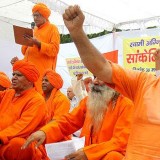
 Founded in 1875, the Ârya Samâj, in effect “Society of Vedicists”, was a trail-blazer of Hindu revivalism and anti-colonial nationalism until Independence. It worked bravely for the reconversion of Indian Muslims, the only humane solution to India’s communal problem. Some of its spokesmen gave their lives for speaking out on Islam, most notably Pandit Lekhram in 1897 and Swami Shraddahananda (co-founder of the Hindu Mahasabha) in 1926.
 As an organization, the Arya Samaj is no longer very powerful or important, but its message has spread far and wide in educated Hindu society. The same is even more true of a similar movement, the Brahmo Samaj (°1825), a flagbearer of the Bengal renaissance which tried to translate Hinduism into rational-sounding concepts acceptable to the British colonizers and the first circles of anglicized Hindus.Whereas the Arya Samaj embraced a Christian-like religious theism, the Brahmo Samaj tended more towards a modern Enlightenment-inspired deism, i.e. the philosophical acceptance of a distant cosmic intelligence rather than a personal God biddable by human imprecations and sacrifices. But like the Aryas, the Brahmos rejected Hindu polytheism as a degenerate aberration from the true Vedic spirit.
 It is undeniable that Hindu Maha Sabha ideologue Savarkar spoke of reviving the “race spirit” of the Hindus. So did Golwalkar. Sri Aurobindo even used the term “Aryan race”, which to him meant exactly the same thing as “Hindu nation”,
  After 1945, the English language gradually lost the usage of the term “race” for the concept of “nation”; the Hindu nationalists followed suit. This was only natural: they had never cared for “race” in the biological sense so dear to the Nazis. The very concept of race, having been narrowed down to its biological meaning, has simply disappeared from their horizon. It is plainly untrue that Hindu ideologues at any time have shared Hitler’s racism.
 Most secularists pretend not to know this unambiguous position of Savarkar’s (in many cases, they really don’t know, for Hindu-baiting is usually done without reference to primary sources). Likewise, Savarkar’s plea for caste intermarriage to promote the oneness of Hindu society is usually ignored in order to keep up the pretence that he was a reactionary on caste, an “upper-caste racist” (as Gyan Pandey puts it), and what not. There are no limits to secularist dishonesty, and so we are glad to find at least one voice in their crowd which does acknowledge these positions of Savarkar’s.
 The first point rightly acknowledges that Savarkar, not being a historian, accepted the Aryan invasion theory promoted by prestigious seats of Western learning; and that he saw modern Hindus as a biological and cultural mixture of Aryan invaders and indigenous non-Aryans. He shared this view with Indian authors across the political spectrum, e.g. with Jawaharlal Nehru. Like Nehru, he saw no reason why people of diverse biological origins would be unable to form a united nation; the difference being that Nehru saw this unification as a project just started (“India, a nation in the making”), while Savarkar believed that this unification had come about in the distant past already.
 Nicholas Goodrick-Clarke has written a book on the strange case of a French-Greek lady who converted to Hinduism and later went on to work for the neo-Nazi cause, Maximiani Portas a.k.a. Savitri Devi. The book is generally of high scholarly quality and full of interesting detail, but when it comes to Indian politics, the author is woefully misinformed by his less than impartisan sources.
 If one is inclined towards fascism, and one has the good fortune to live at the very moment of fascism’s apogee, it seems logical that one would seize the opportunity and join hands with fascism while the time is right. Conversely, if one has the opportunity to join hands with fascism but refrains from doing so, this is a strong indication that one is not that “fascist” after all. Many Hindu leaders and thinkers were sufficiently aware of the world situation in the second quarter of the twentieth century; what was their position vis-a-vis the Axis powers?
 And indeed, in the successful retreat from Dunkirk and in the British victories in North Africa and Iraq, Indian troops played a decisive role. It would earn the Hindus the gratitude of the British, or at least their respect. And if not that, it would instill the beginnings of fear in the minds of the British rulers: it would offer military training and experience to the Hindus, on a scale where the British could not hope to contain an eventual rebellion in the ranks. After the war, even without having to organize an army of their own, they would find themselves in a position where the British could not refuse them their independence.
 It is not unreasonable to suggest that Savarkar’s collaboration with the British against the Axis was opportunistic. He was not in favour of any foreign power, be it Britain, the US, the Soviet Union, Japan or Germany. He simply chose the course of action that seemed the most useful for the Hindu nation. But the point is: he could have opted for collaboration with the Axis, he could have calculated that a Hindu-Japanese combine would be unbeatable, he could even have given his ideological support to the Axis, but he did not. The foremost Hindutva ideologue, president of what was then the foremost political Hindu organization, supported the Allied war effort against the Axis.
  That HMS support to the anti-Nazi war effort was not merely tactical but to quite an extent also ideological, is shown by a series of statements by Nirmal Chandra Chatterjee, president of the Bengal Hindu Mahasabha and vice-president of the All-India Hindu Mahasabha. He declared in February 1941: “Our passionate adherence to democracy and freedom is based on the spiritual recognition of the Divinity of man. We are not only not communal but we are nationalists and democrats. The Anti-Fascist Front must extend from the English Channel to the Bay of Bengal.” (Hindu Politics, Calcutta 1945, p.13)
  All this is hardly the language of a collaborator with the Axis powers. For anyone still in doubt on the Hindu Mahasabha’s position, he declared in March 1942: “In the conflict of ideologies the Hindus have made their position perfectly clear. We hate Nazism and Fascism. We are the enemies of Hitler and Mussolini. We are longing and struggling for our own emancipation and we want to repel any dictator who would try to reduce sections of humanity to slavery to serve the whims of his own megalomania.” (Hindu Politics, p.26) And in December 1943: “We are wholeheartedly anti-Fascist. Every anti-Imperialist must be anti-Fascist.” (Hindu Politics, p.68)
 Yet, the British accused the Freedom Movement, including the HMS but also the Congress, of Nazi sympathies. Already in the 1930s, they had sometimes equated no less a person than Mahatma Gandhi with Hitler (a comparison which made Gandhian Congress activists feel proud). That was the only way they could hope to lessen the sympathy of the increasingly influential American public opinion for the Indian anti-colonial struggle.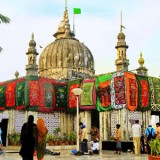
 With its decentralised and mystical approach Sufism is an anathema to Saudi Arabia ’s Wahhabis and their more extreme Salafi offspring. Through petrodollars the Sufism of Pakistan has become deemed as un-Islamic event though Bulleh Shah, Waris Shah and Madho Lal Hussain were figures of great respect in South Asian Islam. The same pressure is now being placed on analogous traditions such as that of the marabouts in West Africa . But Sufism also felt the wrath of the modernist secular reforms of Ataturk as he strove to build a European style state on the ashes of the defeated and discredited Ottoman Empire .
 Amir Khusru was one of the foremost disciples of Nizam-ud-din Awliya of Delhi who is counted among the five great sufis of the Chishtiyya school. He is himself regarded as an outstanding sufi on whose mazar in Delhi urs is held every year. His Hindi verses are cited as a proof positive of his love for the land of his birth. The great poet, sufi and artist Amir Khusro, full name Muhammad Hassan Yaminuddin (1253-1325) said to be a great human being because, he was the father of Qawwali, and its claimed he even
  Of course he was killed by his younger brother Aurangzeb who was himself a Sufi, a follower of the Naqshbandi-Mujaddidi method and disciple of Khwaja Muhammad Masoom, the third son and successor of the founder of Mujaddidi order Shaykh Ahmad Sirhindi. Soon after his coronation, Aurangzeb wrote to his shaykh that due to the duties of the empire, he was unable to attend his shaykh’s company, therefore he should send one of his noble sons to the capital for spiritual and Islamic guidance to Aurangzeb. The shaykh sent his son, Khwaja Saif ad-Din Sirhindi (5th son) who was a scholar and Sufi shaykh by himself . He not only guided Aurangzeb to observe the Islamic law properly, he was also the source of most of the Islamic rules Aurangzeb implemented in the empire. One of those is the ban on musical instruments throughout the country, which was initially suggested by Khwaja Saif ad-Din in accordance with the Sharia law.
 This association of the most fanatic and intolerant of Mughal emperors with Sufism will shock many who have been fed the belief that all Sufis were purveyors of a soft version of Islam. But the Naqshabandis had always stood for strict interpretation of sharia law. Khwaja Mohammad Baqi Billah Berang whose tomb is in Delhi introduced Naqshbandi order in India and due to common Turkic origins with the Mughal invaders this Sufi order always remained steadfast in its political loyalty right from the invasions of Babar.
 In Letter No. 81 he said: “Cow-sacrifice in India is the noblest of Islamic practices. The kafirs may probably agree to pay jiziya but they shall never concede to cow-sacrifice.” After Guru Arjun Deva had been tortured and done to death by Jahangir, he wrote in letter No. 193 that “the execution of the accursed kafir of Gobindwal is an important achievement and is the cause of the great defeat of the Hindus.” Sirhindi viewed mystics like Guru Nanak and Sant Kabir despicable, as they did not follow Sharia, he wanted to encourage the sacrifice of cows and revelled in the execution of Guru Arjun Dev.
 Sayed Ahmad Barelvi (1786-1831) was a disciple of Waliullah’s son, Abd al Aziz, and continued the tradition of by launching armed jihad with a view to restoring Darul-Islam but was killed in the battle of Balkot against Maharaja Ranjit Singh. Indian Muslims continue to regard him as martyr for the cause of Islam. Karamat Ali, a disciple of Sayed Ahmad Barelavi further developed the ideology for purifying Islam from the influences of Hindu custom and tradition.
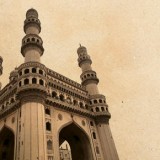




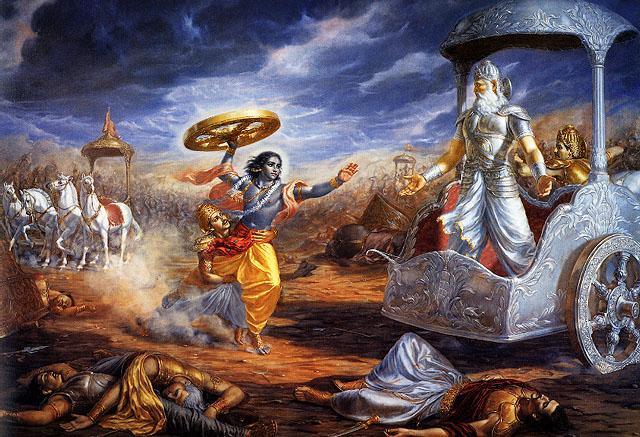 However some thoughts rankled in my mind. If the Hindus were truly slaves for a thousand years plus, then how have we survived to this day with dignity and honour and with a spiritual tradition stretching back to the mists of time and beyond? Many other cultures, civilisations and spiritual traditions have been reduced to museum pieces, but the words of the Holy Vedas are recited in an identical fashion today as they were thousands of years ago when first revealed to the Rishis.
 Following the death of their founder, Muhammad we see the Arab Khilafat expand swiftly over the Middle and Near East, pouring over the deserts of North Africa and crossing the waters to begin a six century occupation of Spain and beyond. The combined might of Christian Europe struggled again and again to reclaim the ‘holy lands’ to end in bitter failure with the rise of the Ottoman Empire, who ruled over a large part of Eastern Europe for centuries.
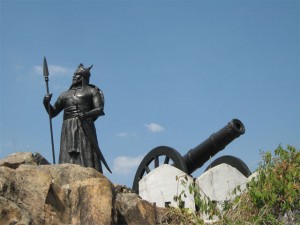
 With the inspiration of Sant Gorakhnath the warrior clans of the Rajputs united under their legendary king Bappa Rawal and in a series of Battles known collectively as the Battle of Rajashtan inflicted a heavy defeat on the Arab invaders in 738 CE. Any further advances by the Arabs were repelled, impelling the formation of large organised Hindu states in the centre and west of India. Frustrated by their failures in India the Arabs turned northwards shortly after defeating the Chinese Empire in the Battle of Talas in 751 CE opening the gate for the Islamisation of Central Asia. India remained unaffected for another three hundred years. (the “thousand years of slavery theory” was beginning to shake)
 Two further centuries passed as further advances were resisted until a breakthrough around 1200 CE allowed the invaders access to the North Indian plains. The remaining Buddhists were slaughtered or converted in an unprecedented orgy of violence and horror. The majority Buddhist regions of Afghanistan, Kashmir and West Punjab joined the crescent banner of Islam. However the conversion of Hindus was slower and the resistance was more fierce. Hindu warrior clans kept up a relentless resistance fighting from the deserts, the mountains and the forests. The heavy cavalry of the Muslim Turks which had proved fatal to the Crusaders of Western Europe were victorious on the plains of North India but this did not prevent an endless cycle of attack and counter attack by the Hindus.
 The religious traditions of India had been severely mauled by the endless bloodletting over the past two centuries. Many important institutions and temples were destroyed. Prosperity suffered, as it tends to in times of continuous war. This created a certain weakening of Hindu society. Religion became preserved in rituals which were less and less understood. Sanskrit learning was on the decline. Caste became more rigid.
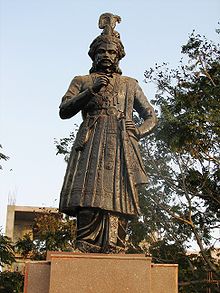 Other larger organised resistance emerged in the Vijaynagara Empire of South India around 1336 CE which consolidated Hindu resistance for over two centuries. In the north the revival of the Rajput kingdoms and the defiance of kings like those of Orissa under the Gajapati Kings, the hills of Punjab under Jasrath Khokhar and the rise of neo Hindu kingdoms in the north east of India along with the entire hill region signaled the revival of Hindu rule over vast tracts of India.
 He instead moved away from the tenets of Islam to a new faith of the Din i Ilahi. By following the age old traditions of religious toleration in India he endeared himself to the majority population and through a period of compromise and alliance brought a brief period of peace to the troubled land.
 The march of western civilisation ended the Hindu revival at a time when Hindus exercised control over almost the entire subcontinent. But it took Three wars with the Marathas, two wars with the Gurkhas, war with the Jaats, also smaller ranging wars with the Santhals, Sanyasis and many others .
 However the theories propagated by the British found challengers from the Hindus. Spurred by a revaluation of their history and the knowledge of western theories a new revival began to take fruit. From the universal preaching of Swami Vivekananda to the guns of the Anushilan Samiti the Hindus were at the forefront of a growing anti colonial challenge to the most powerful empire in the world. Finally finding control of the subcontinent untenable in the teeth of endless opposition the British Indian Empire collapsed in a wave of unprecedented bloodshed which has seen a slow and steady spread and reach of the Hindu world.
 Attack after attack was defeated. Horrific massacres did not force the people to abandon their religion and identity. The destruction of holy places did not see dharma die but rise again and overcome their opponents with the power of truth. The banner of freedom was raised generation after generation despite the best attempts of some vested parties to blur the truths and sacrifices made again and again.